

The Commission Chief Executive (CCE) of the Nigerian Upstream Petroleum Regulatory Commission (NUPC), Engr. Gbenga Komolafe, has affirmed that given the efforts being made to ramp up crude oil production in the country, the presidential mandate to achieve 2.5million barrels per day by 2026 is well within reach.

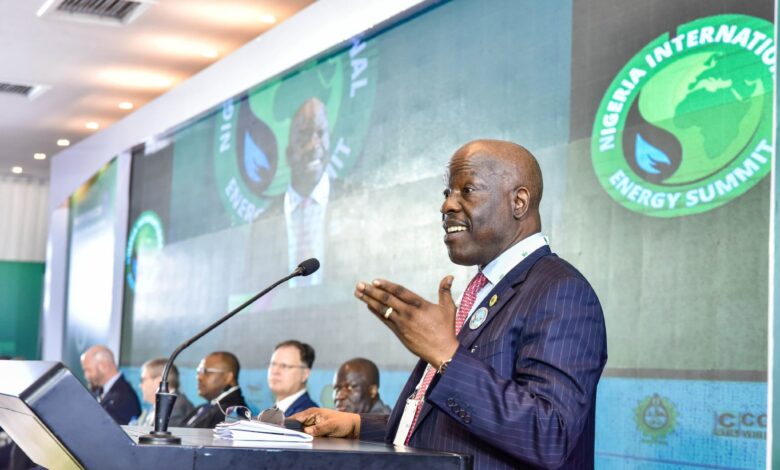
Engr. Komolafe spoke on Monday at the Society of Petroleum Engineers’ Nigeria Annual International Conference and Exhibition (NAICE), with the theme, “Building a Sustainable Energy Future: Leveraging Technology, Supply Chain, Human Resources and Policy,” held in Lagos State.
He informed the gathering that the Commission is pursuing the Project 1 million barrels of oil per day (MMBOPD) Incremental initiative with modest gains recorded owing to the multi-stakeholder collaborative approach adopted.
The CCE reported that Nigeria has crossed the 1.8 MMBOPD oil production mark, with average production hovering at 1.78 MMBOPD.
“We are glad to report that we crossed the 1.8 MMBOPD mark on peak production last month, with average production hovering at 1.78 MMBOPD,” he said.
He noted that as part of commitment towards sustainable production, the Commission is optimising the Maximum Efficient Rate (MER) framework, addressing produced water management, and aligning operational shutdowns and turnaround maintenance schedules to ensure minimal production disruptions.
Engr. Komolafe said the NUPRC is also implementing the Upstream Oil & Gas Decarbonisation & Sustainability Blueprint anchored on seven (7) critical pillars to signal direction for industry sustainability.
Therefore, called on all Operators to collaborate with the Commission as it incorporates decarbonisation measures in Field Development, Facility Engineering, and Production Operations for all-round benefits.
He said as the Upstream Industry regulator, the Commission’s responsibility goes beyond compliance, adding that the Commission is focusing on enabling a stable, efficient, and forward-looking upstream sector, one that balances the imperatives of energy security, environmental responsibility, and economic sustainability.
He said the NUPRC has embraced technology in its regulatory operations to enhance service delivery, improve turnaround time and rejig its business process.
“These are not just technical upgrades; they are part of our broader effort to entrench transparency, promote accountability and reduce costs – all geared towards enabling industry growth and vitality,” he added.
Komolafe charged SPE and other industry associations to accept the challenge of manpower and contribute to repositioning the industry through targeted capacity-building and engagement with young professionals, in consideration of the fast-evolving global energy landscape.
He submitted that since the enactment of the Petroleum Industry Act, 2021 (PIA), the Commission has so far gazetted twenty-one (21) key regulations, with others at various phases of development.
These regulations, according to him, provide the clarity required to support investment, streamline administration, and align upstream operations with national and global priorities.
He highlighted some of the regulations to include, The Upstream Petroleum Measurement Regulations, The Gas Flaring, Venting and Methane Emissions Regulations, The Host Community Development Regulations, The Domestic Gas Delivery Obligation Regulations, The Upstream Petroleum Safety Regulations, and The Decommissioning and Abandonment Regulations.
“These instruments demonstrate our commitment to creating a regulatory environment that fosters innovation, secures long-term value, and ensures the responsible stewardship of Nigeria’s upstream resources,” he said.