

Targeted financial reforms and improved maritime security formed the backbone of Nigeria’s blue economy turnaround in 2025, as the Federal Government moved to unlock long stalled growth in the sector.

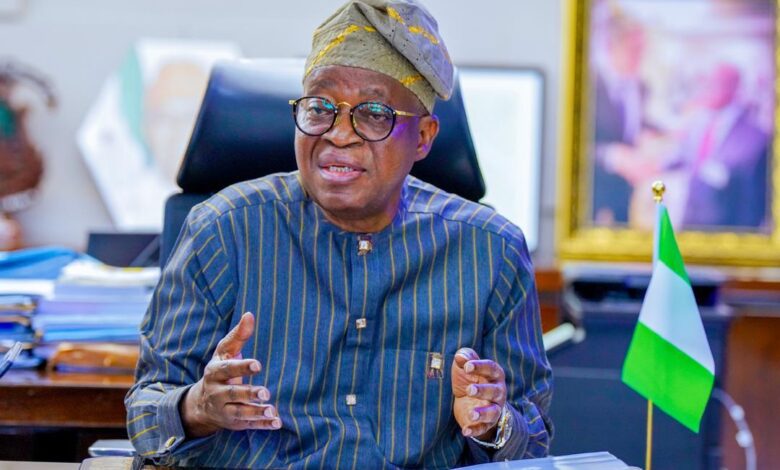
The Minister of Marine and Blue Economy, Dr. Adegboyega Oyetola, through his Special Adviser, Dr. Bolaji Akinola, disclosed this on Wednesday in Abuja.
He said decisive interventions last year addressed chronic funding gaps, security concerns and policy fragmentation that had weakened maritime performance for decades.
“Central to the reforms was the activation of long-dormant maritime financing mechanisms. The establishment of the Regional Maritime Development Bank in 2025 ended a 16-year stalemate on access to long-term capital for shipping and port development.
“In addition, the Nigerian Maritime Administration and Safety Agency (NIMASA) commenced disbursement of the Cabotage Vessel Financing Fund (CVFF), providing indigenous ship owners with access to funds after more than 20 years of inactivity”.
Akinola said the financing breakthroughs are expected to strengthen local shipping capacity, reduce capital flight and enable Nigerian operators to compete more effectively in coastal and international trade.
On security, he noted that sustained deployment and coordination of assets under the Deep Blue Project helped Nigeria maintain zero piracy incidents in its waters throughout 2025.
The improved security environment, he said, enhanced investor confidence and reinforced Nigeria’s leadership in regional maritime safety.
Beyond finance and security, Nigeria’s international maritime standing also improved with its return to the International Maritime Organisation (IMO) Council after a 14-year absence.
The development restored the country’s voice in global maritime policy and regulation.
Domestically, policy coherence was strengthened with the approval of Nigeria’s first National Policy on Marine and Blue Economy in May 2025.
The policy provides a unified framework for shipping, fisheries, aquaculture, marine tourism and offshore energy, offering clarity for investors and operators.
Akinola added that operational gains, including the sustained easing of the Apapa port gridlock and approval of a comprehensive port modernisation programme, complemented the financial and security reforms.
He said the cumulative effect of the interventions has repositioned the maritime and blue economy sector as a viable pillar of Nigeria’s economic diversification drive, with 2025 marking a decisive shift from stagnation to structured growth.