‘$32.8Bn Required To Provide Electricity For 300m Underserved People In Africa’
By Sunday Etuka, Abuja

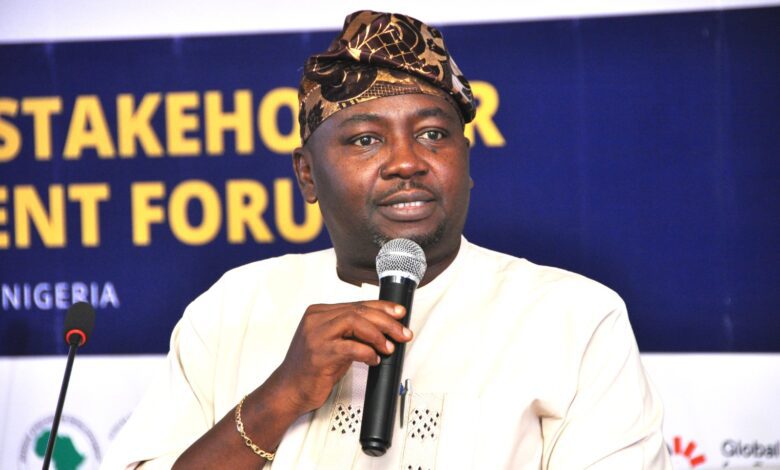

The Minister of Power, Chief Adebayo Adelabu has disclosed that an estimated $32.8 billion investment is required for the Mission 300 Compact, with $15.5 billion expected from the private sector.

Chief Adelabu disclosed this on Tuesday at the Mission 300 Stakeholders Engagement meeting, held in Abuja, Nigeria.
The Mission is to provide electricity to 300 million unserved people in Africa, with the Minister calling on development partners, the private sector, philanthropic actors, the public sector, and the civil society organizations to rally around the mission.
According to him, “mobilizing this level of financing will demand innovation, coordination, and a shared commitment.”
Adelabu, in a statement by his Special Adviser on Strategic Communications and Media Relations, Tunji Bolaji, said the stakeholders meeting was necessary to provide an opportunity for them to align, strategize, and to build the partnerships needed to move from Nigeria Energy Compact, to concrete results.
He reaffirmed the Federal Government’s commitment to setting the power sector on the path of sustainability and bankability, by prioritising the different reforms being undertaken in the sector.
He announced the priorities of the government in power sector reforms to include “adressing the market liquidity issues and initiating required sector reforms”.
“Currently”, he added, “there’s a huge outstanding debt to the Power Generation companies in the form of unpaid government subsidies which stands at about ₦4trn as of December 2024. The Federal Government is already working out modalities to defray this obligation and to ensure that further obligations are not accrued going forward, the government is working on a plan to transition the sector to a fully cost-reflective regime while implementing targeted subsidies for the economically vulnerable citizens in the country.
“Improving our power generation through recovery of idle capacities and expanding energy mix to ensure energy security, and to dilute the power pool with cheaper and cleaner energy sources”.
Other areas he identified included “Expanding transmission infrastructure to deliver more power, ensuring stability of the national grid to put and end to several grid disturbances and collapses previously observed on the grid, and to further strengthen the coordination and management of the national grid.
“Ensuring viability and performance improvement of the distribution segment of the power sector through strategic programs like the Presidential Metering Initiative and the World Bank-funded Distribution Sector Recovery Program (DISREP)”.
The Minister also said that the Power Ministry is pursuing increased renewable energy through its rural electrification and energy transition drive, to provide a reliable power supply to unserved and underserved communities.
Through its training institute, the Ministry is also working to improve human capital and local content development in the sector to reduce import dependence, stimulate jobs, and build a homegrown energy industry.
“I assure you”, he continued “that the Federal Government of Nigeria, under the leadership of President Bola Ahmed Tinubu, is fully committed to this vision and through the Federal Ministry of Power, in collaboration with the Ministry of Finance, we will continue to champion reforms, promote innovation, and partner with all stakeholders to deliver a sustainable energy future”.
He expressed the appreciation of the Federal Government to the World Bank Group under the leadership of Mr Ajay Banga and the African Development Bank under the leadership of the outgoing Managing Director of the Bank, Dr Akinwumi Adesina, the Rockefeller Foundation, the Global Energy Alliance for People and Planet (GEAPP), and Sustainable Energy for All for taking on this mission to connect 300 million people across Africa to electricity by the year 2030 through the Mission 300 initiative, saying, “this ambition reflects our shared belief that energy access is a fundamental issue that must be urgently addressed to unlock economic potential of the continent”.
According to Adelabu, in January 2025 at the Dar es Salaam Africa Energy Summit, President Tinubu joined eleven other African Heads of State in endorsing the Dar es Salaam Energy Declaration and formally committing to the Federal Republic of Nigeria to Mission 300.
“We presented our National Energy Compact, a bold statement of intent and ambition to fast-track access to both electricity and clean cooking for all Nigerians with the aim of achieving universal access by 2030 by increasing the rate of electricity access from 4 percent to 9 percent per annum and raising access to clean cooking from 22 percent to 25 percent per annum”, he said.
The Minister of Finance, Chief Wale Edun, who spoke through zoom from Brazil also said that the reforms the government was undertaking in the power sector were critical towards unlocking the full potentials of the economy as it would lead to job creation. He said the reforms have led to over 40 percent increase in power distribution in the first quarter of 2025.
Present at the meeting were the Minister of Innovation, Science and Technology, Chief Geoffrey Nnaji, the Special Adviser to the President on Energy, the World Bank Officers, head of agencies in the Power Ministry, and partners of the sector.