94% Of Nigerian Health Facilities, 89% Of Schools Lack WASH Services – Report
By Alice Etuka, Kano

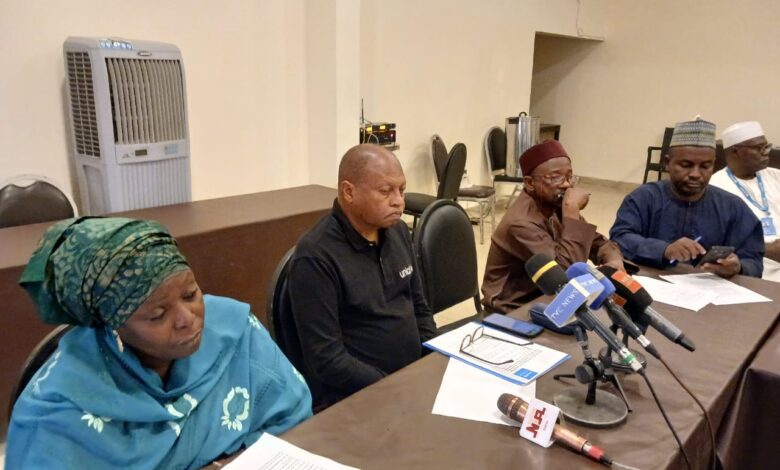

Only 6% of health facilities and 11% of schools in Nigeria have access to basic Water, Sanitation and Hygiene (WASH) services, while a whooping 94% of health facilities and 89% of schools lacked such services, a survey showed.

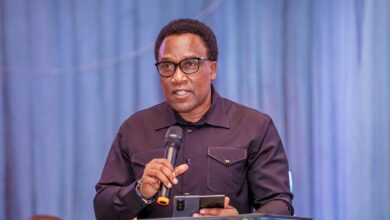
Chief of UNICEF Field Office Kano, Mr. Rahama Farah, stated this on Wednesday at a Media and Stakeholders Dialogue on WASH services in Primary Health Centres (PHCs) and Schools held in Kano.
TheFact Daily gathered that Universal access to safe WASH services can prevent approximately 10% of the total global burden of disease. This translates to the prevention of roughly 1.4 million deaths and 74 million disability-adjusted life-years (DALYs) annually.
According to Farah, “the Nigeria 2021 WASHNORM II survey, the most comprehensive recent national assessment, reveals stark challenges in WASH services across institutions like health facilities and schools.
“Nationwide, only 11% of schools have access to basic water supply, basic sanitation and hygiene services—figures that are even more dire in rural Northwest Nigeria.
“Only 6% of health facilities have access to basic water supply, basic sanitation, and hygiene services”.
He noted that in Kano and Jigawa states, the situation mirrored national laws but demands urgent local action. While Jigawa (and recently Katsina state) has made strides toward open defecation-free status, Handwashing functionality remained low, with states like Jigawa scoring below national averages in school hygiene infrastructure, leaving millions of children exposed to preventable illnesses like diarrhea and cholera.
Consequently, he explained that Schools and Health Care Facilities play host to substantial numbers of people of a variety of ages, health status and physical abilities.
These settings therefore can be centers for rapid diseases spread if not adequately provided with WASH facilities.
“Clean water, toilets, and handwashing stations in schools and health centers are lifelines for children’s health, for their learning, and dignity.
“Without them, school absenteeism rises—especially for girls —and infections spread rapidly, undermining SDG targets for education (4.a) and universal WASH (6.1-6.2)”, he said.
Farah disclosed that in Northwest Nigeria, poor WASH contributes to high child morbidity, robbing children of safe spaces to thrive.
He however said UNICEF was supporting the government to improve WASH services in schools and health facilities with the funding support of donors:
“Through investment of £19 million by the UK Government in the Climate Resilient for Basic Infrastructure (CRIBS) Programme, UNICEF, the Federal Government, the UK Government and partners inaugurated 84 climate-resilient health and education facilities in Kano and Jigawa last year.
“Based on the successful implementation of the approach in Kano and Jigawa States, the initiative has been expanded this year to include Bauchi, Enugu, Gombe, Kaduna, and Katsina states”, he said.
The UNICEF official counseled that, while it was important to have a mutually acceptable standard of services that can result in the social and health benefits that motivate duty bearers to invest in providing the service, it was also equally important to highlight the imperative of duty bearers, stakeholders and communities in ensuring that WASH facilities that had been provided in health facilities and schools were properly and adequately maintained and not allowed to erode.
He urged the media to spotlight the WASHNORM gaps in Kano and Jigawa, demand transparency on state budgets, track resource allocations for boreholes, latrines, and soap in health and educational facilities, and hold the government at all levels accountable for SDG commitments.
“Your stories can amplify children’s voices, pressure decision-makers to prioritize WASH funding, and mobilize communities—turning data into action for healthier futures. We need to work tirelessly to expose any neglect and advocate for building WASH facilities in every school and clinic. Nigeria’s children deserve no less”, he concluded.
On his part, the Executive Chairman of the Kano State Universal Basic Education Board (SUBEB), Yusuf Kabir who was represented by the Board Secretary, Amina Umar said the State has 8,782 public schools managed by SUBEB but 5,884 of them had basic WASH facilities, a number sharply debated by journalists as it did not reflect the reality of schools visited during a Media tour of Basic schools in the state.
Similarly, Director-General of the Kano State Primary Health Care Management Board (KNSPHCMB), Professor Salisu Ibrahim represented by the Director Environment and Public health of the Board, Sani Ungogo
disclosed that the state had 1,239 Primary Health Centres, however, only 282 of them had basic WASH facilities.