

The Federal Government has disclosed that the recent flood incident in Mokwa Town, Niger State, which claimed over 153 lives was primarily caused by heavy rainfall which overwhelmed local drainage systems.

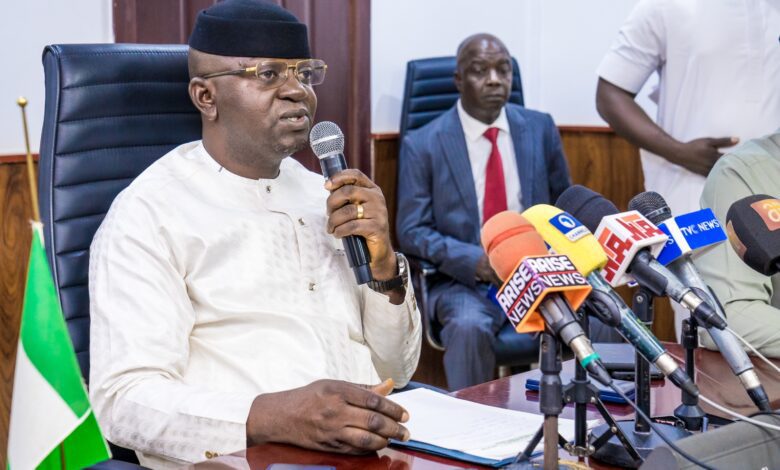
Minister of Water Resources and Sanitation, Prof. Joseph Utsev, made this disclosure while briefing journalists on Tuesday in Abuja.
Prof. Utsev, noted that the flood was not caused by water releases from either the Kainji or Jebba dams and that both dams are intact and safe.
He explained that the unregulated buildings and construction activities blocked an ephemeral tributary of River Dingi, a regressive river, a tributary of River Niger, which remains dry almost all year round with flows solely dependent on surface runoff by rainfall.
He added that the absence of efficient alternative pathways to redirect the excess water further worsened the flood’s impact on the communities.
The Minister recalled that the Ministry through the Nigeria Hydrological Services Agency (NIHSA) in the 2025 Annual Flood Outlook (AFO), on the 10th of April 2025 predicted flooding in 19 LGAs of Niger state including Mokwa LGA.
Generally, he said the 2025 Annual Flood Outlook forecast shows that 1,249 communities in 176 Local Government Areas in 33 States and FCT fall within the High Flood Risk Areas, while 2,187 communities in 293 LGAs in 31 States of the Federation, including the Federal Capital Territory falls within the Moderate Flood Risk Areas.
He gave the names of the High Flood Risk States to include, Abia, Adamawa, Akwa Ibom, Anambra, Bauchi, Bayelsa, Benue, Borno, Cross River, Delta, Ebonyi, Edo, Federal Capital Territory, Gombe, Imo, Jigawa, Kebbi, Kogi, Kwara, Lagos, Nasarawa, Niger, Ogun, Ondo, Osun, Oyo, Rivers, Sokoto, Taraba, Yobe, Zamfara.
Re-echoing the key warnings and recommendations from the 2025 Annual Flood Outlook (AFO), Prof. Utsev said “We had urged and we are still urging states and local governments to act on these early warnings by: • Strengthening drainage infrastructure. • Relocating vulnerable communities from flood plains. • Engaging in sustained public awareness campaigns. • Enforcing land-use regulations to prevent encroachment into flood-prone areas.”
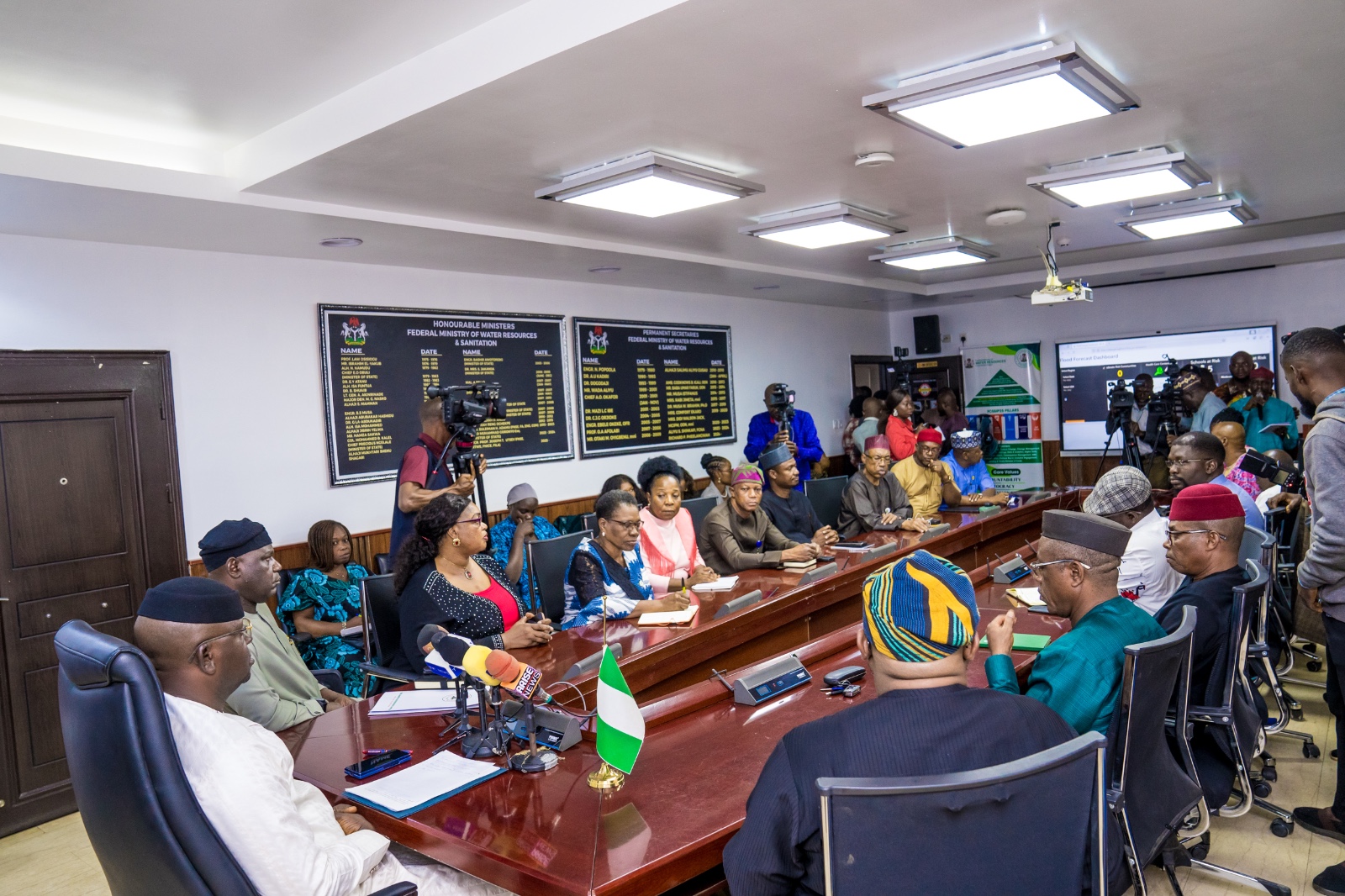
According to him, the AFO provided a comprehensive overview of the flood risks beyond the LGAs to actual communities, the potential flood prone areas, expected flood levels and recommended adaptation and mitigation measures to minimize flood impact and also highlight how communities can adopt innovative approaches to reduce vulnerability.
He, therefore, urged stakeholders to visit the website/dashboard at (https://nihsa.gov.ng/flood-forecast-dashboard) for detailed information to take proactive measures in adaptation and mitigating flood impacts in their domain.
He however, disclosed that the Technical personnel from the Ministry; Nigeria Hydrological Services Agency (NIHSA), Upper Niger River Basin Development Authority (UNRBDA); and National Water Resources Institute (NWRI) are on ground in Mokwa taking assessments of the cause of the flood in order to come up with an appropriate report.
While sympathising with the Government and the good people of Niger State, especially the affected communities in Mokwa, who have experienced losses, deaths and displacements, Prof. Utsev said the Ministry, remains fully committed to its mandate of managing the nation’s water resources in a sustainable and climate-resilient manner.