

On Thursday last week, Petroleum Products Suppliers under the umbrella of the Natural Oil and Gas Suppliers Association of Nigeria (NOGASA) converged on Abuja to jaw jaw on sundry issues in the oil and gas industry and the way forward.

Members trooped in from across the states of the Federation to put their grey hairs together and fashion out ways to deal with the perceived threat to the survival of their businesses.
They raised strong objections to the recent plan by the Dangote Refinery to supply petroleum products directly to end users, bypassing the traditional distribution chain.
Dangote Refinery had earlier announced its plan to begin inter-direct distribution of petroleum products to marketers, petrol dealers, manufacturers, telecom firms, aviation companies, and other large consumers across the country, bypassing traditional depots and intermediaries.
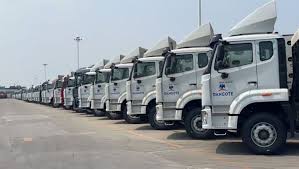
To achieve this, the Refinery recently took delivery of 4,000 new Compressed Natural Gas (CNG)-powered trucks for the initiative, scheduled to be launched on August 15.
The landmark initiative which is intended to provide more efficient transportation across Nigeria and beyond, is also aimed to reduce production costs, ease inflationary pressures, and stimulate economic growth.
With the investment of N720 billion, the initiative is expected to save Nigerians over N1.7 trillion annually, and lift 42 Micro, Small and Medium Enterprises (MSMEs) by reducing energy costs and enhancing profitability.
The Refinery said the strategic programme is part of its broader commitment to eliminating logistics costs, enhancing energy efficiency, promoting sustainability and supporting Nigeria’s economic development.
However, the Oil Suppliers warned that the move could significantly disrupt the oil and gas industry, putting thousands of jobs at risk and jeopardising the existing business models of suppliers nationwide.
Speaking on the potential consequences of the initiative, NOGASA President, Benneth Korie said the new distribution model would render the suppliers’ roles obsolete, pointing at redundancy of trucks, drivers, and other logistical staff as a direct result of the bypassed supply chain.
Korie said the meeting focused on developing a unified strategy to address the issue, including the possibility of downing tools and direct engagement with Dangote to seek a resolution.
He informed that the association was seeking to advocate for a distribution structure where Dangote supplies products to NOGASA members, who will then sell to the end users, preserving jobs within the supply chain.
“We are holding a general meeting to decide whether to down tools and to find a way to ensure that Dangote will supply the product to them rather than supply to the end users. And we will in turn supply to the end users. These are chains of distribution,” Korie explained.
NOGASA insists that bypassing the traditional distribution mechanism is “not healthy for the oil and gas industry” and poses risks to its stability.
The association is calling on all stakeholders to recognize the vital role that suppliers play—not only in logistics but also in maintaining a balanced industry ecosystem.
Corroborating the NOGASA President, the National President of the Petroleum Products Retail Outlets Owners Association of Nigeria (PETROAN), Dr. Billy Gillis-Harry raised concerns about Dangote Refinery’s forward integration adoption, warning that it could lead to a monopoly in disguise and pose a significant job loss threat to Nigeria.
According to him, with a production capacity of 650,000 barrels per day, Dangote Refinery should be competing with global refineries, not operating as a distributor in the downstream sector.
Recall, PETROAN had previously raised alarm about Dangote’s intentions to dominate the downstream sector, citing concerns that the company may leverage its market power to fix prices, limit competition, and exploit consumers, much like it has done in other sectors.
The tactics, it stated, may include a pricing penetration strategy, where they reduce prices to capture market share, with the ultimate goal of forcing other filling station operators to quit the market. This could lead to a massive shutdown of filling stations across Nigeria, resulting in widespread job losses.
“The introduction of 4,000 brand-new Compressed Natural Gas (CNG)-powered tankers by Dangote Refinery poses a significant threat to the livelihoods of thousands of truck drivers and owners. While CNG trucks may offer a lower cost of transporting petroleum products, this shift could lead to widespread job losses in the industry,” Dr. Gillis-Harry re-echoed.
He argued that the adoption of a forward integration strategy by Dangote Refinery would greatly affect various stakeholders, including: Modular Refineries, Truck Owners, Filling Station Operators, Local Suppliers of Petroleum Products and Telecom Diesel Suppliers.
“It is obvious that Dangote plans to gain full monopoly of the downstream sector, which would enable the company to exploit Nigeria’s petroleum consumers. This could lead to higher prices, reduced competition, and decreased economic efficiency,” the PETROAN President said.
He therefore called on the Authority Chief Executive of the Nigerian Midstream and Downstream Petroleum Regulatory Authority (NMDPRA) and the Minister of State for Petroleum to put in place price control mechanisms to prevent any form of monopoly, adding that competition should always be encouraged to protect consumers and promote economic efficiency.
He recommended that the government should encourage a competitive refining market environment; Strengthen regulatory agencies to monitor market behavior, Ensure crude oil supply to local refineries, and Explore alternative livelihoods for affected workers.
In his intervention, the Chairman, House Committee on Petroleum Resources, downstream, Hon. Ikenga Ugochinyere, said that the National Assembly is not oblivious of the inefficiencies that sometimes flood the distribution network and the premier issues, adulteration that compromise the quality and endanger the machineries, the frustrating supply bottlenecks that lead to scarcity and the complex logistical hurdles inherent in the transporting products across our vast geographical.
“We are particularly attentive to the recent entry of Dangote into downstream distribution and marketing and its potential impact on existing distributors. This is a significant development and we want to assure you that we are meticulously looking into this situation,” he added.
He said the objective was to foster an environment that would bring about a win-win situation for all stakeholders with full alignment with the principles enshrined in the Petroleum Industry Act PIA.
Ugochinyere who was represented at the event by Hon. Ahmed Saba, a member representing Edu/Moro/Patigi Federal constituency, said the PIA provided a comprehensive framework for improving distribution systems, enhancing transparency, and rigorously ensuring product quality across the entire value chain.
Beyond the PIA, he said, the government is continuously exploring the potential areas of reform, focusing on leveraging technology for data tracking, regulating processes, and investing in critical infrastructure to optimize the entire supply chain.