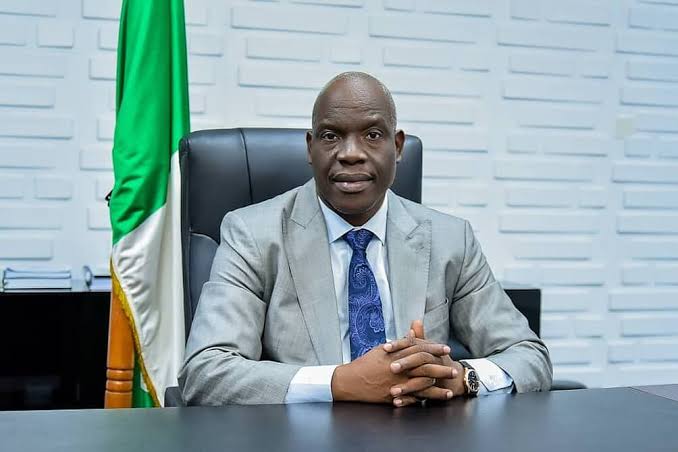


The Commission Chief Executive (CCE) of the Nigerian Upstream Petroleum Regulatory Commission (NUPRC), Engr. Gbenga Komolafe, has stated that the Commission is spearheading strategic initiatives, aimed at boosting crude oil production in Nigeria.

He disclosed that these initiatives, coupled with reactivating dormant fields, accelerating approvals, and deploying improved recovery techniques, had increased production from 1.46 million barrels per day baseline in October 2024 to 1.8 million barrels currently.
Engr. Komolafe spoke on Thursday at the PENGASSAN Energy and Labour Summit (PEALS) 2025, with the Theme: “Building a Resilient Oil and Gas Sector in Nigeria: Advancing HSE, ESG, Investment, and Incremental Production,” holding in Abuja.
According to him, with proven reserves of 37.28 billion barrels of crude oil and 210.54 trillion cubic feet of natural gas, the nation’s upstream sector remains the backbone of the economy, delivering about 90% of export earnings and nearly 70% of government revenue.
However, he noted that the ambition must go beyond being resource-rich, to being resource-responsible, harnessing hydrocarbons with world-class efficiency and environmental stewardship, while strategically investing in cleaner alternatives.
“The urgency of this task is magnified by rising global scrutiny, climate vulnerability, supply chain disruptions, and local challenges such as underinvestment and infrastructure gaps,” the NUPRC boss added.
He remarked that building a resilient oil and gas sector in Nigeria therefore demands nothing less than bold, transformational thinking and unified action across government, industry, labour, and communities; the very kind of partnership the summit was designed to inspire.
Komolafe said the NUPRC is taking decisive steps to future-proof the industry. Noting that the Upstream Decarbonisation Framework and gas-centric transition strategy are aimed to eliminate routine flaring by 2030, cut methane emissions by 60% by 2031, and monetise the nation’s vast gas resources.
He said through initiatives like the Decade of Gas, the Nigerian Gas Flare Commercialisation Programme (NGFCP), and the Presidential CNG Initiative, the sector is creating thousands of green jobs and positioning Nigeria as Africa’s gas powerhouse.
He affirmed that guided by the transformative Petroleum Industry Act (PIA) 2021, the Commission has established a modern, legal, governance, and fiscal framework that addresses long-standing investor concerns.
“We have complemented this with decisive Presidential Executive Orders that have slashed average contracting cycles from 36 months to just 6 months, enhanced local content value creation, unlocked globally competitive fiscal terms for deepwater, frontier basin, and gas projects, and created opportunities in previously underdeveloped investment frontiers,” he added.
The CCE noted that the summit has become more than just an annual fixture, adding that it has evolved into a trusted marketplace of ideas, where frank dialogue meets forward-thinking engagement, and where collaborative problem-solving charts a path for an industry that directly contributes so much to the Nigerian economy.
According to him, the conversations that would be held at the Summit “go far beyond oil and gas; they touch the very core of the nation’s economic sovereignty, the livelihoods of millions of Nigerians, and the country’s place in the unfolding global energy transition.”
He noted that the Commission is fully committed to working with PENGASSAN, operators, service providers, and investors to ensure that Nigeria does not merely participate in this transition era but actively shapes it to its advantage.