

With only five (5) years left to the expiration of the Family Planning (FP) 2030 target, experts have warned that unless the country put in more effort, meeting the target may be a mirage.
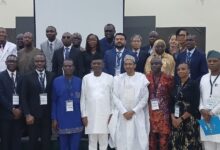
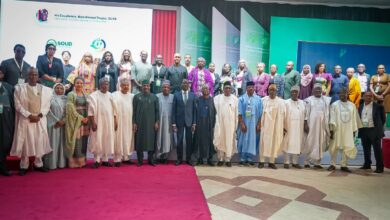
This formed the basis of discussion at the Validation Meeting of Nigeria FP2030 Commitments’ Motion Tracker Progress Report (2024), held in Abuja on Thursday.
The meeting, which brought together Civil Society Organisations (CSOs), Experts in the Family Planning space and representatives of the government aimed at presenting key findings, validating progress, and highlighting advocacy priorities to advance FP2030 implementation in Nigeria.
Chairman, Management Committee, Association for the Advancement of Family Planning (AAFP), Dr. Ejike Oji said the Government should ensure there are enough resources to provide last mile concept, making sure that at the point of service to the woman, every family planning commodity is available.
He lamented that, family planning uptake in the country was not where it ought to be because of inadequate budgeting in some of the states, even as certain states including the Federal Capital Territory (FCT) had no budget line for family planning.
Speaking on report from the Motion Tracker, Dr Oji stated:
“From what we are seeing, if we continue the way we are going, unless we improve remarkably in those commitments, it would be very difficult for Nigeria to meet the FP 2030 target.
“That’s why, as a Civil Society person, my responsibility is to look at making sure there is accountability of the resources that we have. We want to hold government accountable”, he said.
According to him, at the beginning of 2025, there was a lot of cry about defunding the line item in the Federal Ministry of health for family planning.
“Infact, it was put at 97%. To some of us, that was untenable, we rose to the challenge and that’s why we had several meetings with the heads of agencies mainly PVAC and National Primary Healthcare Development Agency. These two agencies gave us very wonderful information about what the family planning commodities purchase money is.
“At the PVAC, we have 5.788 billion naira, for family planning commodities purchase. For National Primary Healthcare Development Agency, we have 6 million dollars. From government, we can say this is the best thing that has happened”, he said.
The Expert however noted that, “our responsibility now is, how is this money going to be used to make sure it is adequately and accountably used to be able to meet our requirements”.
On her part, Programme Delivery Manager of the African Health Budget Network (AHBN), Amina Mohammed explained that the Motion Tracker Approach Report was an accountability mechanism, a type of progress diary to look at the Nigeria FP2030 commitments.
According to her, “there are eight commitments that are meant to be done by 2030. So, we look at the contribution of stakeholders, we also look at some indicators to understand where we are currently in terms of implementation.
“How far along are we? What are the challenges? And we also rate some of the indicators. Some of them might be green, meaning everything is going well and good. Some of it is amber, meaning it’s ongoing, but it’s not where we want it to be. And then it could be red, meaning not a lot of action is happening”, she said.
Mohammed informed that the meeting also involved getting feedback from stakeholders, both in Abuja and also in Kano, that is, both at the national and subnational level.