

The Presidency has stated that the administration’s strategic investment in infrastructure in Lagos and Abuja is statecraft, and not favoritism.

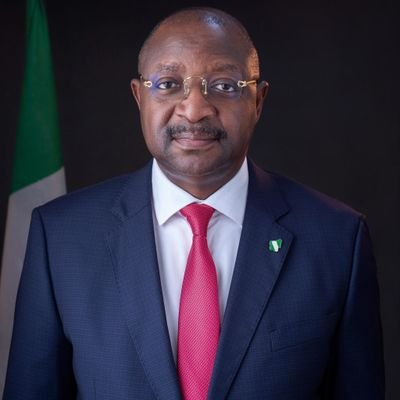
Special Adviser to the President on Media and Communication, Sunday Dare, stated this on Sunday, in response to a publication on National Daily at the weekend.
He described the Daily Trust’s screaming Headline: “In Two Years, Lagos Gets N3.9 Trillion Projects,” as sensational.
Dare submitted that the paper’s attempt to portray Lagos as over-pampered while casting the North as neglected is not just misleading, but lazy journalism.
While stating that the truth is more complex, more national, and more honest, the SA said President Bola Tinubu is not just a statesman, but a nationalist and a President for all.
He reiterated that the Northern Nigeria is mobilised, and not marginalised as alleged in the publication.
“Let’s start with the North. Far from being abandoned, it anchors over half of the capital budgets for 2024 and 2025, when you account for trunk infrastructure and agricultural investments.
“Abuja–Kano Expressway dualization, ₦12.1 trillion Sokoto–Badagry Superhighway (₦3.63 trillion already approved for rollout in Sokoto and Kebbi), Kano–Maradi Railway and the Zungeru–Kano Power Line, Funtua and Bauchi Inland Dry Ports, and Airport upgrades in Katsina, Maiduguri, and Kaduna.
“Add to this massive funding for the Sokoto-Rima, Upper Benue, Hadejia-Jama’are, and Lower Niger River Basins; and food-security anchors like Special Agro-Processing Zones in Borno, Kaduna, and Kebbi, and wheat development in Jigawa and Kano. This is not marginalization. It is mobilization,” he said.
Speaking on Lagos, he said “what did Lagos receive in 2013–2015? Or 2021–2023? Without period-over-period comparisons—adjusted for inflation, exchange rates, and statutory revenue outturns—any single number is meaningless.
“Lagos is not just a state. It is Africa’s second-largest city economy, with over 23 million residents and hundreds of thousands more arriving every year. Every Nigerian ethnicity is represented in Lagos. It is Nigeria in microcosm—a great melting pot straining under infrastructure loads no other state faces.
“And Lagos is not alone. Abuja is becoming the same: one of Africa’s fastest-growing cities, projected to exceed 7 million people by 2030. As the federal capital, it carries the daily weight of the civil service, the diplomatic corps, and a booming private sector.
“That is why President Bola Ahmed Tinubu has given extra care to both Lagos and Abuja. Not as favoritism, but as strategy. When these two urban giants work, Nigeria breathes easier. When they fail, the whole country suffers.,” he said.
Dare argued that no project begins or ends in a single election cycle.
“What Lagos and Abuja receive today flows from the ERGP (2017–2020), the ESP (2020) during COVID-19, and the NDP (2021–2025). The forthcoming Renewed Hope Plan (2026–2030) will build on them. National development is a continuum—not an accident,” he said.
Stating that Mega-cities demand mega-support, he said: “New York City receives tens of billions in annual federal transfers, covering housing, health, education, and transport. In FY 2022, New York State and City received $117.5 billion in federal support.
“Johannesburg/Gauteng generates one-third of South Africa’s GDP. Its 2025/26 provincial budget tops R172 billion, aligned with federal transport and housing priorities.
“If New York and Johannesburg receive proportional federal support because of their scale, why should Lagos and Abuja be treated differently?
“Responsible Journalism Requires Rigor. We must separate propaganda from journalism. That’s the inescapable duty of media practice.”
On why Lagos and Abuja, he said “because Lagos is Nigeria’s economic lifeblood.
“Because Abuja is its political and diplomatic heartbeat.
“Because both cities carry the daily weight of the federation—demographically, economically, and symbolically.
“Investing in Lagos and Abuja is not favoritism. It is statecraft. In the U.S. and South Africa, city-economies like New York and Johannesburg receive federal resources reflective of their burdens.
“Lagos and Abuja, which together anchor Nigeria’s survival, deserve no less. The real question is not “Why Lagos?” or “Why Abuja?” The real question is: What happens to Nigeria if Lagos and Abuja are ignored?”