

The Commission Chief Executive of the Nigerian Upstream Petroleum Regulatory Commission (NUPRC), Engr. Gbenga Komolafe, has reaffirmed the determination of the Commission to achieve the target of increasing crude production to about 2.5 million barrels per day by the year 2026.

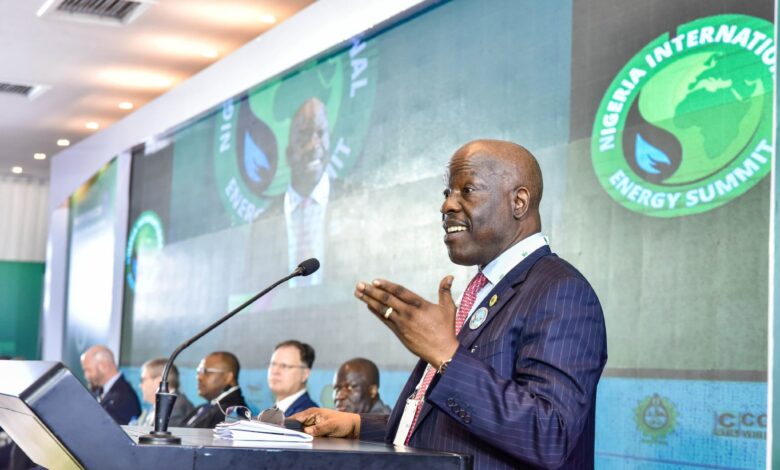
Speaking in a Keynote Address at the maiden edition of the Annual Conference of the Energy Correspondents Association of Nigeria (ECAN), journalists covering the oil and gas industry, held on Thursday at the Nicon Luxury Hotel, Abuja, Engr. Komolafe noted that Nigeria is actively ramping up crude oil production by reactivating dormant fields, fast-tracking regulatory approvals, and enhancing operational efficiencies across the upstream value chain.
“Through our Project One Million Barrels Initiative, launched in 2024, Nigeria is actively ramping up crude oil production by reactivating dormant fields, fast-tracking regulatory approvals, and enhancing operational efficiencies across the upstream value chain.
“With a clear target of increasing production to 2.5 million bpd by 2026, the initiative has already demonstrated strong momentum with current unreconciled daily production averaging 1.7 – 1.83 million bpd,” he said.
With the theme, “Four Years of the Petroleum Industry Act (PIA): Achievements, Gaps and the Way Ahead,” the ECAN Conference brought together policymakers, and industry stakeholders to review the progress so far made since the enactment of the PIA over four years ago.
Komolafe, who was represented by the
Head of Regulatory and Statutory Compliance at the Commission, Mr Kingston Chikwendu,
mentioned that the NUPRC in embracing its mandate with a clear focus on upstream resource optimization has issued 19 enabling regulations that operationalize key provisions of the PIA.
These regulations, according to him, are benchmarked against global standards, providing a stable and predictable framework that enhances investor confidence.
He affirmed that the Commission’s recent bid rounds – anchored on quality data access, regulatory certainty, and an investor-centred reform agenda – recorded unprecedented successes.
These, he said include: the 57 PPL awards of 2022, the 2022 Mini-Bid Round, and the 2024 Licensing Round. Noting that each of these rounds was conducted with unprecedented transparency, unmatched competitiveness, and remarkable investor engagement.
Engr. Komolafe, also mentioned that the approval of 37 new evacuation routes, coupled with intensified collaboration with national security agencies, has significantly curtailed crude theft and enhanced accountability across the industry.
“At the same time, the enforcement of the Domestic Crude Supply Obligation (DCSO) is securing consistent feedstock to local refineries, strengthening Nigeria’s internal supply chains and building long-term economic resilience,” he added.
On the socio-developmental front, he explained that the Host Community Development Trust (HCDT) framework, fully operational via HostComply digital platform, has created unprecedented transparency and direct community impact, fostering trust, reducing conflict, and reinforcing social licence to operate.
“Our broader digital transformation agenda is also reshaping regulatory engagement: streamlining approvals, improving investor clarity, and delivering faster and smarter oversight,” the CCE said.
He submitted that while hydrocarbons continue to generate nearly 90% of Nigeria’s foreign exchange earnings and 70% of government revenue, the Commission is fully aware that the long-term viability of the energy sector depends on aligning growth with climate responsibility.
“Our gas-centric energy transition strategy is a cornerstone of this effort, anchored by flagship initiatives such as the Decade of Gas, the Nigerian Gas Flare Commercialisation Programme (NGFCP), and the Presidential CNG Initiative,” he said.
These programmes, according to him, collectively aim to eliminate routine gas flaring by 2030 and reduce methane emissions by 60% by 2031.
In parallel, he said the Commission is working collaboratively with industry stakeholders to fully monetize Nigeria’s abundant gas resources through strategic LNG expansion, deployment of floating production solutions, and the development of cross-border pipelines designed not only to power Nigeria’s economy but to accelerate Africa’s broader industrialisation.
Beyond infrastructure, Engr. Komolafe said the NUPRC is also championing the creation of a transparent, competitive, and investor-friendly gas market, unlocking the commercial potential of an estimated 600+ trillion cubic feet of gas resources (upward potential) and positioning Nigeria as a central hub in the global energy transition.
He said Nigeria, with its 209.26 TCF of natural gas reserves, and upside potential estimated at over 600 TCF is investing heavily in LNG facilities, pipelines, and domestic infrastructure to unlock its gas potential.
The CCE said through continued investment in natural gas, critical minerals, and youth engagement, Nigeria has the potential to not only meet its own energy needs but also contribute significantly to global renewable energy goals.
He maintained that while challenges such as infrastructure deficits and investment apathy, fuelled by the global energy transition and environmental concerns, still exist, they are not insurmountable.
“With well-informed strategies and robust collaboration across local and regional stakeholders, these obstacles can be effectively addressed,” he submitted.