

President Bola Tinubu, on assumption of office in May 2023, introduced harsh but necessary reforms to reposition the nation’s economy on the path of sustainable growth.
These reforms, as expected, brought untold hardship to Nigerians, as they were visibly living from hand to mouth. This precarious situation continued for over two years.
In resetting the economy for sustainable growth, President Tinubu ended the corrupt fuel subsidies and multiple foreign exchange rates that created massive incentives for a rentier economy, benefiting only a tiny minority.
He redirected the economy towards a more inclusive path, channelling money to fund education, healthcare, national security, agriculture, and critical economic infrastructure, such as roads, power, broadband, and social investment programmes.
These initiatives, he assured, would generally improve Nigerians’ quality of life.
Despite the public outcry over the reforms, President Tinubu was resolute, noting that a courageous and fundamental reform path was necessary to resuscitate the inherited near-collapsed economy caused by decades of fiscal policy distortions and misalignment that had impaired real growth.
He offered hope that the situation would improve with time, saying that the seeds of the difficult but necessary decisions would bear good fruits.
Just two years downline, the economy has started showing signs of great recovery. And has shut the mouths of doubting Thomases who never believe in the efficacy of the reforms.
WHAT THE DATA IS SAYING
For instance, the latest report by the National Bureau of Statistics (NBS) shows that the nation’s headline inflation declined (year-on-year) to 16.05 per cent in October 2025, from 18.02 per cent in September, driven by a moderation in both food and core inflation.
According to the report, food inflation fell significantly to 13.12 per cent in October 2025 from 16.87 per cent in the preceding month, reflecting improved domestic food supply, stable exchange rate and base effect.
Similarly, core inflation slowed to 18.69 per cent (year-on-year) in October 2025, from 19.53 per cent in the preceding month, owing largely to a decline in the price of furnishing & household maintenance.
NBS also reported that the Real Gross Domestic Product (GDP) for the second quarter of 2025, sustained its positive trajectory, evidenced by the growth rate of 4.23 per cent(year-on-year), compared with 3.13 per cent in the first quarter of 2025.
In addition, the Purchasing Manager’s Index increased significantly to 56.4 points in November 2025, the highest in the last five years, pointing to a more positive growth outlook for the third and fourth quarters of 2025.
This just as the nation’s Gross external reserves increased by 9.19 per cent, reaching a high of US$46.70billion on November 14, 2025, from US$42.77 billion at end of September 2025, sufficient to cover 10.3. months of import for goods and services.
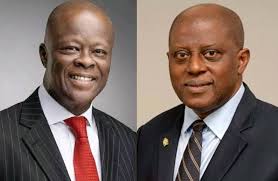
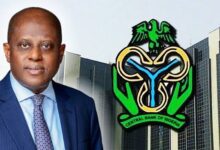
The Governor of the Central Bank of Nigeria (CBN), Olayemi Cardoso, while speaking recently, revealed that foreign capital inflows reached US$20.98 billion in the first ten months of 2025, a 70% increase over total inflows for 2024 and a 428% surge compared to the US$3.9 billion recorded in 2023, reflecting a clear resurgence in investor confidence.
The current disinflation and growth of the nation’s economy could be largely attributed to the efforts made by the Monetary Policy Committee (MPC) of the CBN in sustaining monetary policy tightening, stabilising exchange rate, increasing capital inflows, and surplus current account balance.
Through the committee’s efforts, headline inflation has decelerated (year-on-year) in October 2025, for the 7th consecutive month, supported by the relative stability in the price of Premium Motor Spirit (PMS) and improved food supply, across the country.
THE ECONOMIC REFORMS SNAGS
Despite the potency of these reforms, Nigerians are apathetic, not fully convinced about the growth. According to them, the positive growth as reported by the National Bureau of Statistics (NBS), CBN, International Monetary Fund (IMF), and World Bank, is yet to have positive impact on their lives.
For instance, a data from the World Bank shows a significant rise in poverty in Nigeria, with an estimated 139 million people living below poverty line as of October 2025.
The global bank reported that despite the recent reforms by the current administration, poverty remains widespread, with food inflation disproportionately affecting poor households who spend up to 70%of their income on food.
The data also revealed that state capacity remains weak in many regions, with limited delivery and widespread insecurity. Again, the NBS just reported of the nation’s rising public debt stock, hitting ₦152.39 trillion (US$99.65 billion) in Q2 2025 from ₦149.38trillion (US$97.23billion) in Q1 2025, indicating a growth rate of 2.01% on a quarter-on-quarter basis.
According to the report, total external debt stood at ₦71.84trillion (US$46.98 billion) in Q2 2025, while total domestic debt was₦80.55trillion (US$52.67 billion).
The report also revealed that the share of external debt (in naira value) total public debt was 47.14% in Q2 2025, while the share of domestic debt (innaira value) to total public debt was 52.86%. Experts say while the reforms are beginning to yield positive results, there is also the need to work for the collective prosperity of all Nigerians.
Speaking to TheFact Magazine, an Economist, Simon Galadima said although the reforms are beginning to yield positive results, Nigerians are yet to feel the impact in their lives. So, there is still a disconnect.
Also, an economic analyst, Yusha’u Aliyu, told this paper that the nation’s economy is now well positioned. However, not in terms of collective prosperity when looking at other indexes like poverty and unemployment.