

The Federal Government Nigeria has explained that the ₦152 trillion public debt figure was largely the result of transparency and exchange rate correction, not excessive new borrowing.

This is just as it anticipates the nation’s economy to grow by 4.68%, inflation average 16.5%, and exchange rate stabilise around ₦1,400/$ in 2026.
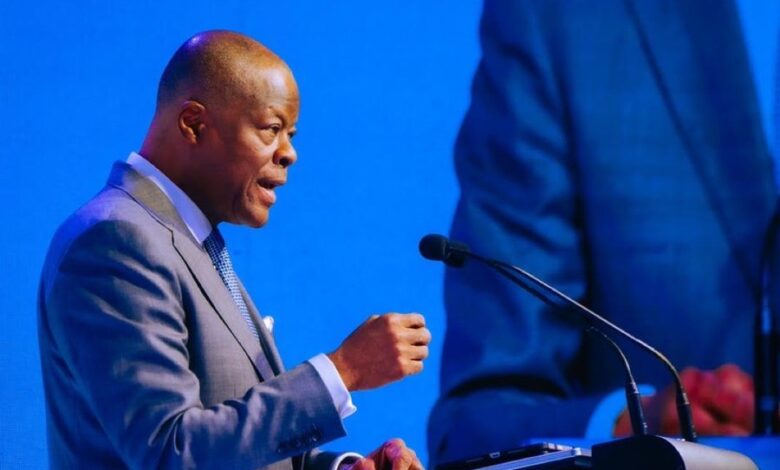
Minister of Finance and Coordinating Minister of the Economy, Mr Wale Edun, gave this explanation while speaking at the launch of the Nigerian Economic Summit Group (NESG) 2026 Macroeconomic Outlook Report in Lagos.
According to him, about ₦30 trillion reflects previously unrecognised Ways and Means advances now formally recorded, and nearly ₦49 trillion resulted from revaluation of foreign debt following FX reforms. Noting that Nigeria’s debt-to-GDP ratio declined to 36.1%, one of the lowest in Africa and well below the global average.
While presenting evidence of economic improvement, Mr Edun said inflation declined from 33.18% in 2024 to 14.45% by November 2025, GDP growth averaged 3.78% by Q3 2025, with 27 sectors expanding, External reserves rose to US$45.5 billion Exchange rate stabilised below ₦1,500/$, Trade surplus reached ₦19.33 trillion in the first nine months of 2025, and NGX market capitalisation increased by nearly 60% year-on-year.
He mentioned that despite the revenue pressures, especially from oil and gas, the government maintained a fiscal deficit of about 3.4% of GDP, improved non-oil revenue performance, strengthened fiscal federalism by increasing allocations to states, and achieved 84% capital budget execution for 2024 projects during the transition period.
According to the Minister, the 2026 Budget of Consolidation, Renewed Resilience, and Shared Prosperity presented by President Tinubu includes: ₦58.18 trillion total expenditure ₦26 trillion in capital spending (44% of the budget), and a deficit of about 4% of GDP, explicitly linked to Nigeria’s development needs.
He highlighted the structural reforms designed to improve efficiency and protect the vulnerable to include: Full digitalisation of government revenue collection, Treasury transparency and central billing reforms, Elimination of opaque deductions and leakages, and Implementation of a pro-poor tax law that exempts essential food items and small businesses while broadening the tax base.