Experts, Survivors Advocate Political Will To Eliminate Leprosy, Elephantiasis, Others
By Alice Etuka, Abuja

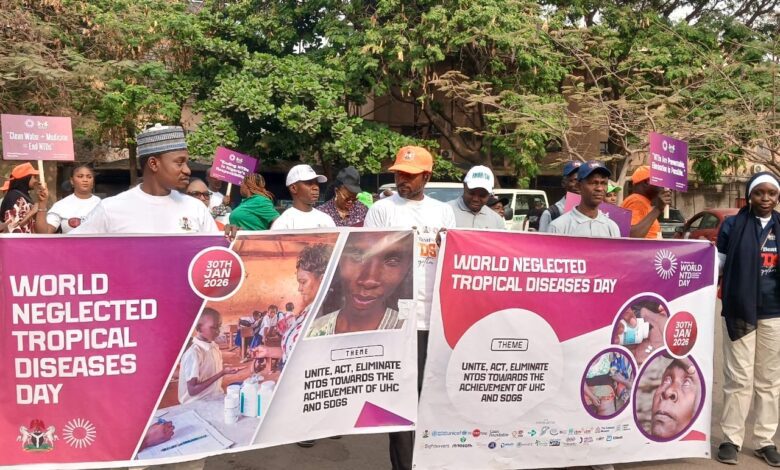

Stakeholders in the health sector and survivors of Neglected Tropical Diseases (NTDs) like leprosy and elephantiasis have called on the Federal Government to demonstrate strong political will towards the elimination of these diseases from Nigeria.
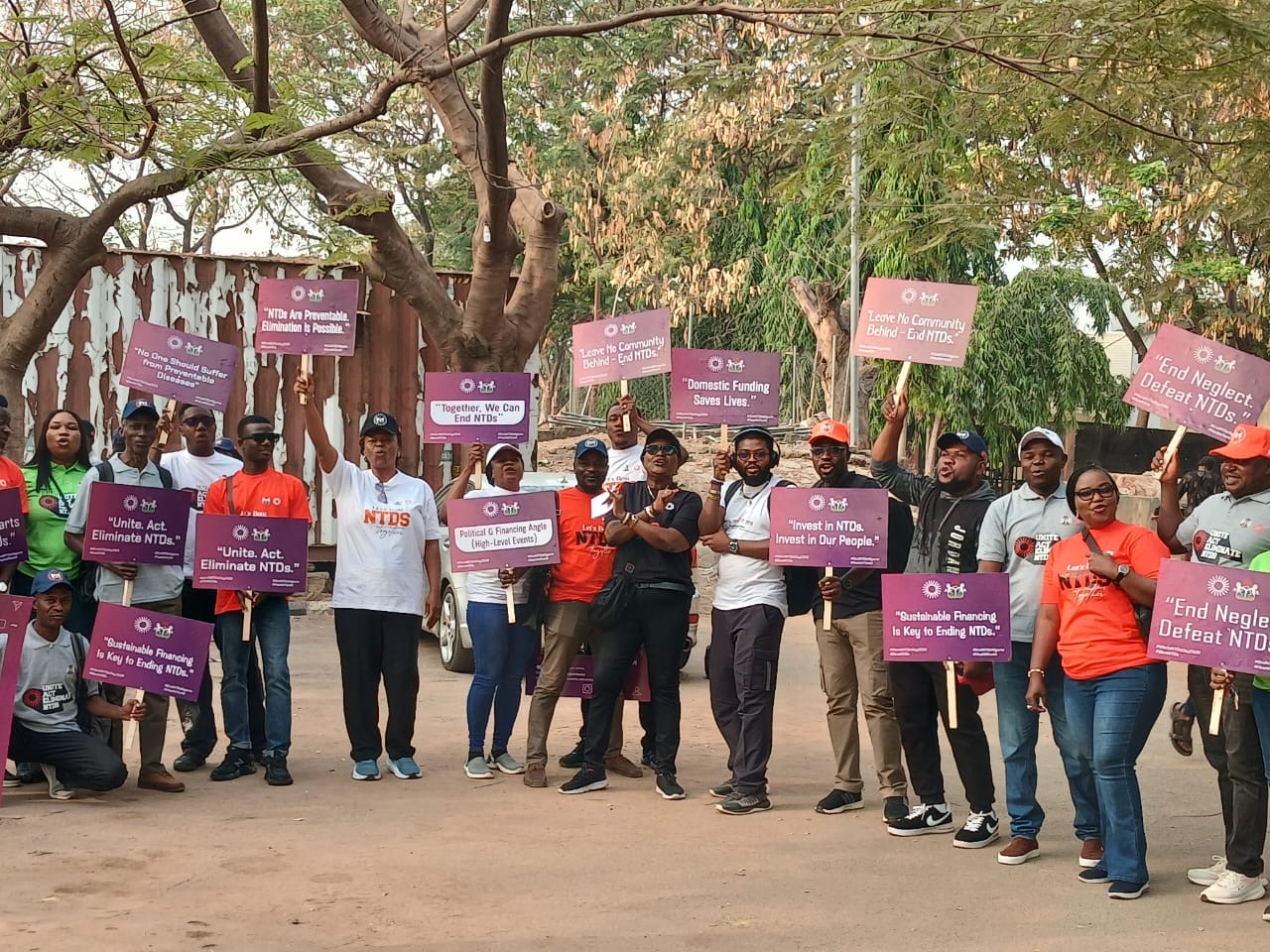
Speaking to Journalists at the sideline of a walk to mark the 2026 World NTDs Day in Abuja on Friday, the National Lymphatic Filariasis (LF) Program Manager, Federal Ministry of Health and Social Welfare, Okoye Chinwe stated that people must unite, to act and eliminate NTDs.
“It is neglected and when people look at it as neglected, they don’t see it as important. Let’s come together to raise awareness about Neglected Tropical Diseases (NTDs) and show our support for those affected”, she said.
Okoye continued: “So what we want people to understand is because it’s neglected, it is not neglected. This is something that can be inside your body and it will be scattering and destroying a lot of cells in the body and you won’t know. So we want people to be aware.That’s what we want everybody to know, that NTD is dangerous”.
Lymphatic Filariasis is something that will be in your body for like 10 years, 5 years, you won’t know. And it will be destroying the cells.
She explained that Lymphatic Filariasis, caused by Wuchereria bancrofti, could be in a person’s body for 5-10 years without visible symptoms the vector is the mosquito that bites me and you, when this infected mosquito bites you, that is infected, it will bite another person and infect that person. You know what mosquito is doing in everyday Nigeria.
She said about 119 million people in Nigeria which represents 50% globally were living with NTDs.
The Project Manager however, cautioned that early detection and treatment was key as delay could mar a patient’s life with permanent disability.
On his part, the Head of Monitoring and Evaluation unit, Neglected Tropical Diseases Control Program, Gambo Yakubu lamented that (NTDs) were silently killing people because they were not receiving the required attention.
Yakubu disclosed that lymphatic filariasis, commonly known as elephantiasis was endemic in 583 out of the 774 local governments in Nigeria.
“Onchocerciasis, that is commonly known as river blindness, about 480 something LGAs are endemic. Then in terms of cystosomiasis, we have about 583 local governments that are also endemic. And then in terms of salt and vitamins, we have about 424 local governments in the country that are endemic.
“Then the last but not the least is trachoma, we have 133 local governments in the country that are endemic”, he said.
Liaison Officer of Carter Center, Dr. Sarah Pantuvo said “guided by this year’s theme: Unite, Act, and Eliminate” is calling for a shared responsibility of all partners, the members of the community, the health workers, and our donor agencies.
Pantuvo added that, “we’re all supposed to come together and put in decisive action towards the elimination of NTDs. There should be sustained funding and political will”.
She explained that each of the partners have responsibilities towards the cause of NTD elimination and the government should play their part:
“Some of us are implementing partners, and then we also have the donors. Like the Carter Center, where I work for, we have put in funding, we have trained workers and we have also strengthened the health system.
“So far in Nigeria, the Carter Center are working in 10 states and it is in the Carter Center states that we’ve eliminated Onchocerciasis and LF. Plateau and Nasarawa states are no longer endemic of Onchocerciasis and LF. And those are the two states that have achieved this feat in the country”, she said.
Meanwhile, President of the International Association for Integration, Dignity and Economic Advancement (IDEA) Nigeria and a leprosy survivor, Mr. Peter Iorkighir appealed to the government to take ownership of the fight against NTDs and also expedite action for the timely delivery of their drugs:
“As I’m talking to you now for the past two years, we’re having a challenge of shortage of NTD drugs.
“These drugs are meant for leprosy and for us to get it in the country, for the past two years, it’s fluctuating. They will tell us that the NAFDAC regulations are making it difficult for us to get the drugs on time. And this is really giving us a setback, because if we are being treated early, we will not end up having a disability.
“Like me, if it happens that I did not treat it at this stage, my hands will be chopped off. And if anybody that sees you like that, we know that you are someone with leprosy and then discriminating against you straight.
“The federal government should join hands with those partners so that they will be able to lead this fight to the grassroots, because somebody coming from outside will not do almost everything to your people. So if there is a budget for us to find cases early and treat them, and also the issue of these drugs, let them discuss with NAFDAC so that we will be getting drugs on time”, he said.