Special Report: Telecom Subscribers Lament Poor Network Amid 50% Tariff Increase
By Stella Enenche, Abuja


Drop calls, delayed delivery of messages, slow internet, among other glitches are some of the recurrent decimals that characterise the telcom subscriber-base equation in the country.
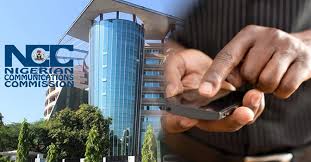
The afore-stated challenges are being experienced in the face of the recent approval for a 50% sharp increase on voice, data, and SMS services by the Nigerian Communications Commission (NCC) – the independent agency saddled with the responsibility of regulating the telecommunications sector.
NCC also promote competition, protect consumer rights, manage spectrum resources, and foster the development of a secure, accessible, and high-quality communications network across Nigeria.
Subscribers in the busy city centres, as well as rural communities, contend with these aberrations daily, with consequential effects on their socio-economic and other realities. It suffices to say that, while the development serves as a disincentive to the millions of subscribers, it grows the profit margins of service providers.
This is happening against the backdrop of the reality that Nigeria is a country with one of Africa’s largest telecom markets. What a sharp contrast the situation represents.
Across Nigeria, network users describe a similar pattern of challenges. Some minor annoyances, others disruptive enough to affect livelihoods.The most common complaints include: Frequent call drops and call failures, poor voice quality such as echo and one-way audio ,slow internet speeds, even on 4G networks unstable network coverage and fluctuating signal strength,congestion during peak hours, especially evenings and weekends.
Delayed SMS delivery, failed USSD codes and disrupted mobile banking, Poor customer service and slow complaint resolution, Weak service in rural areas, forcing residents to travel for connectivity
For small businesses, students and remote workers, these challenges go beyond inconvenience.
All these translate to missed opportunities, delayed transactions and reduced productivity.
An entrepreneur, Douye Dickson said he almost lost his wife over inability to make payment at a hospital due to poor network.
“I almost lost my wife last year because of a poor network. We couldn’t make a deposit at the hospital,not because I didn’t have money but because the network was bad that day. Hospital management refused treatment because I couldn’t make a transfer via my phone. It was a major surgery. Thank God for his mercies, my brother in the United States of America had to send money directly to the hospital account. If anything had happened to my wife what would have been my fate?”.
For Miss Maryanne Ike,” I have both Airtel and Glo but they are both frustrating me. Few weeks back I couldn’t make calls nor use the internet on my Glo line while the Airtel I could only call but can’t use the internet. It was not funny for me at that period because I lost some money. Most of my clients cancelled their orders because they couldn’t communicate with me…… Thankfully now the Airtel is back but nothing has changed on the other line. Am thinking of discarding it or will find time and go to Glo office”.
A University undergraduate, Pearl Adeleye said,” I think the network problems are general. Every Nigerian is encountering it in one way or the other. Mine majorly is drop calls. And the most annoying thing is that even with the increase in tariff price and all, it is still the same old story.
“The commission in charge of network providers is trying but they need to do more. It is not just to increase tariff it should reflect in the quality of service provided”.
Lifu Charity who works in the private sector said, ” Personally, presently my network has improved but it was crazy last year. I almost lost my job. Was on leave and I decided to go spend some time with my mother-in-law in the village. Unfortunately something happened in my office and my presence was required. My colleagues tried reaching me on the phone but to no avail because the network in my village is poor. It comes and goes. It behaves like “Abiku”,lol
Luckily one of my colleagues called my husband and he had to write a letter, went to the park and gave to one of the long distance drivers who ply my village route and that was how my trip was cut short,” she said
Industry experts and operators point to a combination of infrastructure gaps, economic pressures and operational difficulties that continue to weigh down service quality.
Overstretched Network Infrastructure
One major factor is congestion. Nigeria’s telecom subscriber base keeps expanding, but network capacity in many areas has not grown at the same pace. In densely populated communities, too many users are often connected to the same base station at once.
The result is predictable: calls fail, data slows down and service becomes unstable.
Power Crisis and the High Cost of Keeping Towers Alive
Telecom networks depend heavily on constant electricity to run base stations and transmission equipment. But with Nigeria’s unreliable public power supply, operators rely on diesel generators and alternative energy systems.
This makes network operations expensive and vulnerable. When diesel supply is disrupted or power equipment fails, network performance suffers.
Fibre Cuts and Weak Backbone Connectivity
Mobile data service depends on fibre optic cables that carry traffic between network sites. When fibre is damaged whether by road construction, vandalism or accidental cuts entire communities can experience outages, slow speeds or poor call quality.
In some regions, insecurity has made it difficult for operators to build, protect and maintain infrastructure. Vandalism and theft of telecom equipment remain a recurring challenge, while access to certain sites is restricted due to security threats.
Telecom operators also face numerous taxes and charges at federal, state and local levels, including Right of Way fees and other levies. Industry players argue that this financial burden reduces what can be invested in expansion and upgrades.
Telecom infrastructure is largely imported, meaning operators depend on foreign exchange for equipment purchases and upgrades. With currency volatility and rising costs, network expansion has become more expensive.
While subscribers demand better service, network providers insist they are operating in a tough environment.Rising energy costs and dependence on diesel FX-driven increase in equipment costs
Infrastructure vandalism and theft Fibre cuts and damage from construction projects.
Multiple taxation and regulatory charges, Rapid growth in data demand without matching infrastructure expansion Low commercial incentive in rural areas where returns are smaller.
Even as the operators expand coverage, the rising demand for data-heavy services such as video calls, streaming, online banking and remote work—continues to put pressure on existing infrastructure.
The recent 50 percent tariff increase has become a major flashpoint in the telecom debate.Operators argue that the hike was necessary due to inflation, energy costs and the rising price of network equipment. They say the adjustment will help sustain operations and fund upgrades.
But for consumers, the timing is hard to accept. Many believe service quality has not improved enough to justify higher charges. The concern is simple: if subscribers are being asked to pay more, the network must deliver better.
Consumer advocates insist that tariff increases should come with clear performance targets, timelines and accountability measures, not just promises.
Improving network quality will require a coordinated approach involving operators, government and regulators.
The Nigerian Communications Commission (NCC) is responsible for regulating the telecom sector, setting quality standards, monitoring operators and protecting consumers. Policy efforts exist, but enforcement remains uneven.
The Commission has introduced quality-of-service frameworks, licensed Infrastructure Companies, and advocated the designation of telecom assets as Critical National Infrastructure. However, protection and compliance vary across states, and coordination among agencies is often weak. As a result, well-intended policies do not always translate into real improvements on the ground.
However, many Nigerians believe enforcement needs to be more visible and stronger especially now that telecom costs have risen.
Subscribers want stricter penalties for poor service,more transparent performance reporting on operators, clearer consumer compensation mechanisms and assurance that tariff increases translate to service upgrades
In the court of public opinion, the NCC’s efforts are acknowledged, but expectations are rising. Consumers want to feel the impact of regulation in their daily experience through better service, quicker resolutions and accountability.
Poor mobile network service is no longer just a telecom complaint. It is a national development challenge affecting: digital banking and financial inclusion
education and e-learning business operations and productivity emergency communication and security government digital services
As Nigeria becomes more digitally dependent, the demand for reliable connectivity will only increase.
With higher tariffs now in place, subscribers insist the next chapter must be defined by improvements not excuses. For millions of Nigerians, the message is clear: the network must work, and it must work better.