

The Minister of State for Petroleum Resources (Oil), Senator Heineken Lokpobiri, has underscored the importance of local content to achieving sustainable growth of the nation’s oil and gas industry.

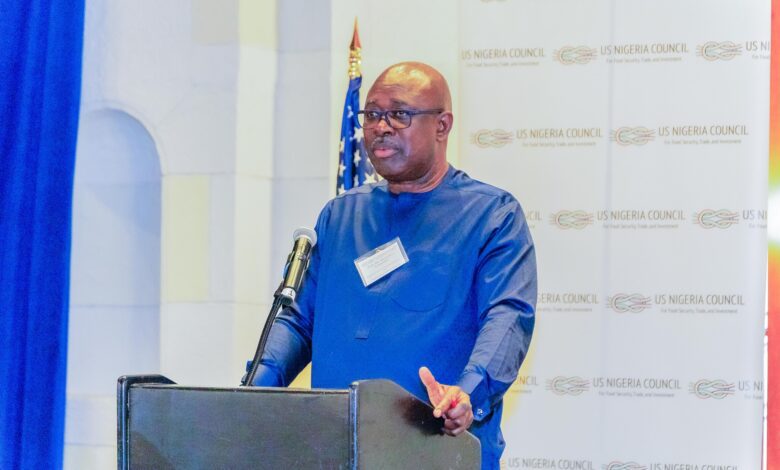
Senator Lokpobiri spoke on Monday at the Pre-Conference Opening at the 2026 edition of the Nigeria International Energy Summit (NIES) holding in Abuja, with the theme: “Energy for Peace and Prosperity: Securing Our Shared Future.”
TheFact Daily reports that the strategic event brought together oil and gas stakeholders from within and across the globe, including leaders, policy makers, investors to brainstorm and chat a way forward for the Nigerian oil and gas industry.
Speaking, the Minister tasked the oil and gas stakeholders to work towards a globally competitive oil and gas production costs.
He stated that while the Nigerian Oil and Gas Industry Content Development (NOGICD) Act was enacted in 2010 with the intention of building indigenous capacity, its misapplication over the years had contributed to high project costs and limited capacity growth among local companies.
Lokpobiri pointed out that the costs of oil and gas projects in Nigeria, is higher than the costs of similar projects in other countries, which according to him was impeding the growth of the industry.
However, he said most of these issues have been addressed by the current administration of President Bola Tinubu through the Executive Orders.
The Minister mentioned that there are provisions to support local companies with financing, and a couple of companies have actually benefited from those finances. Unfortunately, he said most of those companies didn’t actually grow in any capacity. What they did was to take the money and finance their lifestyles.
“And that is the reason why the Minister is Chairman of the Government Council. So that we can bring real strategic leadership to the application of living standards. But the good news is that all these issues are no longer there,” he said.
While stating that the country is big enough for both Engineering, Procurement and Construction (EPC) companies and the local companies to cooperate, Lokpobiri said that the local companies and international companies could co-exist and create the value and develop the capacity that is needed locally.
Also speaking, the Minister of State for Petroleum Resources (Gas), Rt. Hon. Ekperikpe Ekpo, affirmed that gas represents Nigeria’s most immediate, scalable and inclusive pathway to economic diversification, industrial growth, and shared prosperity.
However, he noted that unlocking this potential requires more than abundant reserves, infrastructure development, or policy declarations.
“It requires a deliberate and strategic shift in how we conceive, design, and implement local content across the gas value chain,” he submitted.
Expo, who was represented by the Permanent Secretary, Ministry of Petroleum Resources, Mrs Patience Oyekunle, said: “For Nigeria, gas remains the cornerstone of our Energy Transition Plan and our broader industrial agenda.
“From power generation and clean cooking, to fertilisers, petrochemicals, methanol, and compressed natural gas for transportation, the gas value chain offers unparalleled opportunities for job creation, industrial clustering, and regional integration.
“These opportunities, however, can only be sustained if local companies possess the requisite skills, technology, financing, and governance standards to compete at scale,” he said.
Stating that performance-driven local content in the gas sector demands a new compact, Ekpo said the government must continue to provide clear, stable, and coordinated policy signals that reward capability development and long-term investment.
“Industry operators must embed local capacity development into project design, not as an afterthought, but as a core value driver. Financial institutions must innovate to de-risk gas projects for indigenous firms. And our training and research institutions must align skills development with the technical, digital, and operational demands of a modern gas industry.
“If we get this right, local content becomes a catalyst for the emergence of African industrial powerhouses—companies capable of serving domestic gas markets, competing effectively in regional projects, and exporting services, skills, and expertise beyond the continent. This is how gas becomes not only a transition fuel, but a true transformation fuel,” he added.
On her part, the Permanent Secretary, Ministry of Petroleum Resources, Mrs Patience Oyekunle, said that true local content is not defined by percentages on paper, but measured by the depth of domestic capability, the sophistication of local supply chains, the quality of jobs created, and the ability of Nigerian and African firms to compete first regionally, and ultimately globally.
Represented by the Director, Midstream and Downstream, Ministry of Petroleum Resources, Mrs Irene Ikemba, the Permanent Secretary stressed that if Nigeria gets local content right, beyond compliance, it would unlock a powerful pathway to inclusive and sustainable prosperity.
“We will build industries that outlive oil fields, create jobs and build skill and capabilities that outlast projects, and sustainablydeliver energy that truly supports peace and prosperity across our continent,” he added.