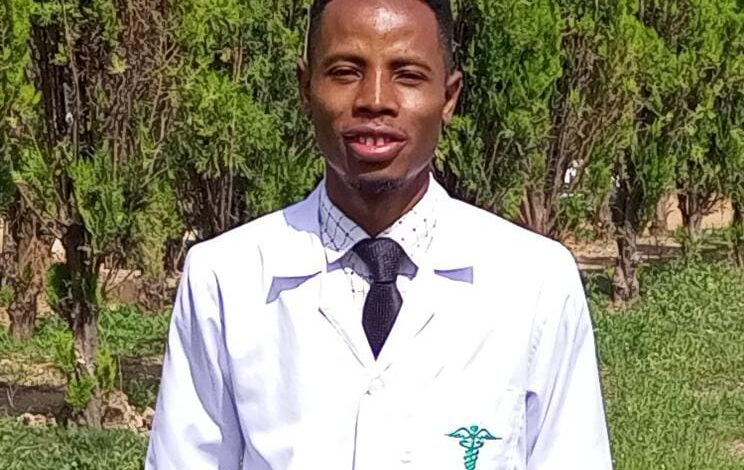


Nigeria was thrown into mourning when a young, vibrant upcoming singer, named Ifunanya Nwangene, died as a result of a snake bite. But more painful was the fact that she visited health facilities but couldn’t receive help timely enough to save her life. According to her brother the deceased sought medical help immediately after the bite but died due to the hospital’s negligence. One of the hospitals she visited, Federal Medical Center (FMC), Abuja, however issued a press statement explaining that upon her arrival, the medical staff provided immediate treatment including intravenous fluids, intranasal oxygen and the administration of polyvalent snake antivenom. Since then, the Internet has been agog with different suggestions. In this Exclusive interview with TheFact Daily, Senior Registrar, Department of Family Health, Jos University Teaching Hospital (JUTH), Dr. Amodu David Adejo, dispelled the myths flying around and gave the standard medically advisable first aid treatment. He talked about how things would have been done differently and hopefully the outcome would have been pleasant and not death. Excerpts:

TheFact Daily: Good day sir, please can we meet you?
Dr. Amodu: My name is Dr. Amodu David Adejo, Senior Registrar, Department of Family Health, Jos University Teaching Hospital (JUTH), Plateau State.
TheFact Daily: What is the first thing a person should do in the case of a snake bite?
Dr. Amodu: The first thing one should do if they get bitten is seek medical advice immediately. One, don’t try to go after the snake, don’t try to tie where you were bitten with any rope or anything, don’t try to suck out the poison, and quickly rush to a health center. That is the best thing you can do at that time. And that’s important because there’s a time duration for the spread of snake venoms.
TheFact Daily: What is the time duration to access help before it becomes fatal?
Dr. Amodu: It all depends on the type of snake and the amount of snake venom in the system. For example, if you have a snake bite when that snake just had a meal, the amount of snake venom left in its system is going to be very small. If that snake happens to bite a person, the snake venom that will be released into the person’s system will be very small. Therefore, the signs of the snake venom in the person’s body is going to be very limited and the effects will be limited. But if the snake somehow happened to release a large volume of venom into the body system, the effect is going to take place in a short while and it’s going to be more devastating. It also depends on the type of snake, because there are some snakes that even though they bite, they don’t have venoms. Their venoms are not lethal, they don’t cause any problem. It’s just pain around the site of the bite, like some of the green snakes that we have around, they don’t cause any problem. But there are some that, with just a little snake venom, like the cobra, the puff adder, just a little bite and it causes a lot of problems for the person.
TheFact Daily: It is popular first aid practice to tie above the snake bite so the venom does not spread to other parts of the body but you are advising otherwise, why?
Dr. Amodu: That information came from belief and not from a medical standpoint and for a lot of us, that’s what we’re taught at home, that’s what we saw in movies, that’s also what some traditional healers do. But medically speaking, tying the sites of a snake bite or what we call applying a tourniquet, does more harm than good for the patient. And that’s because once you tie that region, there’s what we call ischemia that is something like stopping blood and oxygen from reaching a part of the body. Then there are some toxins again that are going to be formed in that part where you tie it. when it is now time to release that tourniquet, or untie that limb, it will release the toxins that have been formed in that region into the body system all at once. This action can cause an effect that can be fatal and lead to death. So, you don’t tie at all. So, if a limb is tied now, and for people that are coming from far, let’s say they need to travel six to seven hours. Some people even need to travel a day before they get to a medical center. And now once you tie a limb or any part of the body beyond a certain time whether it’s the hand or the leg, that limb might eventually die off. Sometimes, some people who have had that, once we see that in the hospital, someone has tourniquet or tied the limb for a long time, six hours, seven hours, we don’t even release it. What we just go and do is just amputate that limb. Because the moment you release it, you are releasing toxins into the system and that person might not make it after that is done.
TheFact Daily: Some people have suggested chewing of onions and washing the snake bite site with kerosene before seeking for medical help, they said it neutralised the snake venom. What is your take on that?
Dr. Amodu: We need to understand how a snake venom works so that we now understand why those things cannot work. Now, the snake venom is in the blood system. Some go directly to the brain and affect the brain, like the case of the cobra. Now, the cobra is neurotoxic, that means it affects the brain. And then it can also be cardiotoxic, that means it can affect the heart. So, from the blood system, it goes to the brain. This causes a lot of problems in the brain, and also causes a lot of problems in the heart. Some go to the muscles and cause a reaction like digesting the muscles. Some go to the blood system and then the person will just keep bleeding uncontrollably. They can literally bleed out to death. So, this venom is in the snake system, it’s in the blood system and if someone chews onions, it will not work. There’s no property in onions that can help. Washing with kerosene will further worsen it because kerosene can cause a reaction in the site of the bite. And I told you that this bite goes into the bloodstream. So, are you putting kerosene so that it will go into your blood system? That means, imagine someone having kerosene in his blood, that’s almost suicide, it does not work. Snake venom is something that circulates within a few minutes to hours. It circulates around the body and kerosene is just being applied at the site, it will not work. Kerosene will only cause more harm. Kerosene, is a hydrocarbon once taken into the system, it can cause a lot of problems.
TheFact Daily: Recently, a lady was bitten by a snake, according to her brother, she tied above the snake bite and went to three different health facilities but two told her they were out of anti-snake venom and referred her to Federal Medical Center (FMC) Abuja. FMC Abuja however, released a press statement saying that at the time she came, there was nothing they could have done. Was it really true that there was nothing they could have done, or they may not have had the anti-snake venom too?
Dr. Amodu: I don’t have the details of what transpired but what she should have done differently is one, not to tourniquet, that part of the limb. That’s not to tie that part of the limb that she was affected in. We don’t tourniquet,. There’s a special way we just stabilize the limb that has been affected but you have to be trained to be able to do that. So, the first thing is don’t tie it, she tied it. Then, you know, I mentioned earlier also that there are different types of snakes with different effects of their venom. And in some, their effect is faster than others. And the cobra, for which I saw on social media that this lady was bitten by, is very venomous, very lethal and the effect can be so rapid. So, once there’s a snake bite, it is advisable to go to a big health facility. For example, I’m in Jos, if you have a snake bite, you should go to the big hospitals. Go to Jos University Teaching Hospital (JUTH), for example, go to Bingham University Teaching Hospital. For those people in the rural areas in Plateau State, the Jos University Teaching Hospital has an outstation in Zamko, that is a specialist center for snake bites, but when you go to a smaller facility, they might end up referring to a big center and in that process, the snake venom is circulating around the body.Now it’s possible when the person gets to the first hospital, the person is fine and healthy so, you feel like the person is still okay but no, the venom is gradually causing damage. And from what was reported on social media, by the time she got to the hospital and from the statement from the hospital, the envenomation, that’s like the effect of the snake bite on her system had really, really gone far. So, at that point, there is really very little that you can do. Like for her, I think the statement came out that she was taken to the ICU( intensive care unit) . That’s like top-notch care. And then sometimes, when the venom have affected the body system so much, even with the anti-snake venom, there’s really nothing that can be done. So quick access to care is very important.
TheFact Daily: Why is it that something as simple as an anti-venom is not available in critical health facilities? Is there a shortage of anti-venoms in the country?
Dr. Amodu: The process of acquiring, or even processing anti-snake venoms is very complex. Some of those anti-snake venoms that you have are gotten from actual snake venoms. So, sometimes you need to rear the snakes, harvest the anti-snake venom, and then use genetic mapping and other things to develop the anti-snake venom. So, you can already see processing the anti-snake venom is already a difficult one. From my own personal experiences, the anti-snake venom is expensive. They are expensive because of some of these processes that I mentioned to you and then most times, some of them are not even produced in the country so, the cost of importation would also be factored in. Again the amount of snake bites reported per year are more than the available anti snake venoms. let me also say that, if you have three doses of anti-snake venom for example and then someone has a snake bite, it is possible that one person can require all the three doses of the anti-snake venom, depending on the level of envenomation. So, you cannot just say, oh, because you have five snake bites, you need five anti-snake venoms, it doesn’t work that way. You need to have more anti-snake venom, because a patient might require more of those anti-snake venom. Most times these anti-snake venoms need to be kept under refrigeration 24 hours so that they can be effective. So storage is a problem . So, all that affects the availability of the anti-snake venoms. Then ultimately, we need a political will also, so that where these anti-snake venoms are expensive, there should be a form of a subsidy or something like that.
TheFact Daily: Someone said something about an activated charcoal, that if any of those hospitals that didn’t have anti-snake venom to administer to the lady had activated charcoal, it would have helped. What is your take on that?
Dr. Amodu: Oh, definitely not. We don’t use activated charcoal for snake bites. They are treating two different things. Activated charcoal is used for poisoning, maybe someone swallowed kerosene or some other harmful substance, activated charcoal is used. We don’t use activated charcoal for snake bites.
TheFact Daily: So, the place of traditional healers, because a lot of people have said, the time she used to move from one hospital to another, if she had gone to these traditional healers, she would have gotten the necessary help. Some people shared their experiences when they went to traditional healers, the snake bite site was tied, then it was cut open with a razor and were given some herbs to drink and they got healed. So, what’s your take on the place of traditional healers? Have you interacted with some of them to see the way they’ve done their work, the things they use, and if it has efficacy, as people say?
Dr. Amodu: Let me talk about some of the processes that traditional healers use that we as medical practitioners are worried about. There are some types of snakes, like the carpet viper, common in Langtan, plateau state and some parts of Gombe state also, this specie of snake causes severe bleeding. Now, when traditional healers cut the areas where the patient was bitten, this can cause uncontrollable bleeding, even from a small pinprick, someone can bleed to death from that effect of the snake venom. So, you have someone who was beaten by a snake that causes him to bleed, and then you now have a traditional healer that is cutting that place, that will cause a massive bleeding that the person can loose his life. And then I mentioned earlier that some people can be beaten by a snake that will not release any venom into their system. So, if someone is beaten by a snake that does not release any venom into their system, of course, nothing will happen to them. They will just have pains around that area and then after some time, they’ll be okay. So, if that kind of person goes to a traditional healer, somebody will say, oh, maybe that is why he got well, not knowing that there was no envenomation in that place. And then sometimes the people will say, they’ll put a stone on the place where the person was bitten, and then the stone will suck out the snake venom. From what I’ve explained to you, this is not possible because the snake venom is in your blood system. So, scientifically speaking, we don’t see how that stone can go into the system or by whatever means and suck out that blood. And then in my own experience, I’ve seen a lot of patients that have come in with very bad snake bites that could have been treated easily, but they went to traditional healers’ houses and stayed there over time. And by the time they came, it was already too late because they’d already become septic. Infections have entered into their system, they have lost a lot of blood. So, apart from giving them anti-snake venom, you now have to start giving them blood and their body is already down because of the infection. So, even for them to mount up some form of resistance or for them to recover on time becomes a problem because their immunity is already down. Some of the things that contribute to delay in accessing the needed care or the appropriate care in snake bites is going to some of those traditional homes, and to some of those practices that they do. Like I’ve mentioned earlier, some snake bites might not be so serious because of the amount of snake venom that was released or sometimes even a dry bite, as we call it, where no snake venom was even released in the first place. That is why you see people have different experiences when they go to those traditional houses. And, you know, in our environment, if somebody goes to a traditional person’s house and passes on, nobody will say that. We might not get to hear about that one.
TheFact Daily: Now, there was a second health facility the lady went to, they loosened where she tied and fixed a drip on her. Is that supposed to be the Standard Procedure, they didn’t have anti-snake venoms and also didn’t refer her to a bigger facility immediately. Are they even supposed to fix drip for someone who was bitten by a snake?
Dr. Amodu: What people call drip is not just drip. Drips could be a lot of things. Even the anti-snake venom, when someone sees it, they will say it’s a drip, because that’s how we administer the anti-snake venom. There are different kinds of drips; some are antibiotics, multivitamins, analgesics or intravenous fluids etc, they could be a lot of things. I don’t really know what form of infusion they gave her there. But like I told you earlier, once there’s a tourniquet, it’s not good. And especially if that stayed over time. And for her, I don’t know how long it has stayed before she went to that particular hospital, but like I told you, in the first place, you should not even put a tourniquet at all.
TheFact Daily: There are a lot of suggestions on how to keep snakes at bay, which ones do you recommend? are they really repulsive to strong smells like sulfur, petrol, e.t.c?
Dr. Amodu: It all depends on the kind of snake that is prevalent where people are resident. I can speak about the common snakes we have here in Plateau State, which is the carpet viper, which is a brown short snake. What is done, especially in the rural areas, is that when you build a house, you create a gutter around that house, just like a drainage for water, but it’s actually for snakes. So, because the snake is so short, it cannot cross that gutter into the house. So, that is one protection. Then secondly, don’t keep your bed on the ground, make sure your bed raised on bed frame or a platform. Because that specie of snakes cannot climb, but actually some can climb, so, if you’re on an elevated platform, that protects you. For people in the rural and urban areas, we advise them not to keep their farm produce close to the house, because the snakes usually like to hide under where they have farm produce. For us that are in the city centers, places where we suspect that snakes can easily hide, the bushes should be cleared. Then, people that like keeping cartons, keeping things in their household for a long time, s storage you don’t open , it’s just there, that is not good, it can be a home for a snake over time. That can be a good hiding place for a snake in a city center, because it will just go into that store and just hide there. So, we need to keep our environments clean. Don’t keep things for long or store them unnecessarily for long. Once in a while, change their positions. And in areas where there are a lot of trees, a lot of grasses, just make sure that the grasses are not overgrown, make sure that your grasses are trimmed. And then, when there is a bite, don’t go after the snake, rush the person to the hospital first.
TheFact Daily: There are cases of snakes coming out of people’s Water Closets. What can be done to prevent such occurrences?
Dr. Amodu: Other countries have animal response units that take care of such, when you see a snake in your house, you call those people, those are professionals that come in, look for where the snake, and take care of it. I think it is time we have something like that in our country for snakes. We need to have response unit that you can call, people that have been trained in handling snakes. We need to have that. So, I feel as a nation, we should have a response unit to snakes when we see them in our environment.
TheFact Daily: Are there things that serve as repellent to snakes? People have suggested spraying substances with a heavy smell like petrol, camphor, sulphur in your toilets and around the house to keep them away, does it work?
Dr. Amodu: I was in a community where snake bite is highest in the state, they say they have different trees that they plant, different shrubs, herbs, plants that they put around their houses to protect them but yet, they still come down with those snake bites. So, that is to say that those things may not really help much. What I have seen work is environmental control. Keeping your environment clean, making sure bushes are cleared.
TheFact Daily: What’s your call to action for the government and citizens?
Dr. Amodu: Once there’s a snake bite, rush the person to the hospital, to a big facility like I’ve mentioned earlier. Individuals on their own can sponsor anti-snake bite programs, we have people that donated some doses of anti-snake venoms to hospitals here in Plateau State, so individuals can do that. People can come together and say this hospital in our area does not have anti-snake venom, let’s buy five doses and keep at an individual level so that just in case any of us is bitten by a snake, we can easily go there and assess it on an individual basis. Let’s keep our environment clean, and let’s spread the appropriate information, medical approved information that will help individuals. The government needs to make sure that the anti-snake venoms are subsidized. They are very expensive, very expensive in the sense that I know someone that after the whole process of treatment for the anti-snake venom, their bill was almost four hundred and something thousand naira, because they needed multiple doses of the anti snake venom. The government also needs to bring in more anti-snake venoms. Facilities should be equipped to be able to store those anti-snake venoms, there should be power, because some of them need to be kept at a particular temperature. So, the government needs to make sure that facilities have adequate storage properties for anti-snake venom. We can also have specialized training for health workers, people in the community regarding snakebite. When snakebite happens in the community, let’s have people that we have trained that can at least do the appropriate first aid for the person. It’s easy, it can be organized and the government can sponsor that kind of training and then retraining of medical staff, there are newer technologies, newer modalities of managing snakebite that are coming in. Health workers too can be retrained on more advanced management of those things. I must also commend the government too; we have snakebite treatment centers in strategic places. We have in Langtang in Plateau State, Kaltungo in Gombe State, that is good, but we need more of such.