Nigeria-UK Migration Pact Does Not Require Acceptance Of Foreign Nationals — Presidency
By Anne Osemekeh, Abuja


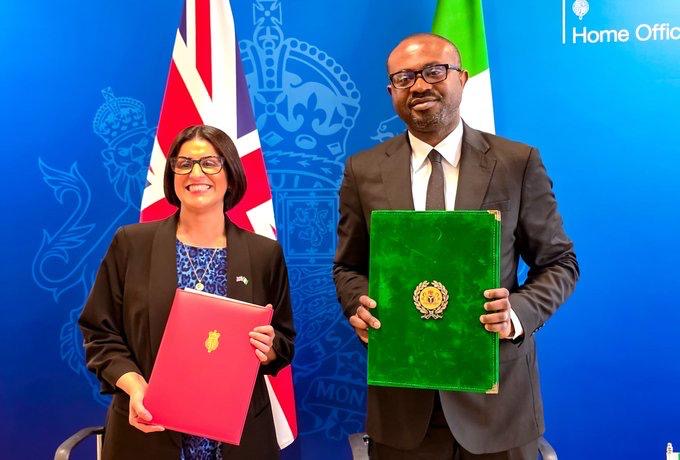
The Presidency has clarified that Nigeria’s migration partnership with the United Kingdom does not compel the country to accept foreign nationals, describing contrary claims as misinformation surrounding the recently signed Memorandum of Understanding (MoU) on immigration cooperation.

In a statement issued on March 21, 2026, Special Adviser to the President on Information and Strategy, Bayo Onanuga, said the agreement—signed during President Bola Ahmed Tinubu’s state visit to the United Kingdom—is designed to promote safe, regulated migration and strengthen bilateral efforts against irregular migration.
The clarification follows public debate and media reports interpreting the pact as obligating Nigeria to receive non-citizens. However, the Presidency said the 12-page document strictly provides for the return of verified nationals, adding that individuals repatriated under the agreement must undergo multiple layers of identification and verification, with provisions requiring the requesting country to bear the cost of returning any wrongly identified persons.
According to the statement, the MoU establishes a framework for cooperation between both countries in managing migration flows in line with domestic laws and international agreements, while ensuring that returnees are treated with dignity and respect, with full regard for their human rights and fundamental freedoms.
It added that both Nigeria and the UK are to work together to facilitate the return of their respective nationals who no longer have the legal right to remain in the other country, stressing that law enforcement agencies on both sides would act to safeguard the welfare of affected citizens and prevent migration-related conflicts.
The Presidency further noted that the agreement includes safeguards for migrants, such as allowing returnees to travel with their personal belongings and granting them time to arrange the transfer or disposal of their assets before departure.
It also highlighted provisions for appeals, stating that individuals facing repatriation may challenge such decisions under applicable domestic or international human rights laws, particularly in cases involving long-term residency or significant reintegration challenges.
On procedures, the statement explained that returns would be coordinated by the requesting country, with advance notice and proper documentation, including the use of valid passports or, where applicable, a UK Letter (UKL) supported by biometric or other credible identification.
It emphasised that the responsibility for issuing Nigerian travel documents rests solely with the Nigeria Immigration Service, noting that this underscores Nigeria’s continued control over its immigration processes.
The MoU also provides for reintegration support for returnees, including short-term assistance such as reception and accommodation, as well as longer-term support through education, vocational training, and access to entrepreneurship opportunities.
The agreement, similar to previous migration arrangements signed between both countries in 2012, 2017, and 2022, will run for an initial period of five years, subject to renewal by mutual consent.
The Presidency urged media organisations to seek clarification on complex policy issues to avoid misinforming the public.