
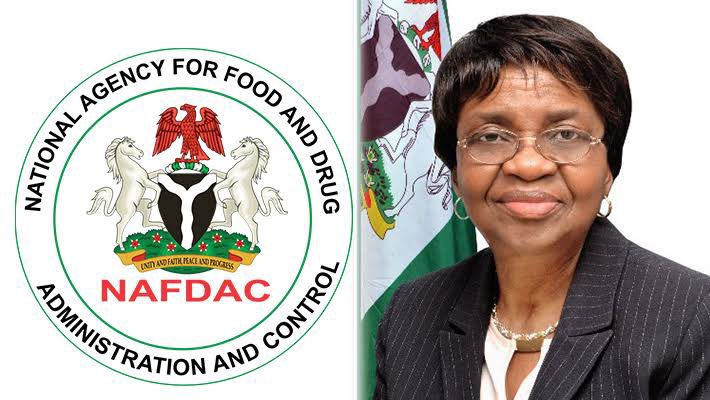


As Nigeria faces heightened cases of diet-related non-communicable diseases such as hypertension and stroke, the National Agency for Food and Drug Administration and Control (NAFDAC) has taken steps to achieve a 30% reduction in population sodium intake by 2030.

Resident Media Consultant to the agency, Sayo Akintola disclosed this in a statement on Tuesday.
According to Akintola, the Director General of NAFDAC, Prof. Mojisola Adeyeye while speaking at a stakeholders’ engagement on the draft NAFDAC Reduction of Sodium in Pre-Packaged Foods Regulations 2026, emphasized that regulators, researchers, public health advocates, and consumer organisations must work collaboratively to ensure implementation, monitoring and compliance.
Adeyeye stated that the World Health Organisation had continued to emphasize sodium reduction as one of the cost-effective strategies for improving population heath and preventing premature deaths from non-communicable diseases.
She maintained that the Reduction of Sodium in Pre-Packaged Foods Regulations 2026 was a key component of broader strategies to promote healthier diets and prevent non-communicable diseases, adding that these regulations aim to establish maximum sodium limits in selected categories of processed and pre-packaged foods, ensure clear and transparent labelling of sodium content, and encourage product reformulation by food manufacturers so that consumers can make healthier dietary choices.
The NAFDAC boss, however, pointed out that, regulations alone cannot achieve the desired impact without the active participation of all stakeholders, stressing that the food industry especially plays a central role in reformulating products to reduce sodium content while maintaining safety, quality, and consumer acceptability.
She added that the stakeholder engagement therefore provides an invaluable platform to present and clarify the key provisions of the proposed regulations, obtain constructive feedback from industry and other stakeholders and
Identify practical strategies for implementation.
On her part, the Director, Food Safety and Applied Nutrition (FSAN), Mrs Eva Edwards, corroborated the DG’s position as she stated that non-communicable diseases (NCDs) remain a major public health concern in Nigeria, with cardiovascular diseases accounting for a significant proportion of morbidity and mortality.
For adults, she disclosed that the World Health Organization recommends a daily sodium intake of less than 2 grams, equivalent to 5 grams of salt (< 1 teaspoon of salt daily).
She however, revealed that available data indicate that the average salt consumption in Nigeria was approximately 10 grams per day, about twice the WHO daily recommendation, adding that this excessive intake poses a serious risk to public health, particularly in the context of the increasing consumption of processed and ultra-processed foods, which are major contributors to dietary sodium intake.
“Pre-packaged foods constitute a substantial and growing proportion of daily dietary intake, especially in urban settings. While these foods provide convenience and accessibility, they also contribute significantly to excessive sodium consumption, driving the scourge of cardiovascular diseases. It is therefore imperative that deliberate and evidence-based measures are implemented to reduce sodium levels in these products”, she said.
While sodium is essential for normal physiological functions such as nerve transmission, fluid balance, and muscle function, she warned that the quantity required by the body was minimal, noting that current consumption levels far exceed physiological needs, thereby increasing the risk of hypertension, stroke, heart disease, and kidney-related conditions.
She further disclosed that evidence from the National Multi-sectoral Action Plan for the Prevention and Control of Non-Communicable Diseases (2019–2025) indicates that mean sodium intake in Nigeria ranges from approximately 2.85 g/day to 10 g/day – highlighting the urgent need for targeted regulatory and public health interventions.
“The National Multi-sectoral Action Plan for the Prevention and Control of Non-Communicable Diseases further identifies unhealthy diets as a major risk factor for non-communicable diseases and notes the ongoing dietary transition towards increased consumption of processed foods high in sodium, sugar, and trans fats”, she said.
Mrs Edwards stated that the Federal Ministry of Health and Social Welfare (FMoH&SW) initiated the development of the National Guidelines for Sodium Reduction, which provides specific sodium benchmarks for various food categories. She said this was aimed at promoting the reformulation of processed foods and encouraging the production of healthier options aligned with national health goals.
She emphasised that the draft NAFDAC Reduction of Sodium in Pre-Packaged Foods Regulations therefore incorporates a phased sodium reduction strategy, beginning with an initial 15% reduction target and progressing toward the national target which is aligned with the WHO global target of achieving a 30% reduction in population sodium intake by 2030.
According to the Director, the Sodium Reduction Regulations represent a strategic regulatory response to meet the national target and address the public health concern of high sodium intake, stressing that the objective is to guide the food industry towards gradual product reformulation and the promotion of healthier food environments, without compromising product quality or consumer acceptance, ultimately to protect the health of consumers.
Partners such as Network for Health Equity and Development (NHED), Resolve to Save Lives and Corporate Accountability and Public Participation Africa (CAPPA) who were present and supported the stakeholders’ engagement underscored the importance of reducing sodium intake as a means of preventing non-communicable diseases.