
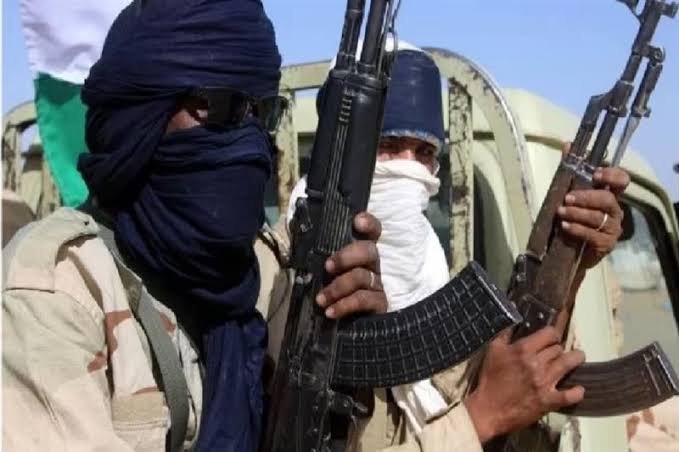


The latest report by Amnesty International Nigeria, revealed that about 1,100 people were abducted in three months -from January to April 2026.

According to the report, which was posted on its official X handle on Sunday, those abducted are frequently subjected to torture, starvation, amputation, rape, forced to witness or commit atrocities.
The report revealed that many of the communities affected by the abductions have for years also endured frequent attacks by gunmen, calling on President Bola Tinubu to urgently address the country’s horrifying spate of abductions targeting rural communities and internally displaced persons (IDP) in the northern part of the country.
Speaking on the development, Director Amnesty International Nigeria, Isa Sanusi, said: “Apart from killing people, gunmen are now on a rampage of abductions – largely for lucrative ransom. Some stay months at the mercy of gunmen in punishing situations.
“Estimates of the number of abductions by gunmen and armed groups across Nigeria vary and some of the commonly cited figures vastly understate the scale of the problem.”
Amnesty International narrated that on February 3, 2026, an armed group invaded Woro village in Kaiama local government area of Kwara State, killing 200 people and abducting 176 people. Disclosing that in the first week of this month, gunmen abducted 150 people during an attack on Kurfa Danya and Kurfan Magaji villages in the Bukkuyum local government area of Zamfara State.
It said the majority of the victims are women and children. On 19 March, Boko Haram fighters abducted over 100 people in an attack on displaced persons working in the Kumbul forest near Mafa, Borno State.
The Human Rights Organisation said on January 3, 2026, in Niger state, gunmen abducted 57 people during an attack on Kasuwan Daji community, located in the Borgu local government area.
It also revealed that on 3 March 2026, Boko Haram fighters attacked Ngoshe town in Gwoza local government area of Borno state and abducted more than 400 people – and laid siege on the town.
“On 22 March, 30 people were abducted by gunmen that attacked three churches in Kachia local government area of Kaduna state.
“On 30 March, 18 passengers in a commercial vehicle traveling from Abuja to Sokoto were abducted along Mayanci in a part of Zamfara state. On 19 February 2026, 92 people were abducted by an armed group in Zamfara state. A total of 42 people were abducted in the Anka local government area, and another 50 were separately abducted in Tsafe local government area,” it added.
Amnesty International said on 18 January 2026, gunmen carried out a mass abduction by attacking three churches at Kurmin Wali village in Kajuru local government area of Kaduna State during morning worship service. Revealing that at least 166 people were abducted but were later released.
The report said a resident of Woro community Kwara state told Amnesty International: “They didn’t just kill; they stole our life away. They abducted 176 people, including my second wife and my three daughters. One of them is only two years old. I have seen the video they posted on social media. I heard my wife’s voice. I saw my people. It has been almost two months now, and they are still in that forest.”
Isa Sanusi said: “In almost all cases of these abductions people were also killed, homes and shops looted and razed. In some cases, families must dispose of everything they have to pay ransom, while villages often crowdfund to rescue their people. Those who could not pay are sometimes either killed, disappeared or tortured more. What we are witnessing right now in the northern part of Nigeria is a crisis of abduction that increasingly endangers lives.”
The report said that “the possibility or fear of abduction is forcing thousands of children to abandon education, while underaged girls are having their education terminated and forced into marriage as a means of avoiding abduction at school. This is a devastating blow to years of efforts to boost enrollment in schools in the educationally disadvantaged parts of northern Nigeria.
“Some incidents of abductions in remote communities are rarely reported. The Nigerian authorities are grossly failing in their constitutional and international human rights obligations to protect lives.”
Isa Sanusi said: “This failure by the authorities to promote and ensure the security and safety of the population constitutes a serious breach of their human rights obligations, including under the Nigerian Constitution and the African Charter on Human and Peoples’ Rights to which Nigeria is a state party.”