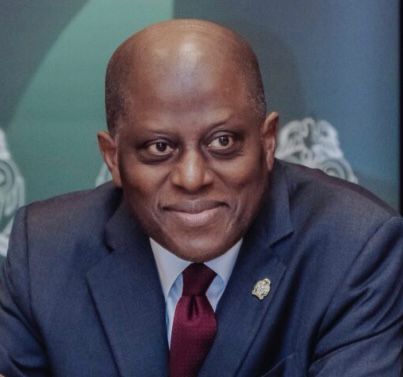


After eight years without an update, the Central Bank of Nigeria (CBN) on Friday, May 15, 2026, unveiled the 4th edition of its Foreign Exchange Manual, to reinforce and strengthen the nation’s FX market.

In 2018, when the CBN last updated the FX Manual, the crude oil was trading around $70 per barrel, and the Naira had not yet begun a dramatic slide that would reshape the nation’s economic conversation.
The Nigeria Foreign Exchange landscape has been transformed since the manual was last updated, from multiple exchange rate windows and chronic dollar shortages, to float of the naira, a surge in FX volatility, and pressure on businesses that depend on import financing.
Obviously, the old manual, which most market participants long complained about, no longer reflect the current market realities, thus necessitated the change.
As designed, the manual was intended to provide guidance, support and clarity as Nigeria enters a new phase of foreign exchange governance from June 1, 2026.
The CBN Governor, Mr. Olayemi Cardoso, while unveiling the manual in Abuja, said the document was not merely a regulatory update, but a foundational reset for how the nation governs its FX market.
According to him, strong monitoring frameworks built on consistency, fairness and accountability are critical to maintaining the credibility and stability of Nigeria’s foreign exchange market.
At the launch, Cardoso told the audience made up of bank managers and stakeholders that the bank’s regulatory system must continue to evolve in response to both global and domestic dynamics.
He noted that over the past decade, the global economy has become increasingly complex and uncertain, while the domestic economy has undergone structural adjustments, including efforts to diversify foreign exchange earnings and manage inflationary pressures.
These developments, according to him, have direct implications for investor confidence and market behaviour.
He urged public and private-sector stakeholders to demonstrate commitment and professionalism to ensure the effective implementation of the revised FX Manual.
Also speaking at the launch, the CBN Deputy Governor for Economic Policy, Dr. Muhammad Abdullahi, said the launch of the manual was born out of the need for a framework that reflects current market realities, reduces operational inefficiencies, and supports a more transparent, rules-based and market-oriented system.
Dr. Abdullahi said the manual was the culmination of a reform agenda the governor set in motion from day one of his assumption of office at the apex bank.
WHAT HAS CHANGED?
Two provisions stand out as significant departures from the previous framework: first is the full repatriation rights for foreign companies in the extractive industries-oil, gas, and mining. Under the new manual, such companies are granted 100% access to their proceeds, unhindered.
The second change is that the new FX manual provides an upward review of allowable advance payment for imports from 15% to 30%. This practically means that companies or businesses importing goods into Nigeria can now pay a larger portion upfront, easing a friction point that had made international suppliers hesitant to do business with Nigerian buyers.
Dr. Abdullahi framed the approach explicitly around commerce. “We approached this review through a strong ease-of-doing-business lens,” he said. “Several bottlenecks, ambiguities and duplicative requirements identified by stakeholders have now been addressed. Our goal is to reduce transaction friction, improve processing timelines and deepen market confidence.”
WHAT THE STAKEHOLDERS ARE SAYING
Also speaking at the manual launch, the body of banks managing directors, represented by Oliver Alawuba, the Chief Executive Officer (CEO) of the United Bank for Africa (UBA), credited the CBN for what he described as unusual deep consultation with the body.
“The CBN consulted widely before concluding the document,” Alawuba said, pledging that the banking sector stood ready to implement the new provisions.
For Cardoso, that buy-in matters, as regulatory documents are only as effective as the willingness of the institutions tasked with enforcing them.
“Your adherence is essential. Your cooperation is indispensable, and your partnership remains central to the stability and credibility of the Nigerian Foreign Exchange Market,” he said.
Whether or not the 4th edition of the FX manual will deliver on the promise will become clear after June 1. But for a market that has been operating on eight-year-old rules in a dynamic environment, the change is overdue.