

Vice President Kashim Shettima has reaffirmed Nigeria’s commitment to a deeper strategic partnership with the Republic of Benin, describing the two countries as sharing a common destiny rooted in history, culture and trade.

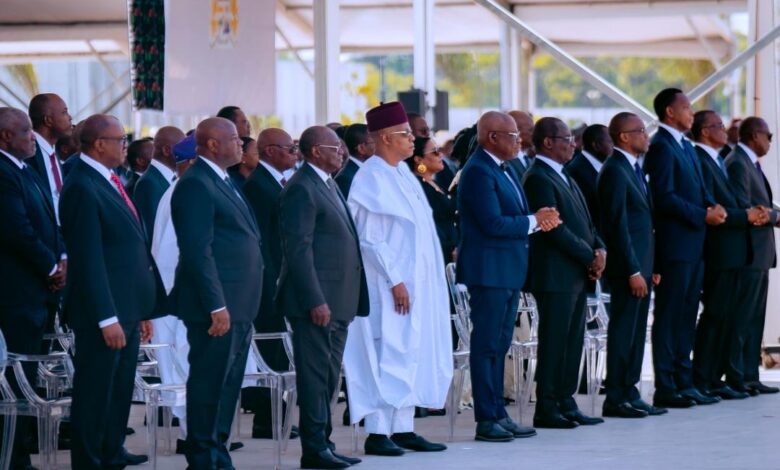
Shettima made the remarks on Sunday in Cotonou, where he represented President Bola Tinubu at the inauguration of President Romuald Wadagni at the Presidential Palace. The event drew leaders and envoys from across West Africa.
Speaking at the ceremony, the Vice President said Nigeria views its relationship with Benin as fundamental to regional integration and democratic stability within the ECOWAS bloc.
“Our presence here in Cotonou underlines President Tinubu’s unwavering, deep-seated commitment to strengthening ties with our neighbours,” Shettima said.
He drew attention to the depth of the two countries’ historical bonds, noting that the Nigerian border with Benin Republic stretches nearly 600 kilometres across six states.
He also pointed to overlapping ethnic identities, including Yoruba communities and shared Borgu heritage straddling both sides of the border, as evidence of a relationship that predates modern political boundaries.
We are essentially one people tied to a common destiny,” he said.
Trade between both countries currently stands around $2billion annually, according the Vice President, who added that about an estimated five million Nigerians live in Benin Republic, which has a total population of roughly 15 million.
Shettima also highlighted recent progress in formalising grassroots cooperations, referencing a Memorandum of Understanding (MoU) saigned last August that established a direct colloboration between Nigerian border Local Government Areas (LGAs) and communities in Benin, particularly in towns such as Seme, Igbokofi and Ilara.
“The arrangement has supported commercial activities, and agriculture and local security coordination,” he added.
Both countries are also implementing trade frameworks under the ECOWAS Liberalisation Scheme and the Common External Tariff system,while the ECOWAS protocol on free movement allows citizens of both nations to stay in each other’s territories up to 90 days without a Visa.
Shettima called on both governments to sustain their coorperation on democratic governance and peace, saying West Africa’s stability depended on it. “Because of this, we must show solidarity, empathy and active support toward strengthening democracy in West Africa,” he said.