FG Unveils Genomic City To Boost Scientific Research, Healthcare, Others
By Alice Etuka, Abuja


The Federal Government has unveiled the Nigeria Genomic City, a landmark initiative designed to harness the country’s vast genomic resources to advance scientific research, improve healthcare, strengthen food security and accelerate inclusive economic growth.

Special Adviser to the Minister of Education on Media and Communications, Ikharo Attah disclosed this in a statement on Thursday.
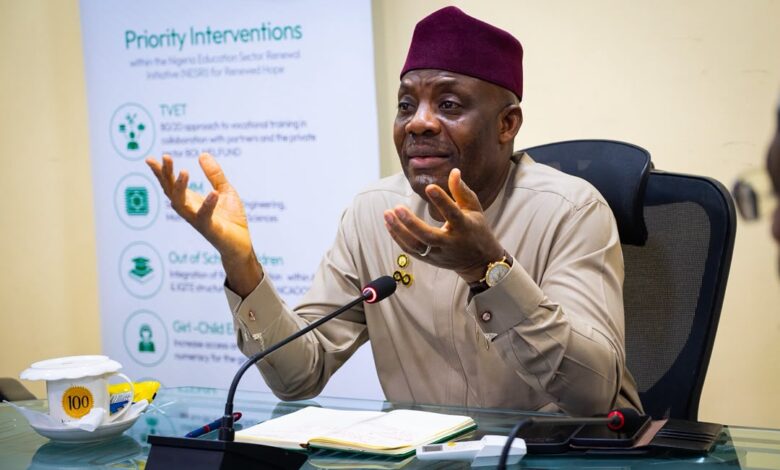
Speaking at a high-level stakeholders’ meeting in Abuja, thes Minister of Education, Dr. Tunji Alausa, warned that Nigeria’s greatest demographic advantage could become a demographic calamity if the country fails to invest decisively in research, science and innovation.
“The biggest demographic dividend ever witnessed anywhere in the world could become a demographic calamity for us if we fail to act. We do not have a choice”, he said.
Alausa described the Nigeria Genomic City as a strategic national investment that will position Nigeria as a leading hub for genomics, biotechnology and precision medicine while laying the foundation for long-term scientific and economic advancement.
He explained that the initiative was conceived more than 20 months ago and deliberately structured as a multi-agency, multi-ministerial project because of its strategic national importance.
According to the Minister, the project is not about institutional ownership or individual interests but about creating a sustainable national asset that will serve generations of Nigerians. He said President Bola Ahmed Tinubu’s administration is committed to moving Nigeria from a resource-based economy to one powered by knowledge, research, technology and innovation, with the Nigeria Genomic City serving as one of the key drivers of that vision.
Dr. Alausa observed that while advanced economies have built trillion-dollar industries around biotechnology and genomics, Nigeria continues to underutilise one of the world’s richest genomic resources.
He warned that unequal international data-sharing arrangements have allowed valuable African genomic data to generate enormous value abroad with little benefit to the continent.
The Minister disclosed that the Federal Government was finalising the establishment of the National Research and Innovation Development Fund, which is expected to mobilise nearly 500 million dollars annually to support research and innovation across the country.
He expressed confidence that, following consideration by the Federal Executive Council and the National Assembly, President Bola Tinubu would assent to the enabling legislation, ushering in a new era of sustainable research funding.
The Minister of State for Education, Professor Suwaiba Ahmad, reaffirmed the Ministry’s commitment to the initiative, describing the Nigeria Genomic City as a unique opportunity for Nigeria to emerge as a global leader rather than a follower in scientific innovation.
She noted that the country’s large population, expanding research capacity and growing pool of technical experts provide a strong foundation for the project’s success. She assured stakeholders of the Ministry’s full support in mobilising the partnerships and institutional commitment required to bring the initiative to fruition.
Presenting the technical framework for the project, Professor Mayowa Owolabi, Pioneer Director of the Centre for Genomic and Precision Medicine, University of Ibadan, and initiator of the Nigeria Genomic City, described the initiative as a transformative investment that will reshape healthcare, agriculture, biotechnology and economic development.
He explained that the project will establish a sustainable national platform built on genomic, biological and health data resources to drive the discovery, development and commercialisation of innovative solutions for disease prevention, diagnosis, treatment and cures. The initiative will also improve crop and livestock production, strengthen food security and support inclusive economic growth.