SPECIAL REPORT: Abhorring The Thriving ‘Flood Business’ In Nigeria
By Sunday Etuka, Abuja

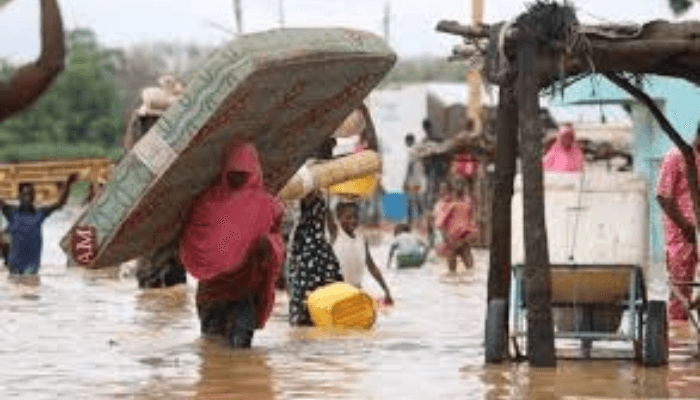

Despite the early warning signals in preparation towards rainy seasons in Nigeria, floods continue to wreak havoc in the country, killing hundreds and rendering thousands homeless.

Climate change, poor building plans, and drainage systems have been identified as some of the causes of the devastating floods across Nigeria, with little or nothing done to change the narrative.
The Nigerian Government identified the states most prone to flooding to include Kogi, Benue, Adamawa, Bauchi, Borno, Gombe, Taraba, and Yobe.
Over the years, the state governments shouldering the responsibility of ensuring the effective implementation of preventive measures are reluctant or play politics with it so as to get donors’ sympathies.
Oftentimes, monies and other relief materials donated to provide succour to the victims are diverted to private pockets, leaving them miserable.
Available data shows that most of the early warning signals issued by the relevant government agencies in Nigeria like: The National Flood Early Warning Center (FEWS Center), The Nigerian Meteorological Agency (NiMet), and The Nigeria Hydrological Services Agency (NIHSA), are ignored.
For instance, after a stern warning of impending flooding in 2022, the National Emergency Management Agency (NEMA), reported that floods in 2022 left over 600 people dead and affected more than 4.4 million people.
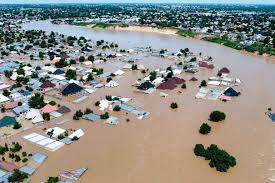
In 2023, January to be precise, NiMet predicted an early commencement of rain. However, even after the prediction, NEMA reported in December 2023 that over 33.983 million people nationwide were impacted, costing the country about $9 billion in economic damage.
In July last year (2024), the Federal Government, through the Ministry of Water Resources and Sanitation, following the torrential downpour experienced in some parts of the country, alerted the state governments on the urgent need to take precautionary measures to avert the ugly flooding menace of the past years.
The Ministry listed some of the measures to include, “educating citizens to imbibe attitudinal change towards warnings for flood prevention by Government Agencies and desist from unethical traditional culture and beliefs of predicting rainfalls.
“Clearing of blocked drainage systems and canals, and Relocation of people living along the water-ways and those that are having socio-economic activities on the flood plains, by the Federal, State and Local Governments.
“Consideration for channelization/training of major rivers in the country. States and Local Governments are encouraged to desilt river channels and canals and to construct/create buffers (or detention basins) in their respective constituencies to collect runoff waters.
“Modification of settlements to withstand floods by putting up flood barriers, and Construction of dykes, flood-walls, buffer dams, detention basins and water retaining structures.
“Effective and efficient operational procedure for dams and reservoirs and maintenance of other hydraulic and water infrastructure across the country”.
Unfortunately, these preventive measures were ignored by the states and local governments, as 10 states, including the Federal Capital Territory were affected, killing over 1,200 people and injuring over 2,712 people.
Despite the failures to adhere to preventive measures, a significant amount of money was donated to support flood victims in Nigeria in 2024.
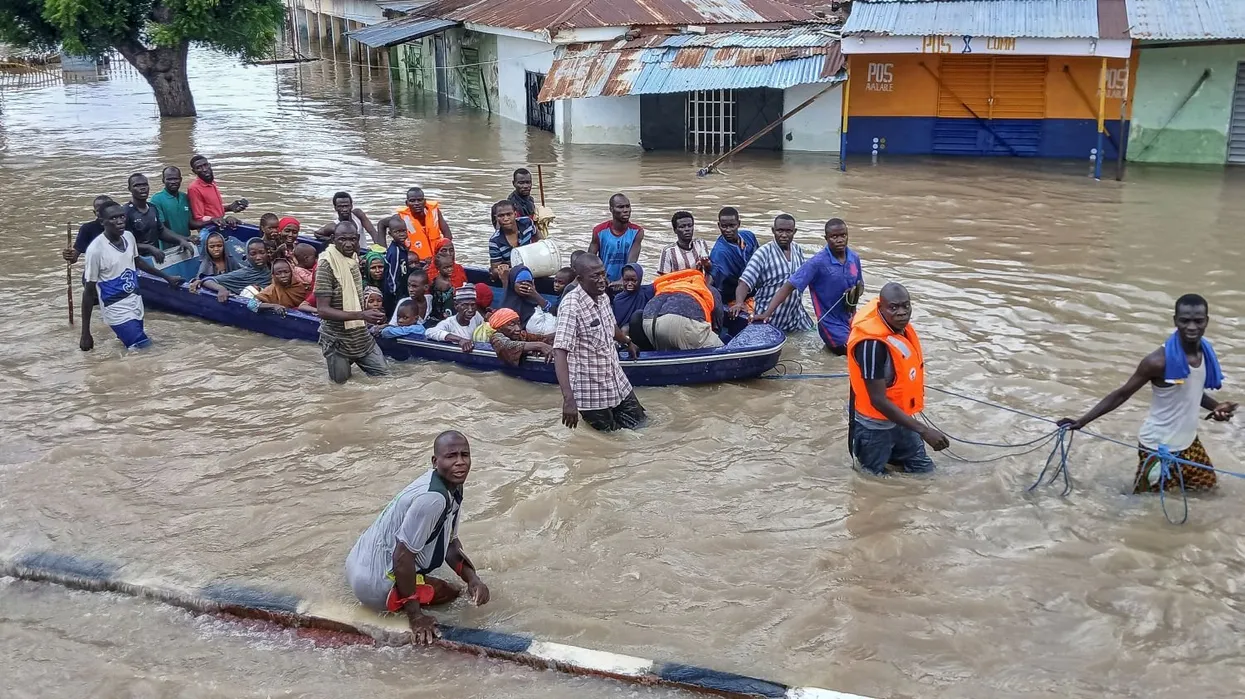
For instance, the Economic Community of West African States (ECOWAS), donated N640 million to the federal government to assist victims in Borno and Bauchi States. Seyi Tinubu, Son of the Nigerian President, donated the sum of N500 million to flood victims in Maiduguri.
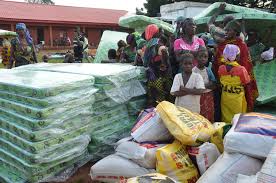
Additionally, Aliko Dangote donated N1.5 billion, with N1 billion going to NEMA and N500 million to the Borno State government. The Nigerian Red Cross Society, with funding from International Red Cross and Red Crescent, also provided support, including N77,000 to 1,000 victims in Yobe State, among other numerous donors.
Why one is not against donations to victims of disasters like flooding, much efforts should be directed towards preventing it rather than supporting the victims. And state governments should stop using it as a money-making venture.
In April this year (2025), the federal government, during the presentation of the 2025 Annual Flood Outlook (AFO) in Abuja, by the NIHSA, alerted that about 1,249 communities in 176 Local Government Areas in 33 States and the Federal Capital Territory (FCT) are within the High Flood Risk Areas.
It also revealed that 2,187 communities in 293 LGAs in 31 States of the Federation, including the FCT fall within the Moderate Flood Risk Areas.
The Minister of Water Resources and Sanitation, Prof. Joseph Utsev, who announced this, further revealed that the High Flood Risk States comprise Abia, Adamawa, Akwa Ibom, Anambra, Bauchi, Bayelsa, Benue, Borno, Cross River, Delta, Ebonyi, Edo, Federal Capital Territory, Gombe, Imo, Jigawa, Kebbi, Kogi, Kwara, Lagos, Nasarawa, Niger, Ogun, Ondo, Osun, Oyo, Rivers, Sokoto, Taraba, Yobe, Zamfara.
He also noted that the Flood risks across Nigeria have been categorized into four main types including the High Flood Risk Areas in 657 communities of 52 LGAs between April–June; 544 communities in 142 LGAs between July–September as well as 484 communities in 56 LGAs between October–November.
He also added that Moderate Flood Risk Areas are projected in 445 communities in 116 LGAs (24 states) between April–June:) and 1,458 communities in 271 LGAs between July–September in addition to 1,473 communities in 171 LGAs (26 states) between October–November.
Despite this early warning signal, Mokwa Town in Niger State was flooded claiming over 153 lives, primarily caused by heavy rainfall which overwhelmed local drainage systems.
The Water Minister, Prof. Utsev, noted that the flood was not caused by water releases from either the Kainji or Jebba dams and that both dams were intact and safe.
He explained that the unregulated buildings and construction activities blocked an ephemeral tributary of River Dingi, a regressive river, a tributary of River Niger, which remains dry almost all year round with flows solely dependent on surface runoff by rainfall.
He added that the absence of efficient alternative pathways to redirect the excess water further worsened the flood’s impact on the communities.
Again, as expected, donations were made by well meaning Nigerians to cushion the effect of the flooding on the victims. This trend will continue ad infinitum, if nothing is done to prevent it.
Instead of turning it to business, state governments should enforce regulations on construction, construction of quality drainage systems, clearing of blocked drainage systems and canals, and relocation of people living along the water-ways.