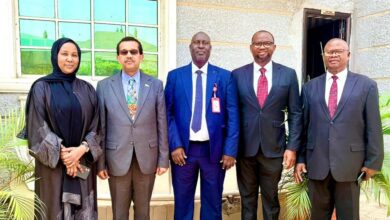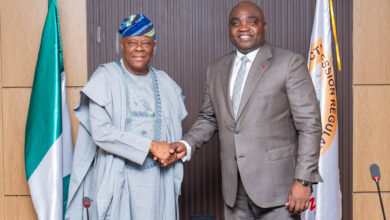



The Accountant-General of the Federation (AGF), Shamsudeen Ogunjimi, has underscored the need for collaboration between revenue-generating agencies and other stakeholders for improved tax compliance in the country.

Ogunjimi spoke on Thursday at a 1-Day Stakeholders’ Engagement between the Office of the Accountant-General of the Federation (OAGF) and the Federal Inland Revenue Service (FIRS), with the theme: “Enhancing Tax Compliance Through Collaboration,” held in Abuja.
He explained that one of the key objectives of the Renewed Hope Agenda of President Bola Tinubu was to diversify revenue sources and reduce reliance on volatile oil revenues, stating that in other to achieve this, inter-agency collaboration is indispensable.
While affirming that the engagement provided a unique platform to foster synergy between the FIRS and OAGF to align strategies, and address challenges hindering optimal tax collection and remittances, the AGF said by leveraging technology, strengthening accountability, and promoting transparency and probity, the agencies could significantly enhance compliance and boost government revenue for sustainable development.
“This engagement also provides the opportunity to address Mr. President’s desire to achieve a 1Trillion dollar economy by 2030,” he added.
He commended the FIRS for its relentless efforts in expanding the tax net and digitizing processes for efficiency, reiterating that the agencies should build a robust tax system that supports Nigeria’s economic growth and delivers on the promises of good governance.
Also in his remarks, the Executive Chairman of the Federal Inland Revenue Service (FIRS), Dr. Zacch Adedeji, said the Service is deeply aware that effective tax administration does not operate in isolation. Noting that it is the product of deliberate cooperation, mutual understanding, and well-coordinated systems among critical institutions of government.
He said the Office of the Accountant-General of the Federation, with its central role in financial controls and disbursements across Ministries, Departments, and Agencies (MDAs), stands out as a pivotal partner in the effort to improve tax compliance, accountability, and ultimately, Nigeria’s revenue generation performance.
Dr. Adedeji informed the gathering that despite the technological advances made, particularly with GIFMIS and TaxPro MAX platform, the Service continue to observe lapses in withholding tax deductions, VAT remittances, and stamp duty administration from the MDA space.
He added that these gaps, many of which are due to technical limitations and a knowledge deficit on tax compliance requirements, result in significant revenue losses and recurrent audit issues. Emphasizing the importance of the workshop to share knowledge, and co-design solutions that would close the existing gaps and build a smarter, more efficient, and technology-driven tax compliance culture in Nigeria.
“When government institutions are tax-compliant, the message it sends to the private sector and to citizens is powerful: that no one is above the law, and that transparency begins at home. Our credibility as public institutions is tested first by our own adherence to tax regulations.
“If we must grow revenue to meet our national development priorities, then we must begin by ensuring that public sector actors play by the rules—and help others do the same.
“That is why this engagement is not another conference, it is a joint mission. It is a collaborative task to standardize systems, deepen understanding, address operational inefficiencies, and align our collective responsibilities within the public finance management ecosystem,” he said.