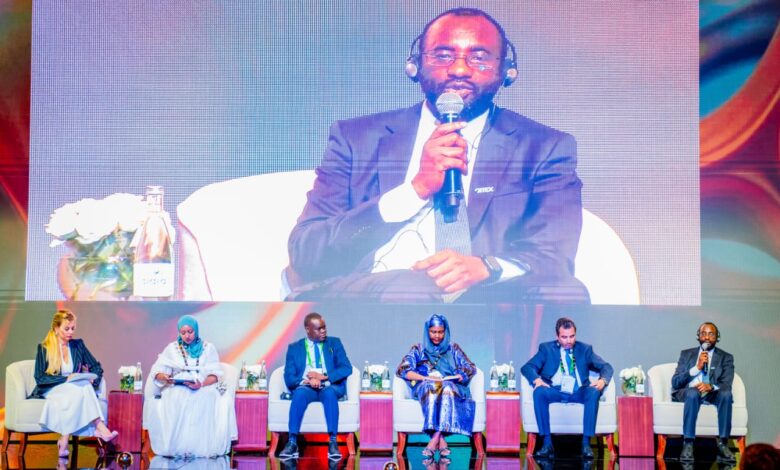

Nigeria has begun a strategic shift in its approach to cybersecurity, moving beyond technology-focused solutions to a broader, society-wide model aimed at countering increasingly sophisticated artificial intelligence (AI)-driven threats.

Director-General of the National Information Technology Development Agency (NITDA), Kashifu Inuwa, disclosed this on Thursday at the ongoing 2026 GITEX Africa summit.
Speaking on a panel on cyber resilience, Inuwa warned that cyber risks are evolving faster than traditional defence mechanisms can handle.
He described the current digital landscape as a “turning point,” noting that while emerging technologies are accelerating economic growth, they are also amplifying the scale and complexity of cyber attacks.
The NITDA boss said the new reality demands a comprehensive approach that integrates human capacity, institutional processes, regulatory frameworks and technological tools.
“Cybersecurity has moved beyond being an IT concern to becoming a core national development issue,” he said, stressing that countries must build systems that can anticipate, withstand and recover from attacks.
A key component of Nigeria’s revised strategy, according to Inuwa, is prioritising the human factor in cybersecurity.
He noted that the majority of breaches are linked to human error, making digital awareness and behavioural change critical lines of defence.
He explained that strengthening citizens’ digital skills would help transform them into active participants in safeguarding the country’s cyberspace.
To this end, the Federal Government is implementing a National Digital Literacy Programme targeting 95 per cent literacy by 2030, with a milestone of 70 per cent by 2027.
The initiative focuses on equipping Nigerians with practical knowledge of online safety and responsible digital practices.
Inuwa also pointed to the “3 Million Tech Talent” programme as a cornerstone of efforts to build a skilled workforce in areas such as cybersecurity, artificial intelligence and data science.
He said the programme is designed to harness the creativity of young Nigerians through innovation challenges, training and mentorship, while steering them toward productive and lawful use of digital skills.
Beyond capacity development, Nigeria is strengthening its legal and institutional frameworks to keep pace with emerging threats.
Inuwa said the Cybercrime Act of 2015 is under review as part of efforts to align it with current realities in the global digital space.
He added that a national cybersecurity architecture, coordinated by the Office of the National Security Adviser, is already in place to provide a structured response to cyber incidents.
The country also operates a round-the-clock cybersecurity operations centre responsible for threat monitoring, early warnings and real-time support services.
According to him, advanced tools such as AI-based detection systems and dark web monitoring are being deployed to improve response efficiency.
Addressing concerns over Nigeria’s ranking in global cybercrime indices, Inuwa argued that such rankings often reflect the scale of digital activity in a country rather than intent alone.
He maintained that the government’s focus is on channelling local talent into innovation that strengthens cybersecurity and contributes to the global digital economy.
Inuwa emphasised that effective cyber defence requires collaboration across sectors, with government agencies, private firms and individuals all playing critical roles in protecting digital infrastructure.
“Building resilience in cyberspace is a shared responsibility,” he said, noting that no single institution can tackle the challenge alone.