BIG STORY: Buried Potential, Gravity Of Nigeria’s High Neonatal Mortality
By Alice Etuka, Abuja

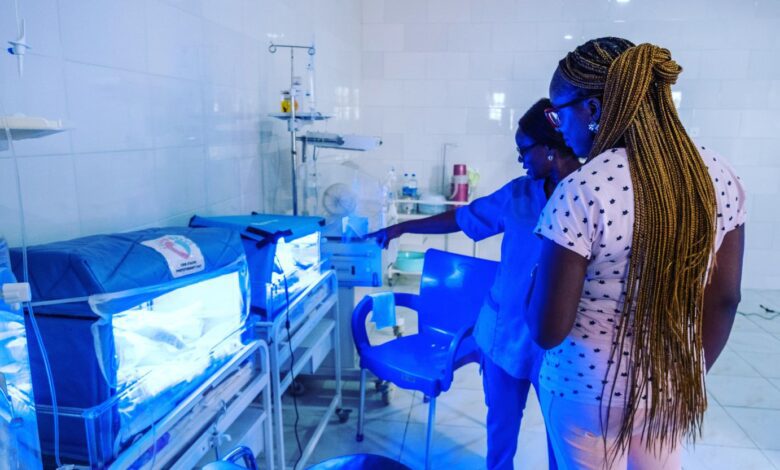

Every year, millions of babies around the world die within the first 28 days of life, a time known as the neonatal period. These deaths, often silent and shrouded in grief, represent one of the most pressing but underreported public health crises of our time.

From complications during birth to infections and lack of access to quality care, the causes are often preventable, and the consequences ripple far beyond the hospital walls, leaving families and communities in grief.
Nigeria Leads Neonatal Mortality Rate In West, Central Africa
According to the United Nations Children’s Fund (UNICEF) Data on Child Statistics, in 2021, Nigeria had the highest Neonatal Mortality Rate in West and Central Africa. This showed that the country needed to accelerate action if it was to get back on track to achieve the SDG 3.2 target.
To achieve the SDG3.2 target by 2030, Nigeria needs to rapidly accelerate under-five mortality rate reduction from 1.8% to 16.5% per year.
The data further stated that if Nigeria was to get back on track to achieve the SDG 3.2 target, over 3,597,700 under five deaths could be averted by 2030.
Speaking at a media dialogue held in Portharcourt, the Rivers State capital, UNICEF Nigeria Health Manager for Maternal, Newborn, Child and Adolescent Health (MNCAH) and HIV, Martin Dohlsten disclosed that Neonatal Deaths account for 32% of under 5 mortalities in the country while deaths of children aged 1-59 months contribute 68%.
Dohlsten said Birth asphyxia was the leading cause of neonatal deaths followed by birth trauma, prematurity and sepsis:
“Neonatal Deaths account for 32%, out of which birth asphyxia and birth trauma was 11%, prematurity was 10% while 11% is attributed to other causes like sepsis and other infectious conditions of the Newborn (4%), acute lower respiratory infections (3%), congenital anomalies, tetanus (1%), other communicable, perinatal and nutritional conditions”, he said.
He further disclosed that cases of neonatal death was higher among women who do not patronize skilled birth attendants compared to those who do.
Lack Of Stable Electricity, Skilled Birth Attendants Fueling Nigeria’s Neonatal Mortality
Dohlsten said only half of the women in Nigeria deliver with the assistance of skilled birth attendants, however, data from Rivers State showed significant patronage, wherein as much as 91% of the women register for antenatal care.
He explained that Nigeria’s high mortality rate was linked to antenatal care, adding that there was a relationship between the number of women being attended to by professionals during child birth and the child’s survival rate.
He revealed that 32% of children born in Nigeria die between day 1 to 28 of their life due to being born prematurely or birth asphyxia.
He also said 79% of newborn deaths were due to infections, prematurity and asphyxia adding that progress in neonatal health care would be achieved if the government focused on them.
He blamed the high number of Newborn deaths on lack of stable electricity, running water, skilled birth attendants, a solid referral system and lack of clinical guidelines for maternal and Newborn care.
When Nico (not real name) and his wife discovered they were expecting a child, they were over the moon with joy. The pregnancy progressed smoothly until the 7th month when tragedy struck.
“Being born at 27 weeks, we were told that his respiratory system was not developed, he was placed on oxygen and it was a fertility hospital, not a big hospital with an established neo natal unit.
“They had an incubator but it was just that one, they did not have a dedicated staff for neonates, the paediatrician that came during the delivery was from another hospital.
Recounting how their ordeal began, Nico said, “My wife had high blood pressure, when we went for checkup, the doctor said there were signs of preeclampsia and she had to deliver or it would get worse.
“When he was born, we had to transfer him to a bigger hospital with a dedicated neonatal ICU ward. There was something (a vitamin) he was supposed to be given on arrival but we weren’t told.
“After he had been there for like a week plus, one of the days I went to visit him, the doctor said there was a fusion of the frontal skull and the back … there are supposed to be formed at different times to give room for the brain to grow.
“For the front, it would take 9 months to 1 year but for the back, till when he is like 2 years. So, that is going to impair his brain activity, he was not going to have room to grow. He had a lot of difficulties from the first day he was kept there, difficulty in breathing, they had to battle to sustain his breathing, we had to transfuse blood at one point. He died after spending two weeks (14 days) at the neonatal unit”.
Negligence By Health Workers, Parents’ Nightmare
On what should have been done differently to prevent such occurrence in the future, he said early detection was key:
“With the current pregnancy, immediately we noticed unusual swelling in her hands and feet, we went to the hospital and the result of a urinalysis test done indicated a +1 which is something that is important, worth looking at at that stage of her pregnancy. That was a sign from the get go which the hospital we went to during the first pregnancy ignored.
“Secondly, there was a drug prescribed by the consultant that she was supposed to be taking with her prenatal vitamins, it was supposed to help regulate blood pressure but she was not given and they didn’t even tell her to get it somewhere else”, he said.
Although a huge number of neonatal deaths were linked to women who did not attend antenatal, Nico’s case is one of the many caused by negligence:
“I blame it on negligence on the part of the health workers. She attended antenatal regularly and was assured that everything was fine, when we started noticing the complications, we went back to the hospital and two days later, we were in terrible complications”, he said.
Like Nico, many other families face the grief of disappointment, missing out on the experience of nurturing a child they had patiently waited for.
In 2020, the World Health Organisation (WHO), UNICEF and other partners developed Every Newborn Action Plan with concrete goals and comprehensive strategies to care for small and sick newborns by 2025 and to end preventable newborn deaths by 2030 in line with SDG 3.2. The coverage target is for 80% of district hospitals to have one level-2 newborn unit by 2025.
In response to these goals, the Government’s Federal and State Ministries of Health outlined the Nigeria Every Newborn Action Plan with an aim to end preventable newborn deaths and stillbirths.
“Nationwide, 30 per cent of infant mortality was due to delivery problems with 50 per cent of deaths happening on the first day and 75 per cent within the first week. Neonatal fatality in the north-west state of Kaduna is 63 deaths per 1,000 live birth, four times higher than the south-west.
“The slow uptake of antenatal care – especially among young, poor and rural women – is one reason babies do not survive beyond one day. While almost half of all women gave birth in a health facility, only 36 per cent of women in rural areas gave birth in a health facility compared to 74 per cent of women in urban areas”, Dohlstein said.
All Hands Should Be On Deck To Ensure No Woman Passes Through The Pain Of Child Birth Without A Smile
Accounting for 11% of neonatal deaths, birth asphyxia is the leading cause of neonatal mortality in the country.
The Head of Department, Obstetrics & Gynaecology, Nyanya General Hospital, Dr. Ifiok Ikpe recounts his experience treating babies with the condition.
“WHO defined Birth Asphyxia also called Perinatal Asphyxia as failure to initiate and sustain respiration within one minute of birth.
“It is actually an insult to the fetus or newborn due to lack of oxygen or lack of perfusion to various organs. It is a cause of early deaths of newborn babies within one week of birth”, he said.
Dr. Ikpe explained that, most babies delivered do not need help to breathe, however few babies may require help and such help should be instituted right on time.
“This explains the need for all health personnel to be equipped with the necessary skills of resuscitation of newborn/ helping babies breathe”, he added.
According to him, Apgar Score is used to grade and classify babies into severe Birth asphyxia (score of 0-3), moderate (4-5), and mild Asphyxia (6-7).
He further informed that, causes of birth asphyxia varies, however, “it can be from the mother like if she has eclampsia, hypovolemic shock, status epilepticus, etc.
“It can be from the uteroplacental unit which includes like cord prolapse, uterine rupture, placental abruption, etc.
“It can also be from the fetus like twin- twin transfusion. It can also be from poor management of labour by health care provider like overstimulation of the uterus from the use of oxytocin, etc”.
The Expert noted that complications from birth asphyxia were enormous ranging from the baby having seizures, being in coma, having cerebral palsy (imbecile), respiratory distress syndrome, pulmonary or kidney failure and so on.
“Management entails prompt newborn resuscitation with appropriate skills and equipments. Continuation of emergency newborn care is very important”, he explained.
Narrating an experience he had with birth asphyxia, the physician said, “I had an experience in our hospital, where a couple who was expectant of having their baby had to spend some days in the newborn unit on account of birth Asphyxia.
“The lady was a primigravida (first pregnancy) who was in labour but the baby suddenly developed fetal distress for which she was rushed for an emergency Caeserean section.
“During the Operation, the baby came out with a low Apgar score and I had to abandon the operation for my second (assistant surgeon) to continue, so I could assist the Anaesthetist, Paediatric doctor and the Midwife during the newborn resuscitation for which the baby picked up and was admitted in the neonatal unit for days before eventual discharge.
“The Joy of everyone is to see a healthy mother and a healthy baby, and everyone should be involved in ensuring that no woman passes through the pains of Labour/ or Operation without a joyous smile (a positive pregnancy experience)”, he said.
The UNICEF Nigeria Health Manager informed that part of efforts made by UNICEF to achieve this include, the donation of 9 PSA oxygen plants to Nigeria, two of which were solar powered.
The Fund also supported the establishment of level -2 newborn units in 6 states of Kaduna, Oyo, Kano, Rivers, Sokoto and Bauchi.