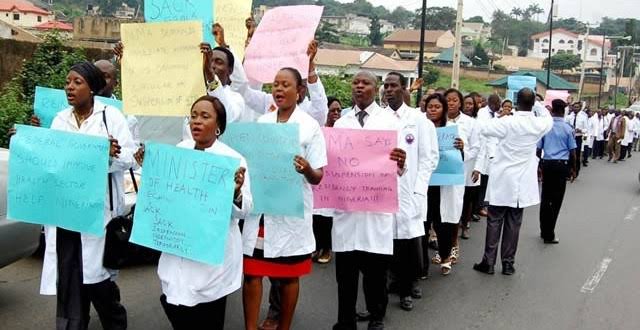


The Federal Ministry of Health and Social Welfare has said it would evoke the “No Work, No Pay” for the number of days the Nigerian Association of Resident Doctors (NARD) strike was observed.
Assistant Director (Information and Public Relations) of the Ministry, Ado Bako disclosed this in a statement issued on Thursday, August 29, 2024.
TheFact Daily gathered that the doctors commenced a nationwide 7-day warning strike on Monday, August 26, 2024, in response to the prolonged abduction of one of their colleagues, Dr. Ganiyat Popoola, who had been held captive for eight months.
The Ministry however expressed deep disappointment over the Nigerian Association of Resident Doctors’ (NARD) decision to embark on the strike, disregarding all negotiations and plea attempts by the Federal Government to resolve its concerns and ensure continued industrial harmony.
According to the statement, “the Ministry will not relent in its efforts to guarantee the safety, improve the welfare and working conditions of all healthcare workers, including resident doctors”.
It noted that significant strides had been made in recent negotiations, and the government had demonstrated good faith by addressing many of the concerns highlighted by NARD.
It added that the Ministry, in collaboration with relevant security agencies, including the Office of the National Security Adviser, NSA, had been working tirelessly to ensure the immediate and safe rescue of Dr. Ganiyat Popoola over the past months.
It assured that, high-level discussions and coordinated efforts were currently underway and was confident that these measures will lead to a positive outcome.
The statement read in part:
“The Ministry finds the decision to proceed with this strike action, in the midst of these ongoing discussions, deeply regrettable. As we believe that continued dialogue is the best approach to resolving any outstanding issues.
“In view of this, the Federal Ministry of Health and Social Welfare wishes to bring to the notice of the Nigerian Association of Resident Doctors (NARD), that in line with extant labour laws, the Federal Government will evoke the “No Work, No Pay” for the number of days the strike was observed.
“This measure is not intended to undermine the legitimate concerns of our medical professionals but to ensure that essential healthcare services are not unduly disrupted to the detriment of the public.
“We encourage all resident doctors to return to the negotiation table so that we can collaboratively find lasting solutions to the challenges facing our healthcare sector. As always, the Ministry remains open to constructive dialogue and is committed to working together with all stakeholders to achieve a fair and sustainable resolution”.