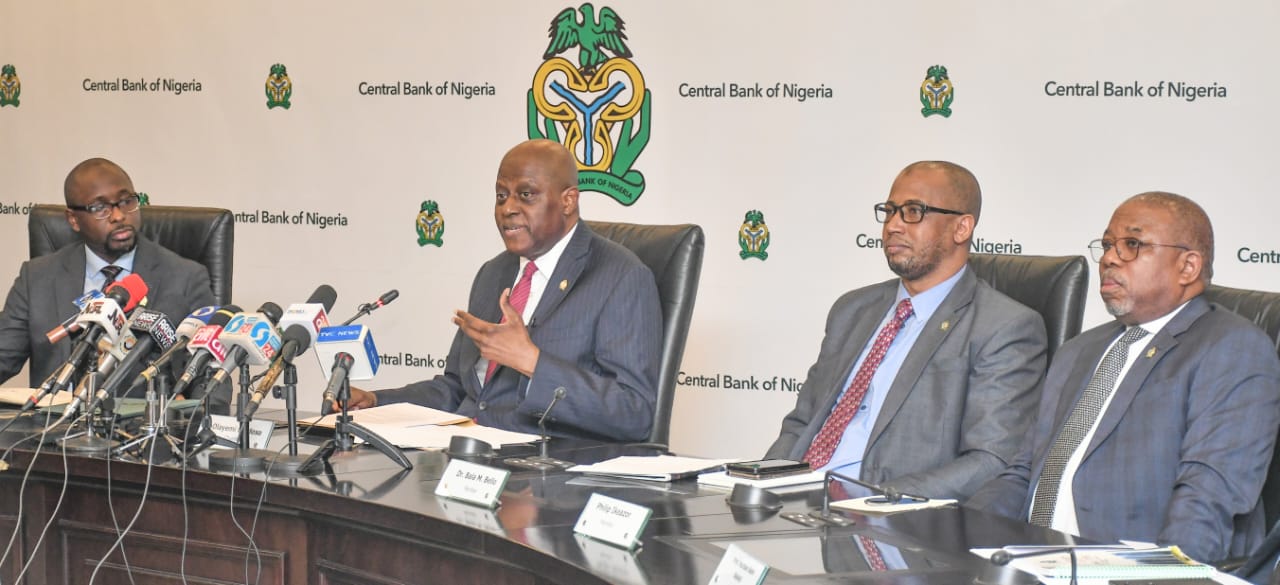

In a strategic move aimed at resetting the nation’s economy on a growth trajectory, the Monetary Policy Committee (MPC) of the Central Bank of Nigeria has voted to retain the Monetary Policy Rate (MPR) at 27%.
Rising from its 303rd meeting on Tuesday in Abuja, the Committee also retained Cash Reserve Ratio (CRR) at 45% for Commercial Banks and retained at 16% for Merchant Banks.
In addition, the Committee retained the 75% CRR on Non-TSA public sector deposits, retained Liquidity Ratio (LR) at 30%, and adjusted the Standing Facilities Corridor to +50 / -450 basis points around the MPR.
The CBN Governor, Mr Olayemi Cardoso, who announced the decision of the Committee while briefing journalists shortly after the meeting, explained that the decision was underpinned by the need to sustain the progress made so far towards achieving low and stable inflation in the country.
The decision was made by the twelve (12) member committee after reviewing key developments in the global and domestic economies, including the risks to the outlook, reaffirming its commitment to a data driven assessment of developments and outlook to guide future policy decisions.
The MPC noted the continued deceleration in headline inflation (year-on-year) in October 2025, for the 7th consecutive month, which it attributed to several factors, including sustained monetary policy tightening, stable exchange rate, increased capital inflows, and surplus current account balance.
It also noted that the relative stability in the price of Premium Motor Spirit (PMS) and improved food supply, supported the pace of disinflation.
However, the Committee submitted that the headline inflation remains high at double digit requiring sustained efforts toward moderating it further.
“The Committee was, therefore, of the view that the steady deceleration in inflation across the three measures (headline, core and food) in October 2025, suggests that the lagged impact of previous tight policy measures is expected to continue in the near term.
“Thus, maintaining the current stance of policy, amidst lingering global uncertainties, would allow the effect of previous policy rate hikes to sufficiently transmit to the real economy and further reduce prices,” Cardoso said.
He said the members also noted the robust performance of the external sector, evidenced by the surplus current account balance and steady accretion to reserves, which have contributed to stability in the exchange rate and moderation in inflation.
The MPC applauded the collaborative effort of both the fiscal and monetary authorities, which led to the recent upgrade of Nigeria’s sovereign credit rating by major rating agencies, and the delisting of the country from the FATF grey list.
Members acknowledged that these positive developments would further boost investor confidence and improve capital flows to the economy.
The Committee noted with satisfaction, the sustained resilience of the banking system, with most financial soundness indicators remaining within regulatory thresholds.
Members also acknowledged the substantial progress in the ongoing recapitalization programme, with sixteen (16) banks achieving full compliance with the revised capital requirements.
The Committee, thus, urged the Bank to ensure a successful implementation and conclusion of the programme.
The Committee while reviewing the domestic outlook said the “headline inflation (year-on-year) declined to 16.05 per cent in October 2025, from 18.02 per cent in September, driven by a moderation in both food and core inflation.
“Food inflation fell significantly to 13.12 per cent in October 2025 from 16.87 per cent in the preceding month, reflecting improved domestic food supply, stable exchange rate and base effect.
“Similarly, core inflation slowed to 18.69 per cent (year-on-year) in October 2025, from 19.53 per cent in the preceding month, owing largely to a decline in the price of furnishing & household maintenance.
“Real Gross Domestic Product (GDP) for the second quarter of 2025 sustained its positive trajectory, evidenced by the growth rate of 4.23 per cent (year-on-year), compared with 3.13 per cent in the first quarter of 2025.
“In addition, the Purchasing Manager’s Index increased significantly to 56.4 points in November 2025, the highest in the last five years, pointing to a more positive growth outlook for the third and fourth quarters of 2025.
“Gross external reserves increased by 9.19 per cent, reaching a high of US$46.70 billion on November 14, 2025, from US$42.77 billion at end-September 2025, sufficient to cover 10.3 months of import for goods and services.”
The Committee forecast a sustained disinflation in the near term, to be largely driven by the lagged impact of previous monetary policy tightening measures, supported by the continued stability in the foreign exchange market.
In addition, it said the ongoing seasonal harvest cycle is expected to boost local food supply, and further moderate food prices.