


The Central Bank of Nigeria (CBN) has reaffirmed Commitment to deepening engagement with the academia as Nigeria moves toward a fully-fledged Inflation Targeting (IT) monetary policy regime.

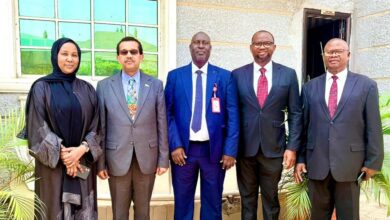
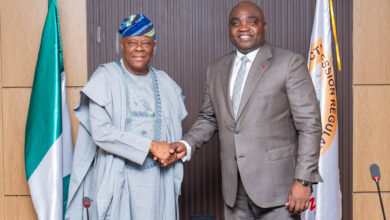
CBN’s Deputy Governor in charge of Economic Policy, Dr Muhammad Abdullahi, reiterated this while speaking during a strategic session with the Nigerian Economic Society (NES) and the academic community recently, describing the dialogue as timely and essential to Nigeria’s ongoing economic reform programme.
The apex bank in a statement on Sunday, said the the Deputy Governor while adressing a gathering of scholars, directors, and policy experts as part of a sensitisation programme, noted that the transition to an inflation-targeting framework marks a significant shift toward a transparent, forward-looking, and rules-based monetary policy system anchored in long-term price stability.
Dr. Abdullahi emphasised that inflation targeting would serve as a crucial nominal anchor for the Nigerian economy. Adding that by guiding market expectations and reducing the impact of supply-side shocks, the framework, he stated, improves transparency, accountability, and the overall credibility of monetary policy.
According to him, tabilising inflation expectations would help lower risk premia, support long-term investment plans, and enable policymakers to look beyond short-term disruptions. With global uncertainties, including geopolitical tensions and volatile energy prices, putting pressure on emerging economies, he stressed the importance of a credible monetary anchor to bolster Nigeria’s resilience.
He highlighted several reforms already put in place to support the transition. These include the Bank’s return to orthodox monetary policy tools, withdrawal from quasi-fiscal activities, and the strengthening of institutional independence. He also noted that major foreign exchange market reforms, including rate unification and the deployment of electronic trading platforms, have reduced volatility and improved price discovery.
While emphasising that additional measures, such as bank recapitalisation and improved prudential oversight, have further stabilised the financial sector, the Deputy Governor noted that enhancements in policy coordination with the fiscal authority and communication have also increased coherence across monetary operations.
According to him, these reforms are already yielding measurable outcomes, with headline inflation decliningsharply from 34.8 per cent in late 2024 to 15.1 per cent by early 2026, driven by sustained monetary tightening and improved policy discipline.
Looking ahead, Dr Abdullahi stated that Nigeria is firmly on track to achieve low and stable inflation. The medium-term target is to steer inflation into a single-digit range of 6–9 percent, barring major external shocks. Achieving this, he said, will require sustained policy discipline, anchored expectations, and a credible institutional framework trusted by markets.
He expressed appreciation to participants for their continued commitment to national development and looked forward to a productive exchange of ideas.
Also speaking in an opening remark, according to the statement, the Director of the Monetary Policy Department at the CBN, Dr. Victor Oboh, reaffirmed the Bank’s commitment to strengthening collaboration with the NES as part of efforts to enhance monetary policy effectiveness and deepen macroeconomic stability.
Dr. Oboh observed that the success of any monetary framework, especially inflation targeting, depends not only on technical capacity but also on public trust and effective communication. He emphasised that academics, researchers, and thought leaders play a vital role in shaping narratives, influencing expectations, and building the evidence base for sound policy decisions.
While acknowledging potential challenges, including short-term trade-offs and the need to reinforce institutional credibility, he expressed confidence that the combined expertise of the CBN and NES will significantly advance Nigeria’s monetary policy goals, building sound, evidence-based policy decisions.
Delivering his keynote remarks, the President and Chairman of the Council of the NES, Dr. Baba Yusuf Musa, praised the CBN for what he described as a bold and reform-minded approach to monetary and financial sector management. He commended the Bank for its openness, policy direction, and willingness to collaborate with the academic community.
Dr Musa, who is also the Director General of the West African Institute for Financial and Economic Management, reaffirmed the NES’s commitment to supporting the CBN’s stabilisation efforts. “Nigeria needs a credible Central Bank, and the Nigerian Economic Society needs a Central Bank worth standing with,” he said, confirming the Society’s willingness to collaborate closely with the Bank on Nigeria’s long-term economic path.
The statement said the engagement featured a detailed presentation on Nigeria’s transition to inflation targeting.
Noting that participants were drawn from Nigerian universities and other public and private institutionslauded the CBN’s reform agenda, especially its transition to Inflation targeting, and reiterated their commitment to support the Bank’s efforts.