
FG Urges Collective Action To Strengthen Transparency, Accountability In Extractive Sector
By Sunday Etuka
The Federal Government has underscored the need for collective commitment to strengthen transparency, accountability, and governance in Nigeria’s extractive sector.
Secretary to the Government of the Federation (SGF), Senator George Akume, made the call on Wednesday, while speaking at the Opening of a Two-Day Advocacy Dialogue for Stakeholders on Nigeria’s 2026 EITI Validation in Abuja.
TheFact Daily reports that the Dialogue was organised by the Nigeria Extractive Industries Transparency Initiative (NEITI), with support from the Rule of Law and Anti-Corruption Programme.
Funded by the European Union (EU) and implemented by the International Institute for Democracy and Electoral Assistance, the programme aimed to consolidate the rule of law andanti-corruption reforms in Nigeria by improving justice and anti-corruption systems for enhanced social cohesion.
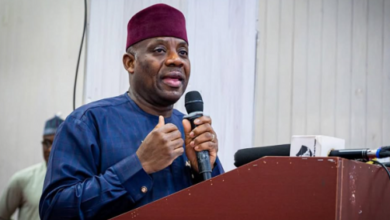
Speaking at the event, the SGF, who is also the Chairman of the NEITI’s National Stakeholders’ Working Group (NSWG), noted that the strength of NEITI lies in its multi-stakeholder model.
“Governmentalone cannot deliver transparency. Civil society, the private sector,sub-national actors, the media, and development partners all have vital rolesto play. This is why dialogues such as this are essential to create space for constructive engagement, honest reflection, and shared ownership of reforms,” he added.
Senator Akume who was represented bythe National President of the Miners Association, and Board Member of NEITI, Mr Dele Ayeleke, said that the dialoguecomes at a critical moment when Nigeria is navigating complex economic reforms, fiscal pressures, and heightened public expectations for accountability in the management of its natural resources.
According to him, the extractive sector remains central to Nigeria’s economic stability, revenue mobilisation, and long-term development aspirations. Yet, it is also a sector where governance gaps, inefficiencies, and lack of transparency have historically constrained its full potential.
Expressing delightthat the findings and recommendations of NEITI reports over the years have become part of the major tools driving the on-going reforms in the nation’s oil, gas and mining sectors.
“The 2023 EITI Standard assumes heightened relevance. The Standard challenges all implementing countries to not only disclose information but to ensure that transparency drives reform, strengthens institutions, and delivers tangible benefits to citizens.
“For Nigeria, this means going beyond compliance to using EITI as a reform tool thatsupports domestic revenue mobilisation, prudent fiscal management, andinclusive governance.
“As the Chairman of the NEITI NSWG, I am particularly encouraged that this dialogue focuses on Nigeria’s recent EITI Assessment, the Validation process, and the unveiling of a policy brief on “Beyond Assent: Pathways for ImplementingNigeria’s New Tax and Revenue Framework”.
“Thesediscussions are not merely academic; they speak directly to how Nigeria canclose revenue leakages, improve sector oversight, and align extractive sectorgovernance with the country’s broader economic reform agenda,” he said.
While formally congratulating the Executive Secretary of NEITI, Hon. Musa Sarkin Adar, on his appointment, Senator Akume commended the NEITI Secretariat, underthe leadership of Hon.Musa Sarkin Adar for convening thetimely dialogue, anddevelopment partners, particularly the European Union- International Institute for Democracy and Electoral Assistance Programme and the EITI International Secretariat, whose continued collaboration, according to him, has helped deepen Nigeria’s transparency reforms.
Earlier, in hisWelcome Address, the Executive Secretary of NEITI, Hon.Musa Sarkin Adar, noted that the dialogue was convened with the intent to unpack Nigeria’s preparedness and journey to validation by the global EITI.
He disclosed that the event was one of the series of engagements that NEITI has scheduled for its esteem stakeholders, affirming that their presence signifies a shared commitment to transparency and accountability in a sector that is the lifeblood of the nation’s economy.
Hon. Sarkin Adar explained that the meeting was critical because Nigeria’s implementation of the EITI would be benchmarked against the EITI 2023 Standard. Noting that having scored 72 out of 100 points in the last assessment in 2023, the nation is determined to achieve a better outcome this time.
“The EITIis no longer just a narrow checklist. It has evolved into an outcome-oriented credibility test that demands demonstrable reform, meaningful stakeholder engagement, and tangible impact on national governance. The 2023 Standard specifically emphasizes robust, independent participation from civil society,the media, and sub-national actors. It requires not just representation, butgenuine influence on policy and governance outcomes,” he added.
According to him, the Nigeria’s2023 Validation identified specific gaps that demand immediate action. These are, strengthening the multi-stakeholder engagement mechanisms, providinga more structured, predictable and safe space for civil society participation, improving the accessibility and utility ofextractive sector data and explicitly demonstratinghow the EITI process contributes to real, impactful policy and extractive reforms across the country.
He noted that NEITI hastaken these findings with the utmost seriousness, initiating comprehensivereforms. However, he explained that the EITI process was fundamentally built on an indispensable tripartite foundation of government,companies, and civil society.
“As we approach thenext validation with urgency, our message is simple that Nigeria will be ready. However, this readiness is a shared responsibility and acollective national outcome.You are central andfoundational pillars in interrogating data, asking difficult questions, andholding institutions accountable. This is a mandatory requirement of the EITIStandard itself.
“NEITI’s objectives for thenext two days are to provide clarity andshared ownership regarding the corrective actions identified in Nigeria’s 2023 Validation report, review the progress made, identify remaining gaps, jointly develop an implementable framework to address the identified challenges and elevatethe essential role of non-state and sub-national actors in advancing Nigeria’sbroader reform agenda.
“A key deliverable of this dialogue is the official unveiling of NEITI’snewest Policy Brief, “Beyond Assent:Pathways for Implementing Nigeria’s New Tax and Revenue Framework.”
“While Nigeria hascommendably passed crucial tax reforms into law, legislation alone does notguarantee results. This Policy brief focuses onbridging the gap between policy approval and practical execution, addressingrevenue leakages, robust revenue mobilization and improving transparency in revenue management.
“Civil society andthe media have critical roles to play in tracking the implementation of thesenew laws to ensure reforms genuinely translate into improved public value andcitizen welfare.
“Furthermore,today’s discussions require civil society to provide concrete inputs into thecomprehensive 2026 Nigeria EITI Workplan. Your insights and recommendations will directly and meaningfully shape how we structure our implementation goingforward,” he noted.
He commended the European Union and the International Institute for Democracy and ElectoralAssistance (EU-IIDEA) for providing essential support for the timely and important program. Your partnership withNEITI underscores a global recognition of the importance of sound governance ingalvanizing shared prosperity for our citizens.