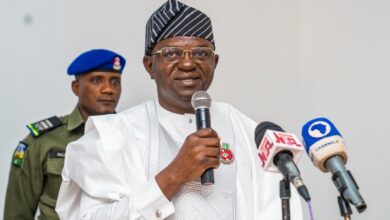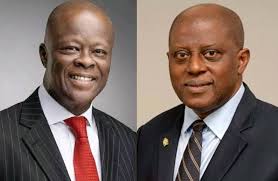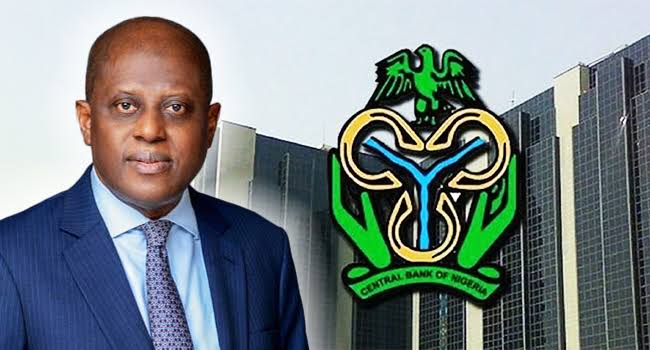

Mr Cardoso is a financial expert whose contribution to the current administration’s economic reforms is commendable.

He was appointed by President Bola Tinubu on September 15, 2023 to serve as the governor of the Central Bank of Nigeria (CBN) for a term of five years, and was confirmed by the Nigerian Senate on September 23, 2023.
He was mandated to successfully implement critical reforms at the CBN, to boost the confidence of Nigerians and international partners in the restructuring of the Nigerian economy toward sustainable growth and prosperity for all.
Despite admitting that the CBN has no magic wand to address the nation’s economic challenges, the apex bank under the headship of Mr Olayemi Cardoso, is working tirelessly to ensure that the economy is stable, inclusive, and primed for sustainable growth.
At CBN, Mr Cardoso wasted no time to show the world that he is the right man for the job. He did not only refocus the bank for profitability, he ensured that trust, transparency and integrity were upheld across the financial system in the country.
His vision was clear: “a Central Bank of Nigeria that is trusted and respected.” Today, he has successfully restored macroeconomic stability, rebuilt trust, and strengthened the credibility of the CBN, reflecting the policy direction he articulated at the beginning of his tenure.
Over the past two years, Cardoso has worked to implement the ambitious cycles of reforms the administration of President Bola Tinubu has undertaken. Even though he was aware that the reforms required courage, sacrifice and patience, he accepted the challenge for the benefit of all Nigerians.
Aware of the security challenges facing many communities across the country, and the international spotlight on the situation, and the implication on the nation’s economy, Cardoso pledged to ensure that the economic foundations remain stable and supportive, so that investment, livelihoods, and community resilience continue to strengthen as broader national efforts are being advanced.
Even though the reforms came with pains and hardship, the remarkable endurance and tenacity of Nigerians have paid off, as the reforms have begun to yield the desired results. The reforms have begun to ease inflationary pressures, stabilise the exchange rate, and restore investor confidence.
Indeed, the reforms have improved the CBN’s internal processes, deepened analytical rigour, and the overall management of the financial system in Nigeria.
WHY REFORMS?
Cardoso was appointed when the nation’s economy was experiencing hiccups, therefore, the reforms were introduced to change the existing economic quagmire hindering the nation’s prosperity.
According to him, “when this leadership team assumed office, the economy faced severe macroeconomic distortions. Inflation was surging. FX liquidity had evaporated. External reserves were non-existent. Trust in economic management had weakened.
“Unorthodox monetary practices had eroded confidence. Businesses could not plan or price. Investors could not commit. The foreign exchange market was in paralysis. A backlog of over US$7 billion in unmet FX obligations undermined market integrity.
“Also, the spread between official and parallel market rates had blown out to more than 60%, creating distortions and rent-seeking opportunities. High inflation had become normalised, stuck in double digits for most of the last 35 years and risen to 34.6% as of November 2024. Food prices were crippling households. Liquidity conditions were unstable. Many businesses faced an existential threat.
“The banking sector, though fundamentally sound, was at risk of being dragged into distress by a deteriorating macro environment and inconsistent policy signals. This was the Nigeria we inherited, not one standing at the edge of a macroeconomic precipice, but one that had already gone over the cliff.”
ACHIEVEMENTS AFTER THE REFORMS
Following the introduction of the reforms, Nigeria’s economy transitioned from crisis management to laying the groundwork for a sustainable recovery.
After nearly a decade in which real GDP growth averaged about 2%, the reforms have restored momentum and confidence in the broad macroeconomic environment.
The nation’s economy grew by 4.23% in the second quarter of 2025, the strongest pace in four years, driven by improvements in telecommunications, financial services, and oil production.
Inflation has moderated consistently. From a peak of 34.6% in November 2024, it has more than halved to 15.1% in January 2026. And this has been applauded by both domestic and international observers.
Over the past year, the CBN has sustained the unification of the multiple exchange-rate windows, with the clearing of the once-crippling multi-billion-dollar FX backlog, which has restored credibility and given businesses the confidence to plan.
The introduction of the Nigerian Foreign Exchange Code has established clear rules for transparency, ethics, governance, and fair dealing among authorised dealers, while the deployment of the Electronic Foreign Exchange Management System (EFEMS) system, powered by Bloomberg BMatch, has transformed FX trading through mandatory order submission, real-time regulatory visibility, and enhanced price discovery.
Together, according to the CBN, these reforms have reduced opacity and manipulation, and restored discipline to the market. The naira now trades within a narrow, stable range. The once-substantial gap between the official and parallel markets has shrunk down from over 60%.
Foreign capital inflows reached US$20.98 billion in the first ten months of 2025, a 70% increase over total inflows for 2024 and a 428% surge compared to the US$3.9 billion recorded in 2023, reflecting a clear resurgence in investor confidence.
Nigeria’s external sector also strengthened decisively in 2025, with the current account balance rising over 85% to US$5.28 billion in Q2, up from US$2.85 billion in Q1.
The nation’s foreign reserves reached US$46.7 billion by mid-November, the highest in nearly seven years, providing over 10 months of forward import cover and significantly enhancing the economy’s resilience.
The CBN said while oil production improved modestly to an average of 1.45–1.52 million barrels per day in 2025, the truly encouraging development was the strong performance of non-oil exports.
“Supported by ongoing reforms and greater exchange-rate flexibility, non-oil exports have grown by more than 18% year-on-year, reflecting rising competitiveness under a truly market-driven FX framework,” it said.
CBN also disclosed that diaspora remittances have also strengthened with confidence returning to official channels following enhancements in transparency, settlement efficiency, and reporting.
Noting that remittances increased by approximately 12% last year, with the expectation to continue as the Non-Resident BVN, launched earlier last year, becomes more widely adopted this year.
CBN expressed unwavering commitment to maintaining the current flexible exchange-rate framework that allows the naira to act as a shock absorber while limiting excessive volatility.
To strengthen this framework further, it said it would be unveiling the revised FX Manual to expand market participation and tighten documentation standards, enhance EFEMS surveillance, and ensure consistent implementation to avoid any possibility of policy reversal.
CBN said Nigeria’s banking system remains fundamentally sound and resilient, especially with the introduction of the recapitalization exercise. With just two months to the conclusion of the recapitalisation exercise, several banks have already met the new capital thresholds, while others are advancing steadily and are well positioned to comfortably meet the March 31, 2026, deadline.
CBN disclosed that to date, over twenty-seven banks have raised capital through public offers and rights issues, and over twenty have already met or exceeded the new requirements — a clear testament to the depth, resilience, and capacity of Nigeria’s banking sector.
The apex bank said it is recalibrating the nation’s cash-printing models, issued guidelines on the optimal ATM-to-card ratio, strengthened requirements for CBN approval before ATM or branch closures, enforced sanctions on banks whose ATMs fail to dispense cash, and intensified supervision of payment agents and POS operators nationwide.
It said it has extended its Payments System Vision roadmap to 2028, an ambitious commitment to modernise payments infrastructure and strengthen cybersecurity. Noting that more than 12 million contactless payment cards are now in circulation.
“Our regulatory sandbox has expanded to over 40 fintech innovators, enabling safe experimentation and responsible scaling of new digital-finance solutions,” CBN said.
It said its revised agent-banking guidelines have tightened anti-money-laundering controls, including geo-fencing of high-risk areas, while improving consumer protection at the last mile.
The bank said Nigeria today stands among Africa’s most advanced digital payments markets, with a dynamic fintech ecosystem that has produced eight of the continent’s nine unicorns. Adding that by mid-2025, leading fintech apps had surpassed 10 million downloads each, with one surpassing 50 million downloads, reflecting deep consumer adoption.
Looking ahead, CBN said its priorities are clear and actionable. these, it said could be achieved by:
“Strengthening the banking system: safeguard stability, protect depositors, and support credit growth through rigorous supervision and strong governance.
“Delivering durable price stability: refine our inflation-targeting framework and deploy advanced analytics to anchor expectations and lower inflation sustainably.
“Modernising payments and promoting financial inclusion: expand contactless payments and strengthen digital rails.
“Fostering responsible fintech innovation: support fintech expansion while protecting consumers, strengthening cybersecurity, and safeguarding financial integrity. This includes enhanced data governance standards, stricter licensing requirements, and clearer guardrails for digital-asset experimentation.
“Building institutional capacity and efficiency: strengthen staff skills, streamline processes, and reduce bottlenecks in licensing and approvals to support a more agile, responsive Central Bank.
“Deepening partnerships and thought leadership: collaborate with regulators, industry stakeholders, and international partners to reinforce Nigeria’s position as a trusted and respected central bank.
“These priorities are not abstract aspirations, they are practical, measurable, and fully aligned with our mandate to safeguard monetary and financial stability.”