
Despite holding immense resources, a growing market, and an increasingly skilled population, African countries continue to wobble on the outskirts of globalization due to energy poverty. This is largely blamed on policy inconsistencies, paucity of funds and investments, high costs of projects and lack of political will.
According to the International Energy Agency (IEA), roughly 600 million people in Africa lack access to electricity, representing over 80% of the global total. The agency said the continent continues to struggle with energy poverty, with nearly 1 billion lacking clean cooking facilities.
Africa’s proven crude oil reserves is estimated at roughly 125 billion barrels and over 800 trillion-cubic feet of natural gas.
Libya holds the continent’s largest crude oil reserves at approximately 50 billion barrels, followed by Nigeria at 37 billion barrels, Algeria at 12 billion barrels, Angola at 7 billion barrels and Sudan/South Sudan.
Nigeria holds the top spot in gas reserves, with about 210 TCF, followed by Algeria at 159 TCF, Senegal at 120 TCF, and Mozambique at 100 TCF. Despite these huge energy resources, Africa is battling an existential energy crisis due to lack of finance. Industry experts say the continent’s potential could only be fully unlocked through bold investments, strategic collaboration, and regulatory harmony.
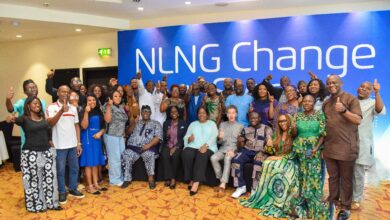
At the 9th Nigeria International Energy Summit (NIES), held from 2-5th February 2026 in Abuja, Nigeria, the experts urged operators to deepen collaboration, innovate across their value chains, and make the long-term investments required to expand capacity sustainably.
They also called on regulators across Africa to accelerate policy harmonization to create a predictable, integrated, and investor-friendly environment.
According to them, Africa’s energy poverty was not fundamentally a resource challenge, but a financing challenge of scale, structure, and credibility.
Currently, the continent spends over $120 billion annually on the importation of refined petroleum products and other hydrocarbon-related services, a situation described by industry watchers as not just a financial cost, but a lost opportunity for economic transformation.
They believe that if Africa could retain a proportion of that spending within the continent through localized value addition, infrastructure development, and industrial participation the economic impact would be transformative.
Nigeria was tasked at the Summit to lead Africa’s energy revolution. Nigeria has been Africa’s largest economy, and one of the most resource-endowed countries in the continent.
Participants at the Summit believe that Nigeria, despite its energy challenges, has the capacity to lead the continent on the path of sustainable energy prosperity, due to sound legal, regulatory, financial, and structural transformation.
WHY NIGERIA?
The Federal government of Nigeria introduced bold reforms in the oil and gas sector, and implemented the Petroleum Industry Act (PIA), which gives investors a stable fiscal framework, clearer licensing, stronger regulation, protection for host communities, local content provisions, and ensures that contracts and terms are predictable.
Determined to reduce costs in upstream operations, the government issued the Upstream Petroleum Operations (Cost Efficiency Incentives) Order 2025, which granted tax credits to companies, lower unit operating costs and other far reaching fiscal regimes.
The government also launched “Project One Million Barrels” in October 2024, and in less than a year, production rose to between 1.7-1.83 million barrels per day, up by roughly 300,000 barrels in July 2025 alone.
Also, the number of active rigs has significantly increased from the paltry 14 in 2023 to over 60 currently. These are signs that the reforms are working, that idle assets are being activated, and existing assets are being optimized.
HOW IS NIGERIA LEADING AFRICA’S ENERGY REVOLUTION?
To lead Africa’s energy revolution, Nigeria is mobilising over $410 billion in investments between now and 2060 to become a renewable energy hub, targeting 277 GW in total capacity.
According to the Nigerian government, over 423 billion would be needed to expand energy access and connect the millions of Nigerians who still live in energy poverty.
Nigeria is also leading the continent by hosting the Headquarters of the African Energy Bank (AEB) in Abuja, with an initial capitalization of $5 billion, which is projected to unlock up to $200 billion in midstream and downstream investments by 2030.
Its core mandate is to mobilize domestic and regional capital for energy infrastructure, reduce Africa’s reliance on external financing, and align energy investments with the continent’s long-term development and industrialization goals.
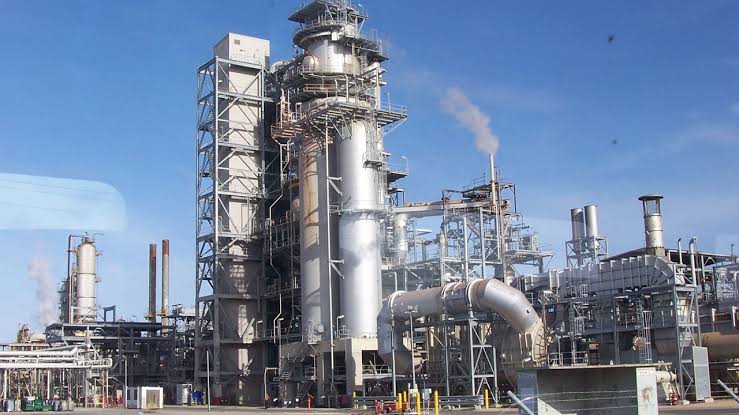
With a refining capacity of over 974,500 barrels per day (bpd), driven by the Dangote Refinery achieving full operational capacity of 650,000 bpd, Nigeria is well positioned to reduce the continent’s reliance on refined petroleum imports.
At the Summit, financing and Infrastructure Development Participants identified high financing costs as a critical barrier to energy project development in Africa. Thus emphasized the need for increased private sector involvement and improved project bankability to address the continent’s infrastructure gap.
The Summit reaffirmed the collective resolve to harness Africa’s energy resources as instruments of economic growth and regional stability. Emphasis was placed on energy sovereignty, prioritizing domestic value chains over crude exports.
Nigeria’s aspiration to become the refining hub of the Gulf of Guinea was lauded as a model for regional downstream integration. The Summit endorsed increased in-country refining capacity and cross-border gas infrastructure projects as key drivers of job creation, export diversification, and economic resilience.
Nigeria’s emergence as a regional energy hub was linked to the fulfillment of domestic energy supply obligations, support for neighbouring countries, and the enforcement of international fuel quality standards.