FEATURE: Nigeria’s Target Of Achieving 6,000MW Power Generation Still A Mirage
By Sunday Etuka



The Federal Government of Nigeria, under the leadership of President Bola Tinubu has again failed to dispel the darkness that is enveloping the country, as Nigerians continue to suffer from chronic energy poverty even after almost three years of being at the helm of affairs.

Amid persistent liquidity shortfalls, unpaid debts, inadequate gas supply, lack of investment, market inefficiencies and other numerous challenges confronting the nation’s power sector, President Tinubu had promised to improve electricity supply to stimulate businesses and enhance the livelihoods of Nigerians.
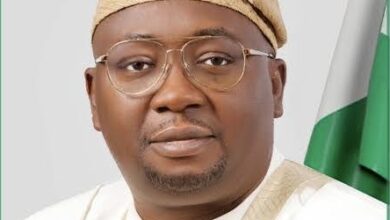
In 2024, May, to be precise, the government successfully generated, transmitted, and distributed 5,000.45MW, prompting the Minister of Power, Chief Adebayo Adelabu, to announce the administration’s bold target to achieve 6,000 megawatts of power generation by the end of December 2024.
Unfortunately, this target was not met as the minister blamed increasing incidents of vandalism of critical power infrastructure as the main reason for the failure.
In 2025, the administration still couldn’t achieve the target. Even though the sector achieved peak generation of 6,003MW in March, 2025, this could not be sustained as generation is currently hovering around 5,000MW.
The current generation capacity was lower than what was required to meet the estimated load demand of 30,000MW, with the demand expected to grow to 45,662MW by 2030.
For a country of over 200 million people, the 5,000MW of power generation is grossly inadequate. According to industry experts, about 88,000-100,000MW of electricity is needed to meet industrial, economic and population demands in Nigeria.
EFFORTS BY THE CURRENT ADMINISTRATION TO IMPROVE POWER GENERATION IN NIGERIA
Even though the Federal Government could not meet the set target, conscious efforts are being made to improve power supply to Nigerians.
For instance, under the Renewed Hope Agenda of President Bola Tinubu, the Nigerian power sector has entered into a new phase defined by decentralization, liberalization, and a shift from a single national market to a multi-tier, multi-actor electricity ecosystem.
The passage of the Electricity Act 2023 has reformed the nation’s power landscape, allowing subnational governments to work with private investors and developers to generate, transmit, and distribute electricity within their boundaries.
Currently, Nigeria has 15 state electricity markets at different stages of development, creating new opportunities for innovation and investment. What this means is simple: Nigeria has moved from a one-size-fits-all electricity market to a dynamic, multi-tier federation of markets.
Even though this comes with challenges like market fragmentation, high costs of running new regulatory institutions, uneven development among states, liquidity issues inherited from the national market, potential tariff adjustments, political interference, regulatory overlap between NERC and state commissions, weak transmission and distribution infrastructure, DisCo indebtedness, limited state-level technical capacity, contract renegotiation complexities, and grid instability, the strategic value of subnational electricity markets is profound.
According to the Minister of Power, Chief Adebayo Adelabu, “they enhance efficiency and competition, enable state-specific solutions, attract greater investment, and improve reliability through potential inclusion of embedded generation and mini-grids.
“These markets also stimulate job creation and industrial growth while offering flexibility to design cost-reflective tariffs with appropriate consumer protection. We are already seeing this transformation across states such as Enugu and Lagos where subnational energy strategies are unlocking new opportunities and shaping local development pathways.”
The administration has also developed a National Integrated Electricity Policy after 24 years, and has attracted over $2 billion in fresh investments into the sector to further extend electricity access in the country. Ushering in the process to transition the industry towards full commercialization which increased the sector’s revenue by 70% to ₦1.7 Trillion in 2024 compared to previous year and the revenue is expected to exceed ₦2 Trillion for 2025, and has also reduced government liability in the sector by NGN 700 billion.
In addition, it achieved first ever successful synchronization of the Nigerian power grid with the wider West African grid, with the West African Power Pool (WAPP) achieving synchronisation across all 14 member countries for over four hours, marking a major step toward a fully integrated regional electricity market.
The administration also increased the nation’s installed capacity for energy generation from 13GW to 14GW and attained an all-time generation peak of 5,801.44 MW and a maximum daily energy record of 128,370.75 MWh on March 4, 2025.
It successfully mobilized N700 billion funding from FAAC to implement the Presidential Metering Initiative, aimed at tackling the sector’s long-standing metering gap. This was complemented by the World Bank DISREP fund of $500million adding 3.45 million meters to the sector. Procurement of the meters have commenced.
To stabilize the electricity market, President Tinubu approved a ₦4 trillion bond to clear verified GenCo and gas supply debts. Alongside this, a targeted subsidy framework is being developed to protect vulnerable households and ensure a sustainable path toward full commercialization and viable industry.
WHAT THE FEDERAL GOVERNMENT SHOULD DO TO HIT 6,000MW -Prof. Ogaji
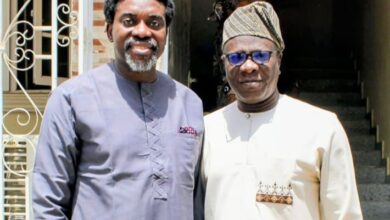
Speaking to TheFact Magazine on what the Federal Government should do to achieve the target of 6,000 megawatts for improved power supply in Nigeria, General Manager, Transmission and Delivery, Niger Delta Power Holding Company (NDPHC), Prof. Stephen Ogaji said efforts should be intensified to achieve a cost-reflective tariffs in the industry.
He also mentioned that the nation’s power sector is driving mainly by politics and technical know-how, disclosing that the sector is 99% politics and 1% technical.
Prof. Ogaji advocated that other power companies adopted the gas security arrangement of Azura Power for a more reliable power supply in the country.
He said: “Well, we can’t achieve a different result if we keep doing the same thing every time, as you know. It’s a normal thing. At the moment, there are no firm contracts in the market.
“For instance, gas, most of the gas, apart from a few companies like Azura that has gas security arrangement, no other company really has that kind of arrangement. That arrangement should be positioned and should be allowed to function.
“The market will go into contractual market, not what we are doing at the moment. At the moment, what we are doing is more of what you call a vending contract. They take power and shares the power for the group. You collect 35% and pay it to Generation Companies (GenCos), 75% should come from government. Government is not having the funds to meet up. So, let’s go into bilateral agreements. Yes, I know this is politics, because the tariff has not been reviewed.
“Make it compliant. Make the tariff reflective of the cost. Everybody would now need to know that, look, this tariff is like this now, so manage your power according to how you use it. If it’s too high, let there be a bilateral discussion. Because there’s a limit to which you can raise tariff. Tariff does not solve all the problem, but it solves part of the problem. There is level you will raise the tariff that everybody will leave you on the grid. And the grid is going to die.
“Everybody will put more solar and manage themselves. Tariff is not only inefficiencies in the system, it’s making this tariff to be higher. It shouldn’t be that high. But for now, government needs to take a back step and allow the market to go into bilateral contracts.
“Do the negotiation between the GenCos and the customers, and find the tariff that meets your requirement and start supplying power. If that happens, we will hit 6,000 to 7,000 megawatts.
And then we need to go back. It’s not a matter of saying that we have to give all parts of Nigeria power at the same time. You start from some places, start from cities, the whole of Abuja, the whole of Lagos, the places where people can pay for it first.
“Then as the thing begins to spread, it begins to penetrate all the nooks and crannies, all the villages, everywhere. Because those ones are beginning to have people that will take the power to them. But if you say you want to spread the resources to everywhere, it’s not going to be that straightforward. It’s not going to be that easy.
“Gradually, putting small money here, putting small money here, nothing is solved. So, that’s the problem we have at the moment. And I hope somehow government will realize that at the moment, it’s mainly politics that determine the sector, not technical. The problem we have is 99% politics and 1% technical. Even those technical decisions, you cannot make them without politics. So, hopefully, the politics will align with the technical to give us the best. But we have to be realistic.
“Government does not have the funds. It wants to float a N1.7 trillion bond to pay N4 trillion. Already for this year, another 2 trillion plus has added to that N4 trillion, which is something. How is it going to stop that? If you don’t stop the bleeding, it will keep building up and building up. So, we have to be a bit careful that the right decision is taken. That’s what I would just advise.”