


The Federal Government has promised to ensure feedstock security for all licensed refiners in the country.
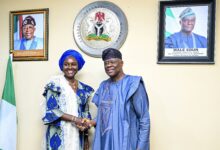
Minister of State Petroleum Resources (Oil), Senator Heineken Lokpobiri, made the pledge on Tuesday while speaking at the Crude Oil Refinery Owners Association of Nigeria (CORAN) Summit in Lagos, with the theme: “Refining-Key to Energy Security in Africa.”
Held in Eko Hotels, the Summit brought together policymakers, regulators, investors, and operators to chart a path toward transforming Nigeria into a self-sufficient refining powerhouse and a regional fuel supplier of choice.
Speaking, the Minister said the priority of the government was to also deepen fiscal incentives to attract more investment, and enhance collaboration between the Ministry, NMDPRA, NUPRC, and security agencies to tackle crude theft, pipeline vandalism and while enhancing relationships with the host communities.
He mentioned that the government is interested in fostering collaboration among African nations for product exchange, logistics, and shared energy infrastructure.
Senator Lokpobiri stated that under the Renewed Hope Agenda of President Bola Tinubu, indigenous refining has been identified as a critical pathway to energy independence, job creation, and industrial revitalization.
“Today, we have seen indigenous success stories such as Dangote Refinery & Petrochemical, Waltersmith Petroman Refinery, Aradel Holdings, etc. which collectively demonstrate that Nigerians have both the capacity and the will to refine Nigeria’s crude oil locally.
“These projects are more than facilities; they are symbols of confidence in our policy direction, and we are committed to replicating them across all oil-producing states,” he said.
The Minister maintained that through the Nigerian Midstream and Downstream Petroleum Regulatory Authority (NMDPRA), the government has streamlined the licensing regime; from Licence to Establish to Construct and Operate — ensuring that genuine investors are supported, not hindered, by bureaucracy.
He said beyond licensing, the Government has continued to consolidate on facilitating the access to crude oil supply through the effective implementation of the Domestic Crude Oil Supply Obligation (DSCO). Explaining that no nation can claim energy independence if it cannot refine its own crude.
“The Federal Government is therefore committed to ensuring that every barrel produced in Nigeria contributes to meeting both our domestic and international obligations,” he added.
He informed that as part of deliberate policy and broader strategy, the Naira – for crude sale agreement will continue to be a major step to reduce cost of fuel production, mitigate the exposure to the fluctuating exchange rate and of course to generally support indigenous refining.
Lokpobiri noted in the bid to extend refining obligation beyond the shores of this country, the government launched the West African Fuel Reference Market to position Nigeria as a regional refining and product supply hub to other West African subregions.
He said with increased local refining capacity, Nigeria would not only meet its domestic demand but would also serve as a dependable supplier of refined products to neighbouring countries, hence reducing the region’s reliance on distant refineries and maritime imports.
This, according to him, aligns with the African Union’s vision for energy integration and intra-African trade under the African Continental Free Trade Area (AFCFTA).
He concluded that the Federal Government remains fully committed to supporting indigenous refiners, strengthening regulatory institutions, and creating an enabling environment for sustainable downstream growth.