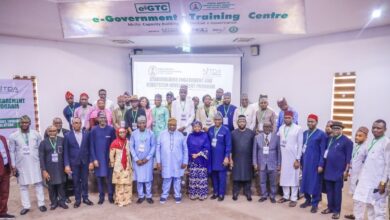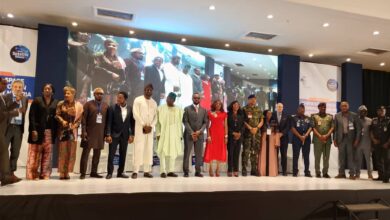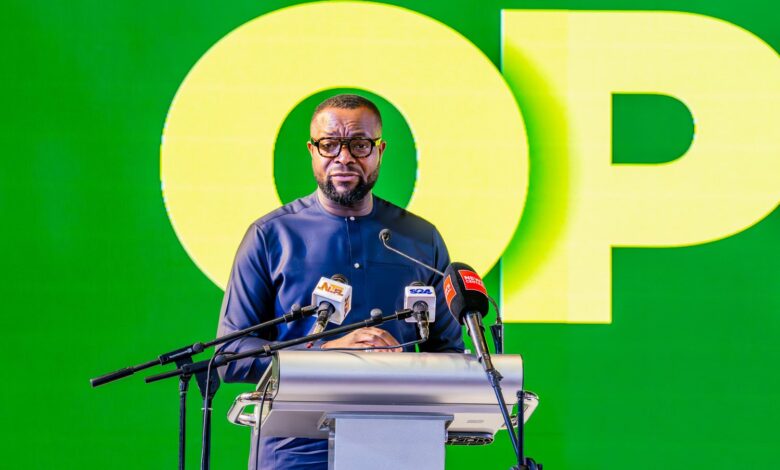

Minister of Communications, Innovation and Digital Economy, Dr. Bosun Tijani, has said Nigeria’s digital transformation journey represents a bold reimagining of the country’s future where technology and innovation drive inclusive growth, competitiveness and prosperity for all citizens.

Tijani who stated this on Tuesday at the Digital Nigeria International Conference and Exhibition (DNICE) in Abuja, said the country’s progress in the digital space was as a result of deliberate reforms, courageous leadership and sustained commitment to building a knowledge-driven economy.
“Digital Nigeria for me is more than just a conference,it is a reminder of what digital means for our past as a people, for our present as a nation, and for the future this administration is determined to build one anchored on prosperity, inclusion and competitiveness, powered through technology and innovation.”
Tijani projected that the sector would soon overtake oil and gas in revenue contribution, a development that underscores Nigeria’s transition to a digital-first economy.
“Out of nine African tech companies worth over a billion dollars, five are Nigerian. “Africa attracts between six and ten billion dollars annually in technology investment, and nearly 20 percent comes to Nigeria. This shows that the world believes in the strength of our innovation ecosystem.”
Tijani revealed that Nigeria is currently executing the largest digital infrastructure project ever supported by the World Bank, a 90,000-kilometre open-access fibre optic network to connect every part of the country with high-speed internet.
He said the project, already approved by the National Assembly, would ensure that millions of Nigerians, including those in remote areas, gain access to quality connectivity within the next few years.
In addition, the government plans to deploy 4,000 new telecommunications towers and expand access to 20 million Nigerians currently living in unconnected communities.
He also highlighted Nigeria’s pioneering steps in artificial intelligence (AI), noting that the country became the first in the world to use AI to identify Nigerian researchers and innovators across the globe.
According to him, 120 of whom were brought together to co-create the nation’s AI strategy now considered one of the most advanced in Africa.
“We have also funded 55 AI research grants to ensure that Nigeria is not just a consumer of technology, but a contributor to global innovation,” he said.
Tijani added that a National Data Exchange System is being developed to allow for secure data sharing and interoperability across government institutions and between the public and private sectors, a step he described as critical for improving efficiency and digital governance.
“Our focus is not just on technology for its own sake,” he explained. “It’s about using digital innovation to solve real problems from healthcare to education, and from agriculture to financial inclusion.Our journey from scarcity to abundance in digital access tells a powerful story,” he said. “And the next chapter we are writing as a nation is one where technology becomes the engine of shared prosperity.”
The Director-General of the National Information Technology Development Agency (NITDA), Kashifu Inuwa, called on Nigerian youth to take the lead in shaping the nation’s digital and innovation future, describing them as the country’s most valuable resource and key drivers of economic transformation.
“With over 220 million people and an average age of 18, our youth can either be our greatest dividend or our most urgent challenge,” he said. “If we harness their energy, creativity, and talent, we will not only power Nigeria, but the entire African continent into a new era of prosperity.”
The NITDA boss warned that failing to create opportunities for young people to innovate and contribute would amount to “squandering the nation’s most precious asset.”
He stressed that the ongoing conference provides a vital platform to engage, empower, and connect young Nigerians with the tools and knowledge needed to drive the country’s digital revolution.
“This gathering is not just about conversations or trends,” Inuwa said. “It’s about inspiring action — about ensuring that every handshake, every panel, and every partnership forged here contributes to building a sustainable digital future for Nigeria.”
Inuwa also commended the Vice President, Senator Kashim Shettima, for his continued advocacy for youth empowerment, describing his presence at the event as a strong signal of the administration’s commitment to young innovators.
This year’s conference, he revealed, has attracted over 4,800 participants from 12 countries and 25 Nigerian states, making it a truly national and international event.
“Our goal is to connect Nigeria’s innovation ecosystem with the global technology space,” Inuwa said. “By doing so, we create opportunities for collaboration, learning, and investment that will move Nigeria closer to a sustainable digital economy.