
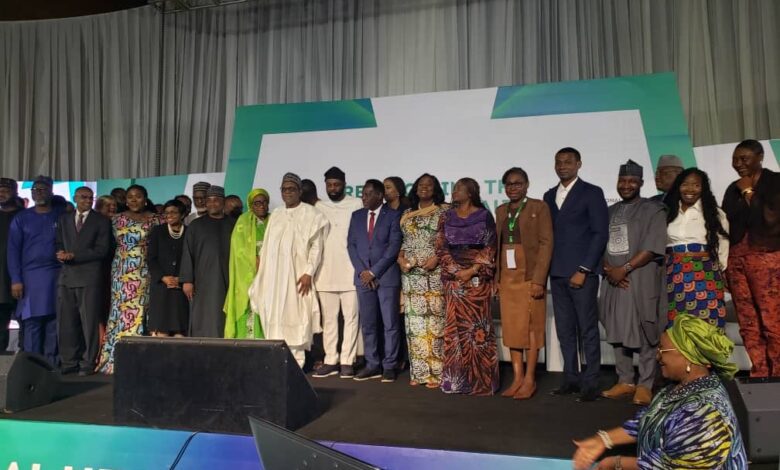

In the wake of dwindling donor funding, the Federal Government has called for an efficient domestic resource mobilisation to improve the country’s healthcare system.
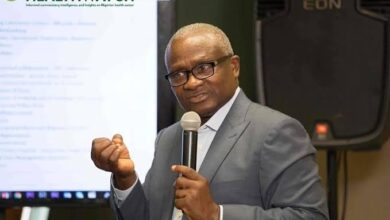
The Minister of Health and Social Welfare, Prof. Muhammad Pate gave the call at the National Dialogue on Health Financing held in Abuja on Monday.
Pate lamented that the country’s health sector had been underfunded and donor dependent for for too long:
“For decades, our health sector has been underfunded. Families bear nearly 70% of healthcare costs out-of-pocket. We cannot continue to build a healthcare system on someone else’s taxpayer resources. We must mobilize our own funds, invest more, and make every naira count. Good healthcare anywhere in the world is not cheap, it must be paid for”, he said.
He highlighted recent gains, including four million new health insurance enrollees in 18 months and expanded coverage for obstetric complications and fistula care. The minister also underscored the transformative potential of the 2022 Health Insurance Act, which mandates universal coverage and strengthens NHIA reforms.
The four-day dialogue, he said, would feature diverse voices, civil society, policymakers, development partners, and media, and culminate in a Call to Action with clear financing commitments.
According to the Minister, “our goal is simple, we want a health system that works for all, protects the poorest, and positions Nigeria for sustainable prosperity.”
He therefore called for shared responsibility and challenged states to match federal investments. He also encouraged private innovation, and tasked civil society on advocacy and accountability.
On his part, the Director General, National Health Insurance Authority (NHIA) and Chair of the Health Financing Technical Working Group, Dr. Kelechi Ohiri said the theme, “Reimagining the Future of Health Financing in Nigeria,” was a declaration of a bold and necessary call to action at a time that many countries have become vulnerable to the impact of global funding upheavals.
He continued, “it is an acknowledgment that the traditional models of financing our health system are no longer sufficient to meet the challenges and opportunities of the 21st century.
“It is my hope that this policy dialogue will leapfrog a nationally supported reform agenda, focusing on increased domestic health financing, exploring innovative mechanisms, and optimizing resources and ensuring transparency”.
Ohiri noted that despite the increase in the 2024 and 2025 health budgets and the strategic disbursement of funds through the Basic Health Care Provision Fund (BHCPF), the country’s budgetary allocation still falls short of desired benchmarks necessary to provide financial risk protection to Nigerians.
He however disclosed that the Government had made successful effort to mobilise resources for health through the Sector Wide Approach.
“While Nigeria joined other countries to set a 15% benchmark in the Abuja Declaration of 2001, 25 years later, we are far from that target.
“Through the SWAP initiative, the Honorable Coordinating Minister of Health and Social Welfare, Prof Muhammad Ali Pate, working with the MDAs in the health sector, has led a successful effort to mobilise resources for health.
“Through the efforts of health committees, the 10th National Assembly appropriated the vulnerable group fund and has considered other bills to provide a catastrophic fund to cover some high-cost conditions”, he said.
The Minister of State for Health, Dr. Iziaq Salako urged key stakeholders at the event to exchange actively in the technical sessions and high-level
political convening.
“Let us bring forth innovative ideas, share best practices, and forge partnerships that will translate our collective aspiration into tangible realities.
“It is my hope that this policy dialogue will leapfrog a nationally supported reform agenda, focusing on increased domestic health financing, exploring innovative mechanisms, and optimizing resources and ensuring transparency”, he said.