


Nigeria’s Minister of State for Health and Social Welfare, Iziaq Salako, has disclosed that the federal government secured over $1 billion in concessional financing and grants to revitalize the nation’s healthcare system.

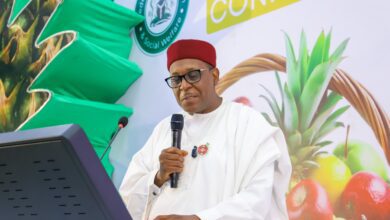
Speaking at a business health conference organized by BusinessDay on Thursday, Salako emphasized that revitalization of the health sector was not just an administrative goal, but a national imperative.
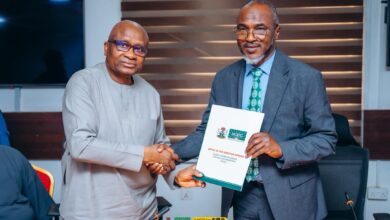
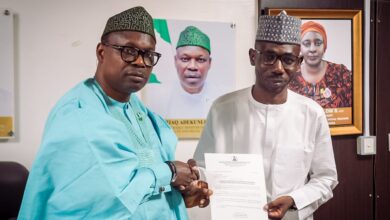
According to him, “Strategic partnerships have been central to our reform efforts. We have redefined our collaboration with key partners including WHO, USAID, the World Bank, Global Fund, UNICEF, UNFPA, and TARGET to better align with Nigeria’s health priorities.
“Through these strengthened partnerships, we have secured over $1 billion in concessional financing and grants to support the ongoing transformation of our health system.”
He added that, “Under the Renewed Hope Agenda led by His Excellency President Bola Ahmed Tinubu, health is viewed not as a cost center but as a vital investment for national prosperity, productivity, and security”.
Salako described the initiative as not just policy, but an actionable transformation agenda focused on saving lives and improving patient outcomes.
Key to the government’s reform strategy is the implementation of a Sector-Wide Approach (SWAp), a governance model designed to dismantle fragmentation in health policy and financing. SWAp aligns domestic and external resources under a unified framework, ensuring efficiency and reduced duplication.
Salako informed that this model has begun to yield results, with improved coherence across partner and donor contributions.
To address longstanding challenges in healthcare delivery, especially the strain on Nigeria’s health workforce, the Federal Government has expanded training capacity across institutions, increased medical school admissions, and recruited approximately 50,000 health professionals to strengthen federal health institutions.
The government is also addressing medical brain drain through the implementation of a Health Worker Migration Policy and digital workforce tracking platforms.
In response to persistent infrastructure and energy challenges, the Ministry has rolled out an ambitious Energy for Health Initiative aimed at providing reliable, sustainable energy to federal hospitals. In partnership with the Ministry of Power, the Rural Electrification Agency, the World Bank, and Gavi, solar hybrid systems are being deployed to ensure uninterrupted power in critical care units. A national policy dialogue on healthcare energy transformation is scheduled for September 9th.
The $1 Billion funding, obtained through a recalibrated engagement with strategic partners such as the WHO, USAID, the World Bank, Global Fund, UNICEF, UNFPA, and TARGET, is expected to play a transformative role in the country’s ongoing health sector reforms.