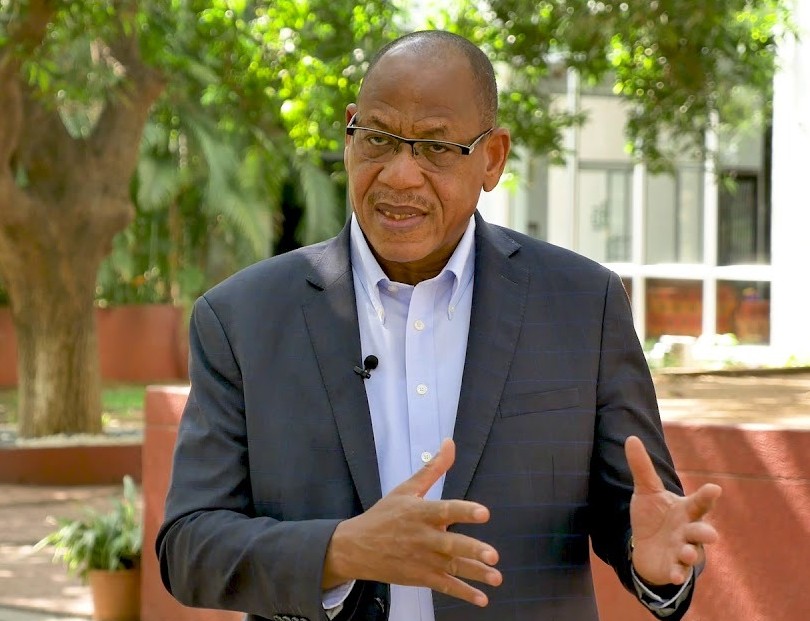
Hepatitis: Nigerians Are Paying Much Money With False Idea Of Liver Detox -Dr. Ladep
By Sunday Etuka



Dr. Nimzing Ladep, is the newly appointed National Director for Gastroenterology of CHEC. CHEC is one of the leading providers of efficient, community-based healthcare, working in partnership with the National Health Service (NHS) for over a decade. With over 30 hospitals and 90 community sites across England, CHEC makes specialist Ophthalmology, Gastroenterology, Dermatology, and ETN services more accessible in local communities. In this Exclusive Interview with TheFact Magazine, he speaks on his new role and the prevalence of Hepatitis in Nigeria.

On 1st September, 2025, you joined CHEC as the National Director for Gastroenterology. What is the new position all about?
Ladep: As you have seen in my profile, I have got about more than 5years in gastroenterology and herpetology, working within a hospital in the East of England. While doing that, I’ve been quite prominent discussing liver health and also some endoscopy health care, and prominent also in the British society of gastroenterology network. While doing those things, I was approached by a recruiter to actually join the community health care centre limited, which is actually a body that had actually been very prominent for health care and they take a lot of patients who are within the community to help reduce the emergency care, and also be able to reach out to them within their communities with health care solutions. So, they wanted a Clinical Director to manage their over 22 sites within the United Kingdom, whose strength has to do with what I brought to the table and so, I think they are as excited as I am to have me on board and particularly to supplement what is going on within the tertiary hospital setting. We know that of one hundred (100) patients, only twenty (20) should actually require health care within the hospital; in other words, seventy (70) should actually be seen in the community. But the current task means that a lot of patients aren’t actually able to see a doctor because there is no specialist within the community. So, this is a paradigm shift because there’s a Transformation agenda of the national health service in the UK to ensure that patients are actually being taken care of.
How was your experience with the previous hospital where you were working before the current employment?
Ladep: I think the experience has been very pivotal in getting me to where I am today, because while working within the tertiary center, I could see how we’re so versatile in managing complex cases of very sick patients; those with cancer, those who are almost at the point of unfortunate demise and palliative care. But we cannot prevent it, because you can imagine me sitting in a consulting room and seeing patients for about 3-4hours. In that way means therefore, that all my training at that moment is restricted to those numbers of patients. So, I always have this kind of discussion that, well, I have mastered how to see a few patients-that is 30 minutes for one patient. I think it is time to move to being able to see 30 patients in 1 minutes using health tech. That’s the kind of strive that has actually moved me on to where I am.
As a global advocate for Liver Health and founder of Liver Care Connect, tell us more about Hepatitis and what should be done to reduce the prevalence in Nigeria?
Ladep: Whatever I am doing should be replicable, in other words, people should replicate it globally. They should be a strict and Clare path way, which I’m willing to support in any country. Of course, I have been to Rwanda, Zambia and Tanzania. And talking about how to move paradigm of care for the hepatitis with the sole aim of preventing liver cancer that has been ravaging workforce, thereby crippling the economy of sub-Saharan Africa, I have approached and collaborated with a lot of government officials and also patients advocates and actually even as the WHO hepatitis leadership, and some of the input within the health tech ideas that are resident within the health tech solutions I have. As a result of those collaborations and definitely, there’s no alternative to vaccination, particularly for hepatitis B. Because we know that generally, patients who have acquired the virus are very young in life, and most likely it will progress. You know if you leave the disease it will rise to cancer, and we can vaccinate to prevent them from getting it. By the way, one vaccine can prevent hepatitis transmission by 95% of the time. And so, even one dose of vaccine, it will do a lot of good. And of course, people who are at risk of viral hepatitis would also need that kind of programmatic approach to vaccinate them if they’re not being vaccinated in childhood and or giving them boosters. Secondly, there should be a governmental policy which is already existing, but we would ramp up the discussion to ensure that our country, our leaders are actually pushing and allocating a nice budget to make sure that health care is available to those who need it. Lastly, I would talk about the lever care connect, which is really targeting and emerging conditions, in other words, we may end up eradicating hepatitis. And so, liver nutrition is out there trying to say, well, instead of spending money on detox which is not correct, because there’s a 20-billion-dollar market out there marketing wrong things instead of the people to be told how to eat well. People are buying liver detox instead of eating just adequately. Because the liver actually has a store, unless it is unwell, but the liver itself can detoxify your body. That is what it is there for, So, feed well and keep it healthy. That’s the kind of thing I’m out for; advocating for liver health.
Are you satisfied with the efforts being made by the Nigerian government with regards to the sensitization, vaccination and treatment of Hepatitis in Nigeria?
Ladep: I am not here to criticize, but I think there’s more to that. The government has actually, in its own capacity, been able to give some ideas. They’re trying their best, but their efforts are limited by what those in the industry are able to advise. And so, there’s a need for collaborative, proactive research activities with the bryological outcome that will inform policy changes in order to ramp up the global elimination of hepatitis by 2030. I have had recent meetings with some of the members of NASCAM which is the highest decision making for HIV and Hepatitis eradication. As well as some other health officials within the Nigeria sectors. So, I think, the trend is moving in the right direction. We can aim to improve that by continuous community and communication collaborations and these types of discussions. And I think there’s a movement, the trail is moving, we’re in the right direction but can we make it a reality by 2030? That is 5 years to come. Am in doubt, but I think if we can actually accelerate things such as the health tech I was talking about, where 1 minutes so many patients. For example, hepatitis health care companion is a News in 97 countries. If a lot more people are encouraged to have access to this information, they will be well informed, there will be a massive vaccination campaign, there will be a lot of people who will access care. All of those together, if we can really concentrate on it and think about social media, hepatitis elimination is going to be a history.
How much do you think the Federal Government should budget for the treatment of Hepatitis in Nigeria?
Ladep: In general terms, the calculation for budget allocation to health care within governments in some countries in Africa is actually very limited. Whereas, there’s a global advocacy to ensure that 5% at least is attributed to health care. I don’t think many countries are actually getting close to that at all. If you look at the section of hepatitis which is actually about 20million that is 10%, about 10% of Nigerians are having chronic hepatitis B, that means therefore, we actually ramp up the calculation well enough. There should be a huge amount of resources that should go to prevention because that is the source of elimination. So, vaccinations should not be compromised. And so, a shunk of resources should actually move to the area of liver disease prevention. Remember, it’s not only hepatitis, it is actually mostly related to food care as well because we know that Aflatoxin is a key factor also which is something that may not and all of those can complicate the outcome of patients with hepatitis. And so really, for preventions, allocation of treatment or rather I think the government is moving in the right direction to make sure that production of medications occur locally. It means therefore, that they will improve on the cost of medication because one of the biggest challenges to treatment is cost of medication. And so, if we can bring that down, people will access those care very readily, easily and cheaply. And then thirdly, reducing the travel requirements for patients who would have to leave their farms and travel even at the cost of the minimum wage to a center where they will have an exorbitant amount of ultrasounds, tests etc. I heard reassuring how the government moved to subsidized dialysis for patients with chronic kidney diseases . Well, think about it; how many people have chronic kidney diseases, but they got attention, but perhaps because somebody got data before the government. But 20 million people struggling with hepatitis do not get much attention, why? I don’t know where we can start the battle from, but somebody has to actually package the information well enough and then advocate to the government to subsidize the cost. I am open to collaboration, discussion and advice to policies. But policy is something unless you’re approached, you cannot nominate yourself unfortunately.
What can you do to help the Nigerian government reduce the spread of Hepatitis in Nigeria?
Ladep: I do remember making an attempt to meet with the minister of health when I came back to Nigeria, paid my air ticket and could not. It’s not this government. Perhaps they’re safe. I got to the ministry of health but I couldn’t meet any of the directors. The best I could do was to meet with the NASCAM who’s also important. But in their own capacity, everything comes down from a top down approach. If I would have met the right people, that would have created a pathway for collaborations that could have been more sustainable, but I must tell you, there are open doors. The challenge comes when you don’t have a prearranged visit and then you actually learnt, and then you can’t. So, I’m left with a few options, such as media presence and explaining the relevance of getting a top leader to be able to provide information. That being said, I am having some connections with those who are within the decision-making process of hepatitis care, but those are their personal collaborations rather than created by the government itself. The second thing is that, I have a Hepatitis care companion which is actually the app that is globally available for people to use. And so that makes some of the patient advocate groups use it and recommend it for patients, and hopefully, if there’s an uptake by the government to actually say well this is a free resource, can you access this? This can help you; this can guide you. They’re training materials which I have as well within that context. Those can be very relevant as well to ensure that people can actually access that information and perhaps community health care officers are able to get that information as well. I am looking and hungry for the opportunity to meet with those who are in the framework of doing things. While talking with them, I could identify their main point and as long as there’s a buy-in from that segment, to say it is our pain point; they can actually go the way to help collaboratively to develop solutions together, why not?