

Apart from meeting 100% obligations to the electricity market in the country, and reducing previous debts, the Abuja Electricity Distribution Company (AEDC) says it has metered about 70,000 customers and reduced its Aggregate Technical, Commercial and Collection losses (ATC&C Losses) from 42% to 32% in one year.

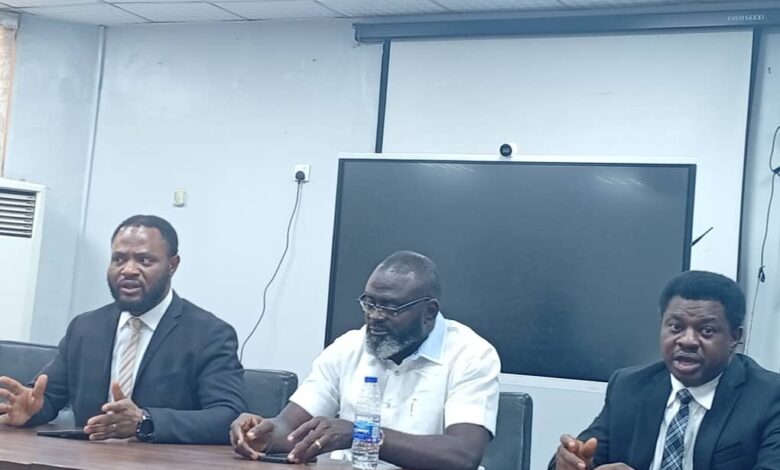
AEDC Managing Director/Chief Executive Officer, Engr, Chijioke Okwuokenye, who disclosed this on Thursday during a Media Parley with some select journalists covering the power sector in Abuja, said the meters were deployed under the Meter Acquisition Fund (MAF) and Distribution Sector Recovery Programme (DISREP).
“These are real customers that have been moved from estimated billing to credible billing by improving customer satisfaction, improving customer confidence and also improving the liquidity in the market, “he added.
Okwuokenye said the company has also made some tremendous progress in terms of investments, and service delivery to customers. Noting that last year, the company increased its energy intake by almost 15%from what it did the previous year.
Acknowledging that there are still challenges in the sector, especially with regards to the low power allocation available for distribution, due largely to dry season and gas constraints, the MD assured that supply would soon normalise.
He expressed confidence that with the coming on board next year of the Gwagwalada Independent Power Project (GIPP) by the Nigerian National Petroleum Company Limited (NNPC Ltd.), and the Abuja-Kaduna-Kano (AKK)gas pipeline project, Abuja and its environs, would be massively relieved of energy cuts. Revealing that the company is working closely with the NNPC management on how to uptake that power and improve service delivery to Abuja.
The Gwagwalada IPP is among the NNPC flagship power projects along the AKK corridor. It is part of the 3,600MW cumulative power capacity which includes Kaduna IPP (900MW) and Kano IPP (1,350MW).
The AEDC MD disclosed a new feeder is being constructed in Wuse, a dedicated feeder to further improve the reliability of power supply in WUSE. Affirming that by the second week of March 2026, the project should be completed.
“By the second week of March, we can assure customers in Wuse that they will be experiencing nothing less than 20 hours of supply uninterrupted. Because we are creating redundancy, bringing in new feeders and ensuring that even when there are faults and outages, we can do back feeding through our redundant network.
“We are also doing a dedicated feeder to IDU as we speak. We have a plan which the regulator is even currently reviewing and is going to sanction, that is going to ensure uninterrupted power supply to the industrial area of IDU. So, the idea is to create clusters of positive impact, which will create the confidence both in investors and in customers that AEDC is able to deliver on our promise. And start replicating these clusters of positive impact across our entire franchise area.
“I have spoken about a few things we are doing in Abuja, but this is not just restricted to Abuja. In Kogi, Niger, Nasarawa, we are trying to replicate the same solutions. The idea is to position AEDC as the best DisCo in West Africa. It might sound like a tall order, but the fact is that it is possible. We have the support of our shareholders, we have the support of our regulators, we have the support of the government to get this to happen,” he said.
The AEDC boss said the company is planning to implement embedded generation scheme, in partnership with the Rural Electrification Agency (REA)to have interconnected mini grids where people are able to build solar plants and interconnect them to the company’s network and serve uninterrupted power supply to their clusters. “With the embedded generation, we have a plan to build about three 10-megawatt solar plants, expanded to 20 depending on how the demand grows,” he added.
The MD said the identified issues in Lokogoma and Karu are being addressed, assuring that very soon the areas would enjoy uninterrupted power supply. According to him, plans are being perfected to improve power supply in Karu and placed everyone on Band A for efficient power supply.
Also speaking, AEDC Chief Operating Officer, Engr. Blessing OGbe listed energy theft, vandalism and lack of payment of bills as some of the challenges facing the company.
The challenges, according to him, are also impacting the electricity market as the revenues that should accrue to the value chain are often lost. Nevertheless, he said efforts are ongoing to address issues of meter bypass and theft of electricity using the law enforcement agencies.
He mentioned that most of the customers in Band A want to be downgraded to Band B, not for lack of supply, but because of perceived high tariff and harsh economic condition in the country.
On the current epileptic supply to customers, Engr. Ogbe explained that the 15% load allocation to the company from the total energy generated is grossly inadequate. “Saying for a period now, the energy available had not been as it used to be. And we can’t give all we don’t have,” he said.
On his part, AEDC Chief Technical Officer (CTO), Engr. Godfrey Abba, said the management has been working around the clock to continuously improve the company’s network and infrastructure. Explaining that the company actually inherited a network that was under very serious decay.
“If you look at Abuja, the city center, majorly underground. Ordinarily one would think that because it’s underground, you have a very perfect network. But if you look deep into it and you diagnose and do some analysis, you see why we have a lot of issues. We don’t have cable trenches in the city center.
“The cables, the holes are dug and cables are just laid. So if I have a fault on an 11 kV cable, for instance, it will take time to detect the fault. Of course, we have machines that we use to detect such faults.
“It will take time to expose the cable. Sometimes you see buildings coming on top of where the cables have already been laid. You need to expose and before you carry out repair work to service the area again.
“That has been a major constraint for us. Those cables, we are making arrangements to replace them. As not to create that downtime and that number of hours that the customers will be out,” he said.