How We Saved Nigeria $4m Through Integrated Vaccination Campaigns-NPHCDA
By Alice Etuka, Abuja

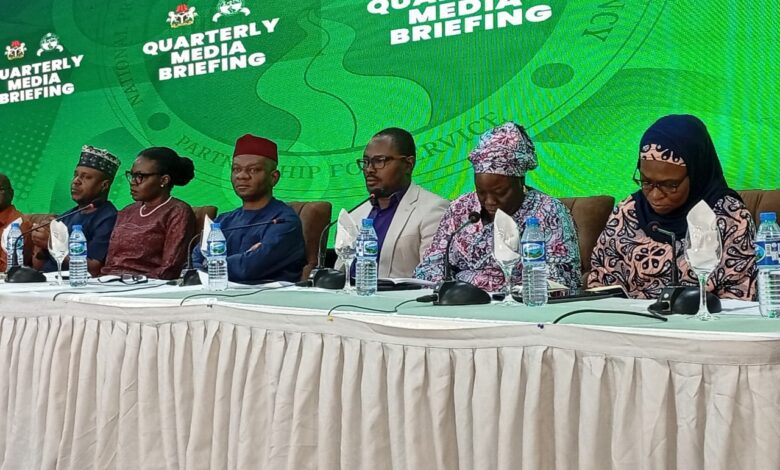

The National Primary Healthcare Development Agency (NPHCDA) has said it saved Nigeria $5 million through its integrated vaccination campaigns.
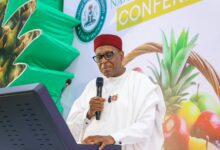
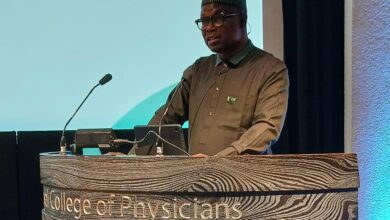
Director of Disease Control and Immunisation at the NPHCDA, Dr. Rufai Ahmed disclosed this at a quarterly media briefing held in Abuja on Tuesday.
Dr. Ahmed informed that Nigeria accommodates about 2.1 million of all the zero-dose children globally, to counter this and ensure that communities were not ravaged by outbreaks, the agency developed the zero-dose induction operational plan to go and find the children wherever they were, under the Identify Enumerate Vaccinate (IEV) strategy.
“Our aim is to reduce that 2.1million by 30% every year and also be able to maintain their level of immunity”, he said.
To achieve this, they plan targeted outreaches, where Community Health Workers leave the health facilities, go to communities, a distance of 1-2kilometers from the facilities to immunise children.
“I will gladly tell you that from July last year to October, we were able to reach 500, 000 of these zero-dose children with at least penta 1”.
He also disclosed that they liase with vigilantes and the military in security compromised areas to carry out outreaches where they provide, not only immunization services but also maternal care.
He further stated that the NPHCDA also adopted the integration approach whereby all the immunization services are rendered together during outreaches.
“And one other thing that we have set the pace for in Africa is what we call the integration. So usually the PHC services have been verticalized for a very long time.
“But what we’re looking at now is why have a polio campaign this month and have a Measles Rubella campaign next month and later on have a yellow fever campaign, using the same health workers, attending to the same communities, attending to the same children, the audience is the same.
“Why go there three times when you can deliver at once? So we have come up and said we’re tired of all of this. The communities are even tired of seeing us at least 17 times in a year, so we have started integrating.
“Just to tell you that we did a large-scale introduction on Measles Rubella vaccination where we definitely piloted the integration and we saw the benefits of it. Where we get to meet these children, administer services once, saving ourselves that duplication and everybody just running around and everybody getting tired and the quality of such interventions do not actually even meet the minimum standard.
“So now we have planned better, one micro-plan for all of these activities. Same health workers, same delivery methods, same awareness structure and all of that.
“And just to state here that it actually does save money. In the last Measles Rubella (MR) campaign, because of the polio resources and the MR resources, we were able to save over $4 million and that’s a good thing for Nigeria because that can now be put into some other activities”, he said.
Corroborating Dr. Ahmed, the Executive Director of NPHCDA, Dr. Muyi Aina said the integration strategy was in response to communities’ request, as a result, they had a massive campaign that targeted 106 million Nigerians from 0-14years with various interventions ranging from vaccination against Polio, Measles Rubella, Yellow fever, hpv for young girls, malaria in high-burdened states and Neglected Tropical Diseases like river blindness, trachoma, Lymphatic filariasis and others.
Aina explained that, for the Identify Enumerate Vaccinate Strategy (IEV), they documented 7.4 million children and vaccinated over 3.4 million of them with different vaccines including the polio vaccines.
He disclosed that 163,000 of the children were zero dose, which meant there was no record they received any of those vaccines that a child should get.
According to the Executive Director, “we do campaigns to bridge the gap. A lot of investment have gone into the cold chain infrastructure to improve routine immunization. We’ve also revamped the distribution networks.
“We have added to the frontline cold chain About 1,642 health facilities that now have solar refrigerators where they store their own vaccines and the ability of community health workers to access them is easier”, he said.
He noted that outbreaks had been traced to stock out of vaccines and to prevent reoccurrence, a new hub had been created in Lagos, Abuja and Kano, making it easier for vaccines to go from the state stores to the health facilities that have storage capacity.
“On that note, we would really like to thank the president, despite the tight finances of the country at the moment recently recently released 68 billion naira for the co financing of Nigeria’s vaccine procurement with Gavi…what that did was to avert an impending stock out that would have happened earlier in the year”, he concluded.