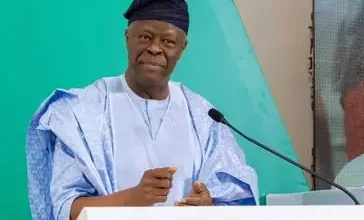

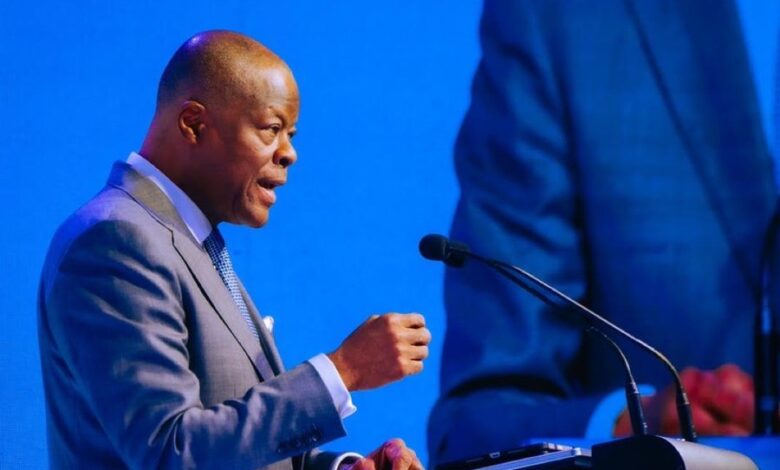

The Minister of Finance and Coordinating Minister of the Economy, Wale Edun, has stated that despite vast potential, Africa continues to face significant challenges, disclosing that illicit financial flows alone are estimated to cost the continent nearly $88 billion annually.
Edun who spoke at the opening of the 5th Session of Sub Committee on Tax and Illicit Financial Flows of the Specialised Technical Committee on Finance, Monetary Affairs, Economic Planning and Integration (STC –FMAEPI), on Tuesday in Abuja, said these resources should have been invested in infrastructure, education, healthcare, and productive sectors of the continent’s economies.
He also mentioned that the Continent continues to grapple with: Tax evasion and base erosion, Limited economic diversification, Weak institutional capacity, and Continued dependence on external financing, stating that addressing these challenges was not optional, but essential.
Speaking on domestic resource mobilisation, the Minister said that achieving the continental ambition to mobilise up to 90 percent of Africa’s development financing needs from domestic resources, as envisioned under Agenda 2063 requires not incremental change, but systemic reform.
According to him, the Continent’s Agenda 2063 provides a clear reform pathway and its priorities include: Strengthening tax systems and administration, Maximizing returns from natural resources, Enhancing domestic savings and financial inclusion, Developing capital markets, Combating illicit financial flows, and Improving governance and reducing inefficiencies.
“These are not abstract goals. They are practical levers for transformation,” he added.
On Nigeria’s tax reforms experience, Edun said Nigeria, like many African countries, has taken deliberate steps in this direction. Noting that since May 2023, under the leadership of President Bola Ahmed Tinubu, the nation has implemented comprehensive tax reforms aimed at simplifying the tax system, broadening the tax base, reducing the burden on vulnerable populations, and improving compliance. “These reforms came into effect in January 2026,” he said.
“We have also strengthened transparency and accountability in the management of natural resource revenues.
“The President signed Executive Order 9 that stipulates that all oil and gas revenues are remitted into constitutionally designated accounts prior to Disbursement.
“In addition, the removal of fuel subsidies and the unification of the exchange rate have significantly improved fiscal transparency, reduced distortions, and strengthened investor confidence.
“To further enhance trade efficiency and reduce leakages, Nigeria recently launched a National Single Window system—an important step in tackling trade-based illicit financial flows.These reforms are already yielding results,” he added.
The Finance Minister said Nigeria has recorded notable improvements in revenue performance, particularly in non-oil revenues, alongside stronger fiscal buffers and increased investor confidence.
He said the country has also expanded international tax cooperation, deploying information exchange mechanisms to identify and recover revenues lost through illicit financial practices.
“From national reforms to continental progress, while these reforms reflect Nigeria’s experience, they also underscore a broader point: practical, country-led reforms are essential to advancing Africa’s collective fiscal resilience,” he noted.
While stating that the path forward for African fiscal reform requires clarity of priorities, Edun said Africa’s fiscal reform agenda must focus on:
“First, broadening the tax base through improved compliance and reduced leakages.
“Second, strengthening public financial management to ensure transparency, accountability, and value for money.
“Third, promoting domestic savings and financial inclusion to mobilize local capital.
“Fourth, developing robust capital markets to support investment and innovation.
“Fifth, intensifying efforts to combat illicit financial flows through stronger enforcement and cross-border cooperation.”
He stressed the need to invest in the foundations that make reform sustainable, which according to him, include Strong and accountable institutions, Digital infrastructure and data systems, Regional cooperation and policy coordination, Active citizen engagement.