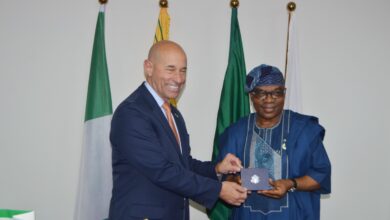
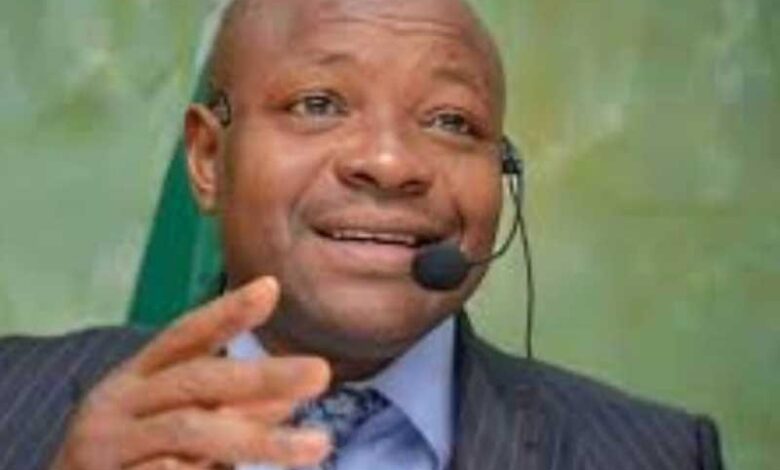


The Nigeria Union of Journalists (NUJ) on Friday named the Director‑General of the Department of State Services (DSS), Mr. Adeola Ajayi, its man of the year, citing his role in deepening cooperation between security agencies and the media.
This follows a two‑day National Security Summit held in Abuja, themed “Media and Security Agencies as Partners in Nation-Building,” jointly organised by the NUJ and the DSS on June 18 and 19.
The Summit drew media executives, journalists, heads of security and intelligence agencies, policymakers, academics, civil society representatives and development partners.
While presenting the award, the NUJ said the investiture recognised more than a title: it honoured a leadership approach that values engagement, transparency and partnership.
It said under Mr. Ajayi’s stewardship, the DSS has pursued regular and constructive interaction with media stakeholders, the union said, creating channels that reduce suspicion, curb misinformation and foster cooperative solutions to Nigeria’s security challenges.
NUJ National President, Comrade Alhassan Yahaya Abdullahi described the summit as a timely intervention amid a complex security environment marked by terrorism, banditry, kidnapping, cybercrime, violent extremism, separatist agitations and hybrid threats.
He reiterated that national security is a shared responsibility requiring ethical, accurate journalism and coordinated action across institutions.
The Honourable Minister of Information and National Orientation, Alhaji Mohammed Idris, who chaired the occasion, commended both the media and security agencies for their complementary roles.
He urged renewed trust and professionalism, while reaffirming the federal government’s commitment to intelligence driven operations, inter‑agency collaboration, technological modernisation and community‑based responses.
Speakers emphasised the media’s role as a “force multiplier” for security operations and a critical defender of democratic values.
Professor Okey Ikechukwu argued that strategic communication is essential to close information gaps that fuel harmful narratives. Musikilu Mojeed, President of the International Press Institute (IPI) Nigeria, underscored that press freedom and national security are mutually reinforcing and must be balanced through dialogue and due process.
Aisha Ibrahim, President of the Nigeria Association of Women Journalists (NAWOJ), called for greater inclusion of women in peacebuilding and security governance.
Summit participants made several observations, noting that sustainable security requires a whole‑of‑society approach that combines operational readiness with socio‑economic investment, community engagement and credible communication.
They raised particular concern about the threat of misinformation, the under‑utilisation of women and youth in peacebuilding, and the link between drug abuse and criminality.
Key recommendations adopted at the summit included institutionalising structured dialogue between media and security agencies, improving proactive and transparent communication from security services, strengthening fact‑checking and ethical standards in journalism, expanding joint training for journalists and security communicators, and integrating summit outcomes into national security frameworks.
Participants also urged increased government investment in education, youth empowerment, state‑owned media, and enhanced funding for security agencies to procure modern technology and logistics.
In its appreciation, the summit expressly thanked Mr. Ajayi and the leadership of the DSS for their foresight and collaborative spirit in making the summit possible.
The communiqué was drafted by Shu’aibu Usman Leman, Abdulrazak Bello Kaura and Ayuku Pwaspo, and signed by NUJ National President Comrade Alhassan Yahaya Abdullahi on 19 June 2026.