Kashimbilla Multipurpose Dam Fully Completed, Adding 40MW To National Grid -Utsev
By Sunday Etuka



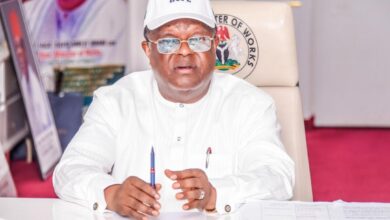
The Minister of Water Resources and Sanitation, Prof. Joseph Utsev, has disclosed that the Kashimbilla Multipurpose Dam, one of Nigeria’s flagship projects, is now fully completed, with its forty-MegaWatts hydropower facilities supplying power to the national grid, and airstrip already commissioned.
This is just as he disclosed that work is currently advancing on the water supply and treatment components that will soon provide clean and reliable water to millions of Nigerians across Taraba State and neighbouring communities.
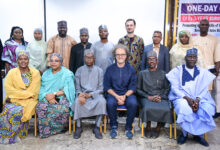
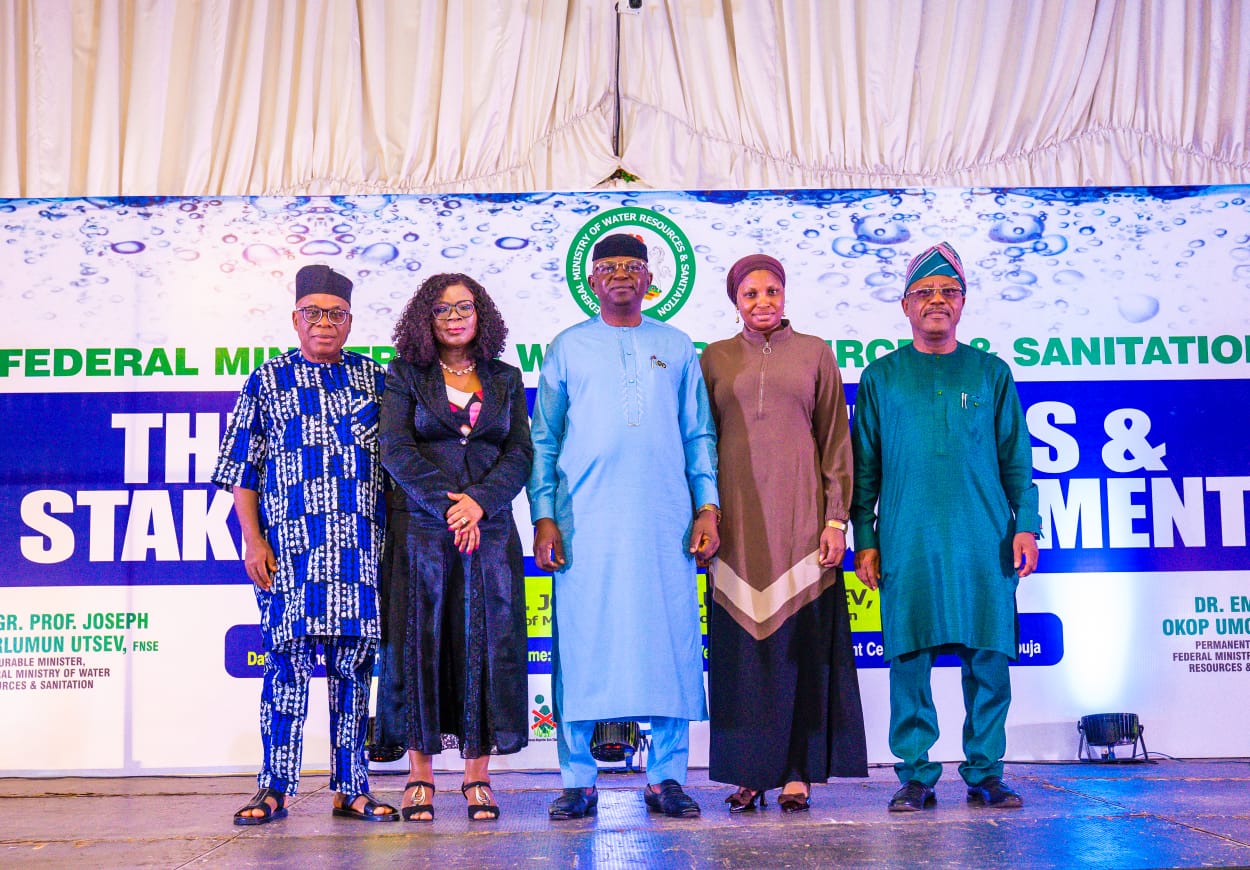
Speaking at a One-Day Citizens and Stakeholders’ Engagement on the achievements of the Ministry’s projects and programmes, held on Wednesday at the Bolton White Apartments, Wuse Zone 7,Abuja, the Minister said together with the Gurara and Dadin Kowa Dams, these projects now generate a combined 110 megawatts of renewable energy, contributing significantly to Nigeria’s power mix and commitment to clean energy transition.
TheFact Daily reports that the landmark engagement was convened by the Ministry in furtherance of the directive of the Federal Government under the leadership of President Bola Tinubu, to strengthen accountability, enhance transparency, and deepen stakeholder inclusion in the implementation of government policies and programmes across all sectors, including Water, Sanitation and Hygiene (WASH).
Prof. Utsev stated that over the past two years, the Ministry under his watch, has worked tirelessly to transform Nigeria’s water and sanitation landscape, expand irrigation and foodproduction, and harness water resources for clean energy generation.
He noted that beyond Kashimbilla, several other projects are advancing strongly, adding that the “Mangu Dam in Plateau State has reached 90 per cent completion; Adada Damin Enugu State stands at 78 per cent; Ogbesse Multipurpose Dam in Ekiti Statehas achieved 65 per cent; and the Farin Ruwa Dam in Nasarawa State continues to record steady progress.
“We are equally proud of the work on Alau Dam in Borno State, which is enhancing flood control and securing potable water for the people of Maiduguri.
“We have also completed or advanced several smaller dams including Irawo Earth Dam in Oyo, Otukpo Multipurpose Dam in Benue, Amla Otukpo Dam, Alajue Dam, and rehabilitation works on Tiga, Challawa Gorge, and Ruwan Kanya Reservoirs.”
The Minister revealed that through its Public-Private Partnership (PPP) initiative, the Ministry has successfully concessioned two major brown field assets: the 40-megawatts Kashimbilla Hydropower Plant and the Kashimbilla Integrated Cargo/Agro-AlliedAirport.
“Both were concluded in full compliance with the Infrastructure Concession Regulatory Commission Act of 2005, generating over N7 billion in commencement fees for the Federal Government. We are finalising concession agreements for new hydropower projects — Farin Ruwa,Katsina-Ala, Dasin Hausa, Manya, and Bawaku — as well as the Azara–Jere Irrigation Scheme, which marks a historic step in bringing private-sectorefficiency into agricultural water management,” he added.
In the area of irrigation and food security, Utsev said the Ministry has continued to translate potential irrigable lands into productive farmlands through modernisation, efficient water management and sustainability.
“At the Dadin Kowa Irrigation Scheme inGombe State, we completed and handed over 2,000 hectares of irrigable land directly to farmers—boosting crop yield and improving livelihoods in the North-East.
“In Sokoto State, the Middle RimaValley Irrigation Project has seen key components completed, including the gate-control structure and access roads, while large sections are now operational.
“The Middle Ogun Irrigation Project hasreached 90 per cent completion on its power line and 80 per cent on the solarisation of sprinkler systems, significantly reducing farmers’ operatingcosts.
“To strengthen climate resilience, we have expanded small-scale irrigation systems using renewable energy. The Micro Irrigation Project at Gari in Jigawa, Ipapo in Oyo, and Duku-Lade in KwaraState have been completed and commissioned, while additional schemes in Yauri, Shaga, and Ngaski in Kebbi State are underway,” he noted.
In the water-supply and sanitation subsector, he said the Ministry has constructed and rehabilitated more than 6,700 water schemes nationwide, delivering safe drinking water to over 32million Nigerians. Projects such as Ugbema, Boko/Buruku, and Wannune in Benue;Greater Dutse in Jigawa; Gombe Regional Water Project; Farin Ruwa in Nasarawa;ATBU in Bauchi; Biu in Borno; Gashua and Damaturu in Yobe; Ota in Ogun; andZungeru–Wushishi in Niger State stand as proof of our dedication to servicedelivery.
“In rural communities, we successfully implemented numerous rural water supply projects, enhancing access to clean water for over 2,000,000 beneficiaries across various states. For the period under review, we have constructed about 500 new water supply projects consisting of the provision of Solar Powered Boreholes, Storage Water Facilities, Reticulations and Fetching points nationwide,” he said.
On sanitation, the Minister said that the Clean Nigeria Campaign continues to make history, noting that so far, about 5,238 public sanitation facilities were constructed nationwide, and 162 Local Government Areas have now been certified Open Defecation Free.
“In addition to ensuring water bodies are protected from contamination, two (2) National Water Quality Reference Laboratories in Asaba and Umuahia were recently completed to enhance water-quality monitoring,” he added.
Utsev further disclosed that through the SURWASH and PEWASH Programmes, supported by UNICEF, the World Bank, and other partners, the Ministry was delivering sustainable WASH services to millions across 17 States andthe FCT.
He also mentioned that as part of its proactive flood management strategy, the Ministry unveiled the 2024, and2025 Annual Flood Outlook, saying that the 2025 report identified 1,249 communities in 176 local government areas across 33 States and the FCT as high-risk area, and 2,187 communities in 293 local government areas as moderate-risk.
He said in response to these risks, the Ministry introduced several innovative flood risk management initiatives, including the National Flood Insurance Programme now being piloted in Kogi and Jigawa States, the Integrated Climate Resilience Innovation Project aimed at supporting climate-adaptive planning, the Niger Flood Project for enhanced control and water resource optimization, and the introduction of an Annual Drought Outlook to complement flood prediction and response.
Earlier, in her Opening Remarks, the Permanent Secretaryof the Ministry, Dr. Emanso Okop Umobong, said water and sanitation sector remains central to public health, economic development, food security, environmental sustainability, and overall national well-being.
Noting that it was therefore imperative that the Ministry continues to interact closely with its stakeholders to obtain feedback, share information, and strengthen mutual understanding in order to improve service delivery to the citizenry.
“This forum provides an opportunity for constructive dialogue on sectoral performance, emerging challenges, and opportunities for enhanced collaboration.
“The Ministry attaches great importance to the contributions of all stakeholders, and the outcomes of today’s deliberations will be carefully considered in strengthening ongoing reforms, refining policies, and enhancing programme implementation,” she added.
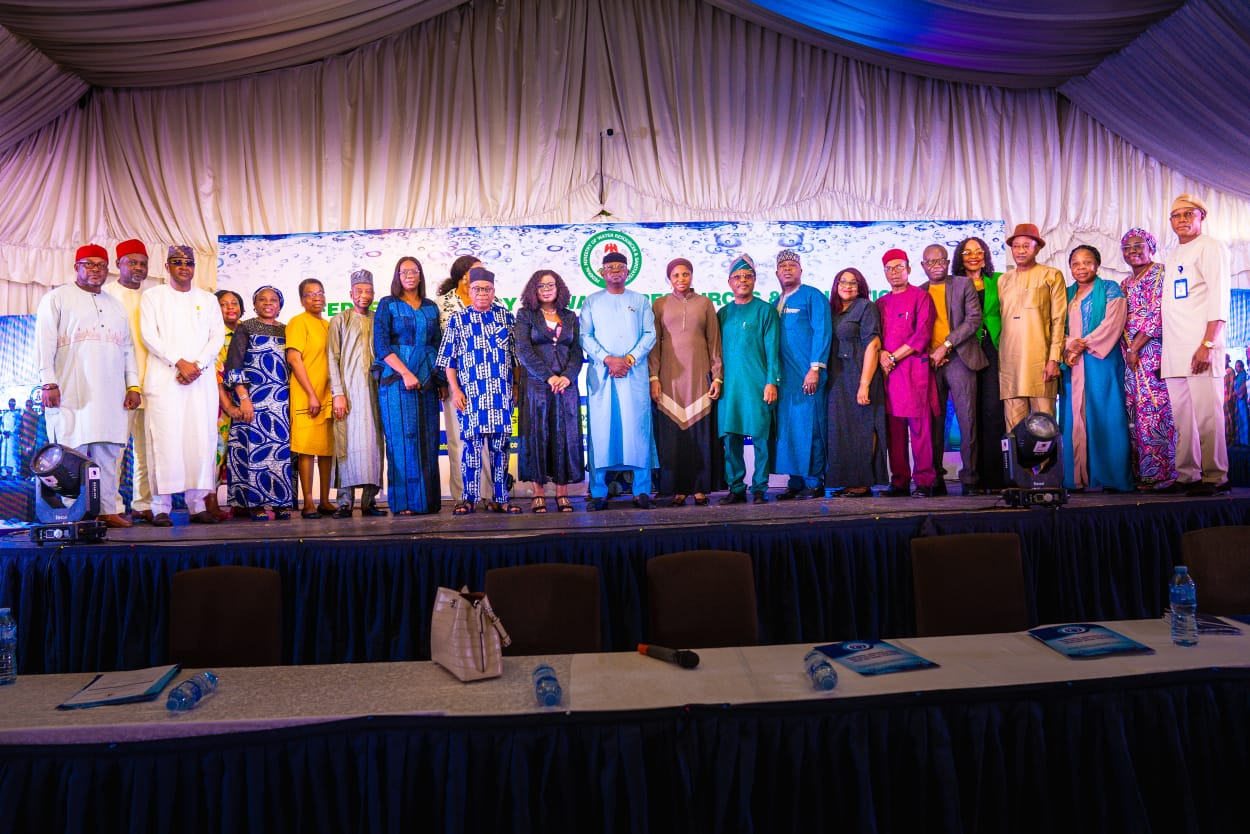
The event was attended by the development partners, representatives of civil society organisations, professional bodies, community groups, private sector actors, officials of theRiver Basin Development Authorities, Directors, Heads of Departments and Units of the Ministry.