
Mission 300 is an ambitious initiative of the World Bank Group (WBG) and the African Development Bank (AfDB), to connect 300 million people to electricity in Africa, especially Nigeria by 2030.
With nearly 600 million people in Sub-Saharan Africa living without access to electricity, the initiative comes handy to guarantee access to reliable, affordable, and sustainable energy which is critical for powering economies, delivering essential services, and spurring job creation for Africa’s growing population.
The unique initiative brings together African governments, the private sector, and development partners to deliver affordable power, expand electricity access, boost utility efficiency, attract private investment and improve regional energy integration that drives economic transformation.
To accelerate energy access through Mission 300, the World Bank Group said it would connect 250 million people to electricity and the AfDB another 50 million by 2030.
Building on the ongoing sector reforms by the African governments, the WBG is increasing its support for energy projects in Africa, leveraging $30 billion in IDA resources between now and 2030, while using innovative tools to mobilize private sector investments.
It was gathered that the WBG and the AfDB are working with partners like The Rockefeller Foundation, Global Energy Alliance for People and Planet (GEAPP), Sustainable Energy for All (SEforALL), and the World Bank’s Energy Sector Management Assistance Program (ESMAP) trust fund, to mobilize resources and align efforts in support of powering Africa.
Many development partners and development finance institutions (DFIs) are also supporting Mission 300 projects through co-financing and technical assistance.
To unlock private investment across Africa’s energy sector, the WBG said it is building upon its new guarantee platform to create innovative financing and de-risking facilities.
For instance, the launch of Zafiri, a new investment company that will provide patient equity to private companies that advance distributed renewable energy solutions.
It said together under Mission 300, this broad coalition of stakeholders is set to achieve a historic change in global energy access that will lift millions out of poverty and transform Africa.
Mission 300 partners pledged more than $50 billion in support of increasing energy access across Africa.
In Nigeria, efforts are been intensified to tackle energy poverty in line with the initiative, since the nation’s commitment in Dar es Salaam, Tanzania in January this year.
The Rural Electrification Agency (REA) is a key implementing partner for Mission 300. REA implements four of Mission 300’s five pillars and is signing grants and developing national energy compacts to achieve the goal of connecting more Nigerians to reliable, affordable, and sustainable electricity.
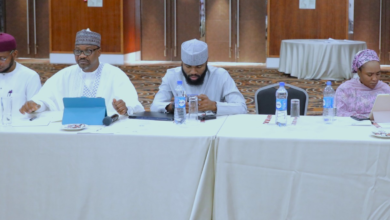
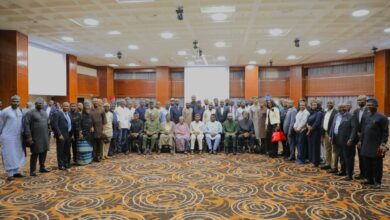
In July, Nigeria convened a high-level stakeholder engagement forum towards the implementation of the National Energy Compact under the Mission 300 initiative.
The country established a high-level Compact Delivery and Monitoring Unit to oversee and coordinate the delivery of Mission 300 targets.
It planned to achieve the Mission through the provision of the non-grid solar powered energy, agriculture and other small-scale businesses, especially at the rural level, by providing energy access to the large population of rural dwellers.
Nigeria is making significant progress in implementing the policy, with a focus on deploying solar-powered irrigation systems to farmers across the country.
Just recently, the Global Energy Alliance for People and Planet (GEAPP), applauded the Federal Government of Nigeria for its efforts towards achieving the Mission 300 target.
GEAPP African Director and Leader of Delegation, Labna Bhyani, pledged to provide technical assistance to support Nigeria’s Mission 300 initiatives, particularly in monitoring and tracking progress.
Bhyani who said the mission was to get a first-hand information on how the country is progressing on the programme, pledged to provide assistance to help Nigeria provide clean energy to the people, even though they do not give loan like the World Bank and the African Development Bank.
She said the organization is impressed with Nigeria’s progress in policy reforms, grid, and off-grid programmes.
Speaking on the progress so far made, the Minister of Power, Chief Adebayo Adelabu said the government is focusing on the transformation of the agricultural sector of the economy, through the deployment of solar powered irrigation system to farmers across Nigeria adding that this forms part of the strategies towards the implementation of energy access to 300 million Africans by the end of 2030.
He said as a signatory to Mission 300 in Dar es Salaam, Tanzania in January this year and having presented its National Energy Compact, Nigeria will revolutionized, through the provision of the non-grid solar powered energy, agriculture and other small scale businesses, at the rural level in achieving energy access to the large population of rural dwellers.
He called on the foreign partners to provide technical assistance to Nigeria in the implementation of the mission 300, saying: “We so much need the technical support for us to be able to monitor and track different parts and locations in the country, so that at any time, we can measure our achievements for data collection. Even though we have made significant progress in the implementation of this policy, there are lots of gaps to be filled so that it will not just be rhetorics. We must fully implement it”.
Expatiating on how the program can make effective impact on energy access to the rural areas, Adelabu told the delegation that “in the area of agriculture for instance, we want to focus on irrigation to our rural farmers. In this case, we want to deploy thousands of solar power pumps to help rural farmers to boost productivity. We will also follow with the deployment of solar powered storage facilities because, when they produce more than what can be consumed, storage becomes a challenge as the products go bad quickly. We want to be able to achieve this for our rural farmers, using the non- grid method to power processors, planters, harvesters and other farm implements. In the same way, we will provide solar powered access to small scale businesses in our rural areas such as patent medicine stores and others that require energy. Through this, we move them to clean energy and enhance their productive capabilities”.
According to the Minister, Nigeria is moving in the right direction in the implementation of the policy “in partnership with the Ministry of Finance, but still looking for partnership that can drive the implementation faster.
“We have established key pillars of the compact. About two months ago, we held our first stakeholders meeting. We are taking energy access to a lot of rural communities in their primary health care programmes. We have secured funding from India to achieve these.
“We are enhancing grid extension and expansion through programmes such as the Presidential Power Initiative (PPI), which has generated additional 700 megawatts for us, we are moving to the first phase of the Siemens project, which will also add additional 7000 megawatts to our generation and also stabilise it. We are also moving towards achieving the cost reflective tariff. Our metering initiative is going on so that our consumers can get the accurate value of their consumption as the estimated billing is a rip off on them. These and so many other activities have been embarked upon towards achieving mission 300 by 2030. But, just as I said, we need your support, your cooperation and partnership for us to move ahead”, Adelabu said.