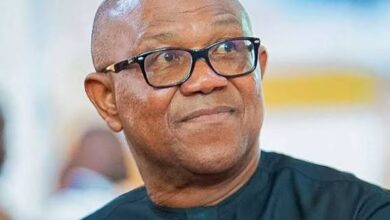

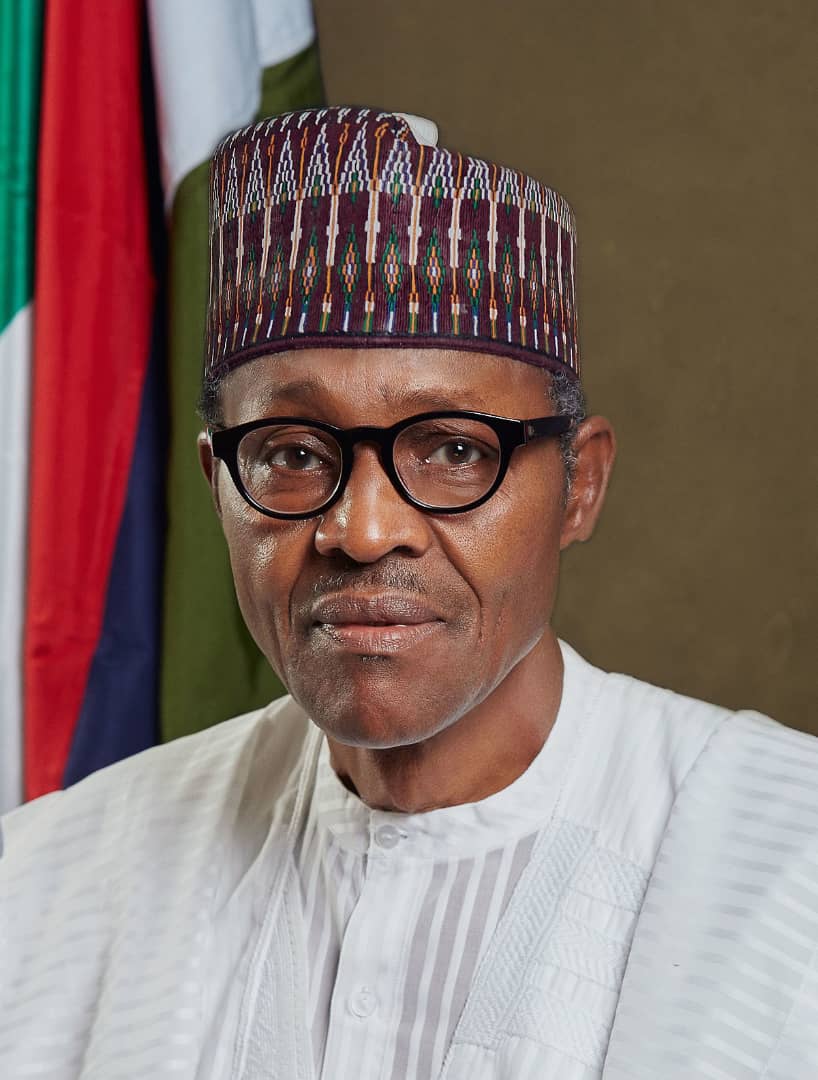

Muhammadu Buahri was a Nigerian politician who served as the President of Nigeria from 2015 to 2023. As retired Nigerian Army Major General, he was the Military Head of State of Nigeria from 31 December 1983 to 27 August 1985.
Buhari ran for president of Nigeria on the platform and support of the All Nigeria Peoples Party (ANPP) in 2003 and 2007, and on the Congress for Progressive Change (CPC) platform in 2011.
In December 2014, he emerged as the presidential candidate of the All Progressives Congress party for the 2015 general election. Buhari won the election, defeating incumbent President Goodluck Ebele Jonathan.
It was the first time in the history of Nigeria that an incumbent president lost a re-election bid. He was sworn in on 29 May 2015.
In February 2019, Buhari was re-elected, defeating his closest rival, former Vice President Atiku Abubakar, by over 3 million votes. He died on 13 July 2025 in London.
Buhari was born to a Muslim family on 17 December 1942, in Daura, Katsina State, Nigeria. He was the twenty third child of Mallam Hardo Adamu, a Fula chieftain originally from Dumurkul in Mai’Adua and Zulaihat.
He was named after ninth-century Islamic scholar Muhammad al-Bukhari. Buhari’s great-grandfather, Yusuf, was a businessman. Buhari was four years old when his father died, and Waziri Alhassan, the son of the Emir, Musa dan Nuhu (reigned: 1904–1911), became the guardian of Zulaihat and her six children, including Buhari.
Buhari attended Qur’anic school, where he helped in rearing cattle. He had his primary education in Daura and Mai’Adua, and graduated in 1953. He was admitted into Katsina Middle School (later renamed to Katsina Provincial Secondary School), where he had his secondary education from 1956 to 1961.
During his sixth form, he served as the house captain and headboy of the school. In 1960, he was awarded scholarship by the Elder Dempster Lines for a summer visit to the United Kingdom.
Buhari wanted to pursue a medical degree to become a doctor, however, the only option at the time was to study Pharmacology at the Nigerian College of Arts, Science, and Technology in Zaria, which would take him many years.
He was advised by Mamman Daura to join the Nigerian military and pursue higher education there. Inspired by the then junior officer Hassan Katsina, who took young boys in Katsina State, including Buhari, on night hikes, where they camped under the stars.
In 1962, at the age of 19, Buhari was one of 70 boys selected for recruitment into the Nigerian Military Training College (NMTC). In February 1964, NMTC was upgraded to an officer commissioning unit of the Nigerian Army and was renamed Nigerian Defence Academy. From 1962 to 1963, Buhari underwent officer cadet training at Mons Officer Cadet School in Aldershot, England.
In January 1963, at the age of 20, he was commissioned a second lieutenant and appointed Platoon Commander of the Second Infantry Battalion in Abeokuta, Nigeria, and attended the Platoon Commanders’ Course at the Nigerian Military Training College, Kaduna, Kaduna State, from November 1963 to January 1964.
In 1964, he further moved to the Mechanical Transport Officer’s Course at the Army Mechanical Transport School in Borden, United Kingdom.
From 1965 to 1967, Buhari served as commander of the Second Infantry Battalion and was appointed brigade major of the Second Sector, First Infantry Division (April 1967 to July 1967).
Following the 1966 Nigerian coup d’état that killed the Premier of Northern Nigeria Ahmadu Bello, Buhari, alongside other officers from Northern Nigeria, took part in the July counter-coup which ousted General Aguiyi Ironsi, replacing him with General Yakubu Gowon.
CIVILIAN PRESIDENT
In 2003, Buhari ran for the office of the president as the candidate of the All Nigeria People’s Party (ANPP). He was defeated by the People’s Democratic Party incumbent, President Olusẹgun Ọbasanjọ, by more than 11 million votes.
On 18 December 2006, Buhari was nominated as the consensus candidate of the All Nigeria People’s Party. His main challenger in the April 2007 polls was the ruling PDP candidate, Umaru Yar’Adua, who hailed from the same home state of Katsina.
Buhari officially took 18% of the vote to Yar’Adua’s 70%, but Buhari rejected these results. After Yar’Adua took office, he called for a government of national unity to bring on board aggrieved opposition members. The ANPP joined the government with appointment of its national chairman as a member of Yar’Adua’s cabinet, but Buhari denounced this agreement.
In March 2010, Buhari left the ANPP for the Congress for Progressive Change (CPC), a party he had helped to found. He said that he had supported foundation of the CPC “as a solution to the debilitating, ethical and ideological conflicts in my former party the ANPP”.
Buhari was the CPC presidential candidate in the 2011 election, running against incumbent President Goodluck Jonathan of the People’s Democratic Party (PDP), Mallam Nuhu Ribadu of Action Congress of Nigeria (ACN), and Ibrahim Shekarau of ANPP. They were the major contenders among 20 candidates.
Buhari campaigned on an anti-corruption platform and pledged to remove immunity protections from government officials. He also gave support to enforcement of Sharia law in Nigeria’s northern states, which had previously caused him political difficulties among Christian voters in the country’s south.
The elections were marred by widespread sectarian violence, which claimed the lives of 800 people across the country, as Buhari’s supporters attacked Christian settlements in the country’s central region. The three-day uprising was blamed in part on Buhari’s inflammatory comments.
In spite of assurances from Human Rights Watch, which had judged the elections “among the fairest in Nigeria’s history”, Buhari claimed that the vote was flawed and warned that “If what happened in 2011 should again happen in 2015, by the grace of God, the dog and the baboon would all be soaked in blood”.
Buhari remained a “folk hero” to some for his vocal opposition to corruption. He won 12,214,853 votes, coming in second to Jonathan, who polled 22,495,187 votes and was declared the winner.
Buhari ran in the 2015 presidential election as a candidate of the All Progressives Congress party. His platform was built around his image as a staunch anti-corruption fighter and his incorruptible and honest reputation, but he said he would not probe past corrupt leaders and would give officials who stole in the past amnesty if they repented.
In the runup to the 2015 election, Jonathan’s campaign asked that Buhari be disqualified from the election, claiming that he was in breach of the Constitution. According to the fundamental document, in order to qualify for election to the office of the president, a person must be “educated up to at least School certificate level or its equivalent”. Buhari failed to submit any such evidence, claiming that he lost the original copies of his diplomas when his house was raided following his overthrow from power in 1985.
In May 2014, in the wake of the Chibok schoolgirls kidnapping, Buhari strongly denounced the Boko Haram insurgency. He “urged Nigerians to put aside religion, politics and all other divisions to crush the insurgency he said is fanned by mindless bigots masquerading as Muslims”.
In July 2014, Buhari escaped a bomb attack on his life by Boko Haram in Kaduna, 82 people were killed. In December 2014, Buhari pledged to enhance security in Nigeria if elected president. After this announcement, Buhari’s approval ratings skyrocketed, largely due to Jonathan’s apparent inability to fight Boko Haram.
Buhari made internal security and wiping out the militant group one of the key pillars of his campaign. In January 2015, the insurgent group “The Movement for the Emancipation of the Niger Delta” (MEND) endorsed Buhari.
In February 2015, former Nigerian President Olusegun Obasanjo quit the ruling PDP party and endorsed Buhari.
On 31 March, Jonathan called Buhari to concede and congratulate him on his election as president. Buhari was sworn in on 29 May 2015 in a ceremony attended by at least 23 heads of state and government.
The second inauguration of Buhari as the 15th president of Nigeria, and 4th president in the fourth Nigerian Republic took place on Wednesday, 29 May 2019, following the 2019 Nigerian presidential election and marking the start of the second and final four-year term of Muhammadu Buhari as president and Yemi Osinbajo as vice president. It was the 8th presidential inauguration in Nigeria, and 6th in the fourth republic.
The official swearing-in ceremony took place at Eagle Square in Abuja, the Federal Capital Territory. Acting Chief Justice Tanko Muhammad administered the oath of office taken by President Buhari and Vice President Yemi Osinbajo. The traditional inaugural speech was not delivered.
Former Nigerian heads of state General Yakubu Gowon, General Ibrahim Babangida, Interim President Ernest Shonekan, General Abdulsalami Abubakar, General Olusegun Obasanjo and President Goodluck Jonathan were in attendance.
HEALTH
In May 2016, Buhari cancelled a two-day visit to Lagos to inaugurate projects in the state but he was represented by the Vice-president Yemi Osinbajo after citing an “ear infection” suspected to be Ménière’s disease.
On 6 June, Buhari travelled to the United Kingdom to seek medical attention. This happened days after the Presidential Spokesman Femi Adesina was quoted as saying Buhari was “as fit as fiddle” and “hale and hearty”, to much discontent and criticism from political analysts and followers.
In February 2017, following what were described as “routine medical check-ups” in the UK, Buhari asked parliament to extend his medical leave to await test results. His office did not give any further details on his health condition nor the expected date of his return.
On 8 February, President Buhari personally signed a letter addressed to the President of the Senate of Nigeria alerting him of a further extension to his annual leave, leaving his vice president in charge.
Following an absence of 51 days from office, President Buhari returned to Nigeria. He arrived at Kaduna Airport in the morning of 10 March.
Although information was limited during his stay in London, he was pictured on 9 March meeting the most senior cleric of the world Anglican congregation, Archbishop of Canterbury Justin Welby. Vice President Yemi Osibanjo remained in charge as acting president, while the President continued to recover in Abuja.
The President has missed major official and public appearances just two months following his return to office from England. Most recently he was absent from the Federal Executive Council (FEC) meeting, the worker’s day event held at the Eagle Square in Abuja on May Day 2017.
Speculations about the President’s health circulated in the public sphere in the days following President Buhari’s wishes to “work from home”. Some prominent Nigerian figures urged the President to take a long-term medical leave, citing his failure to make any public appearances over a two-week period.
President Buhari again left Nigeria for a reported health check-up in London on 7 May 2017. President Buhari returned to Nigeria from his medical leave in the United Kingdom 104 days after leaving, on 19 August 2017.
On 8 May, Buhari left Nigeria to London for medical checkup, upon arrival from USA; and he returned on Friday 11 May 2018.