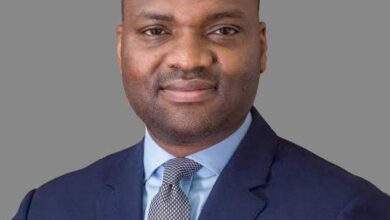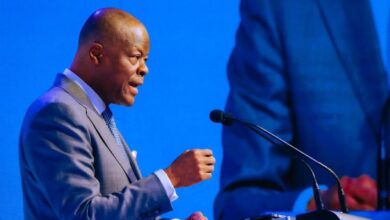

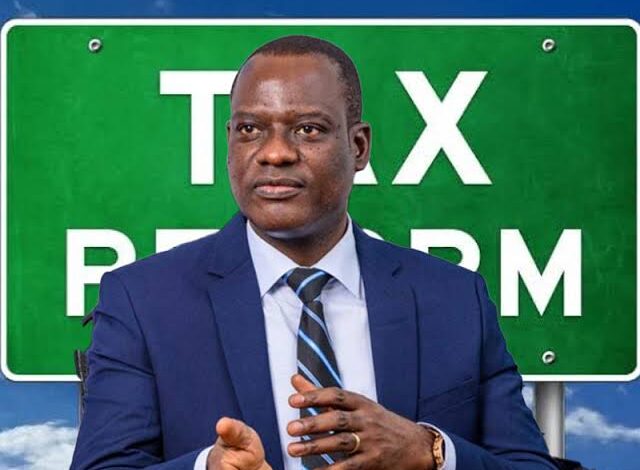

The Chairman of the Presidential Committee on Fiscal Policy and Tax Reforms, Mr. Taiwo Oyedele, has disclosed that the results of the economic reforms introduced by the present administration, especially the Tax Reforms Acts are already evident on the floor of the Nigerian Stock Market.
Mr. Oyedele spoke on Monday at the 3rd Prof. Uche Uwaleke Capital Market Colloquium 2026, held at the Shehu Musa Yar’Adua Centre, Abuja, with the theme, “Future-proofing Africa-wide economic integration: Infrastructure, Innovation, and Capital Markets.”
Highlighting the gains of the reforms, Oyedele said “As of mid-February 2026, the Nigerian Stock Exchange (NGX) showed exceptional performance with the All-Share Index (ASI) recording a robust 25.3% return in just the first seven weeks of the year with market capitalisation crossing the psychological ₦100 trillion mark in January, and reaching an all-time high of over ₦125 trillion by 20 February 2026.
Oyedele, who said that the nation’s tax system prior to the reforms was fragmented, complex, and costly to comply with, discouraging investment and limiting the market’s ability to allocate capital efficiently, said the reforms were designed to build confidence in the economy, stimulate inclusive growth, and foster a truly investment-friendly environment.
“To address this problem, the tax reform provides a unified, transparent, and predictable framework where businesses can plan, investors can price risk properly, and capital can flow productively.
“This is complemented by the crucial monetary policy reforms to ensure exchange rate stability, FX liquidity, and transparency.
“Confidence continues to grow from both foreign and domestic investors, driven by the structural reforms and strong performance in key sectors like energy, industrial and financial services,” he noted.
Speaking on how the tax reform is supporting the capital market development, he said “the new tax laws are strategically designed to deepen our capital markets by recognising them not merely as trading platforms but as a vital engine of national development.”
Other benefits, according to him, are structural: Elimination of “Tax Drag”: Investors can rebalance portfolios without losing money to CGT.
“Increased Velocity & Liquidity: More frequent trading and capital rotation are encouraged, enhancing market liquidity.
“More Patient Capital: Incentivises keeping capital within the Nigerian ecosystem rather than divesting to offshore assets.
“Stronger Linkage: A stronger connection is built between savings and productive investment, meaning the capital market is better able to fund factories, infrastructure, innovation, and jobs.”
Looking ahead, he said “The outlook is promising, particularly as interest rates are expected to moderate following declining inflation numbers, and with the recent increase in regulatory headroom for pension investment in stocks.
“This presents a more attractive investment opportunity for Nigerians compared to virtual assets where tens of billions of dollars is being invested especially by young Nigerians.
“By ensuring policy consistency and deepening our reforms, the capital market will finance our developmental aspirations.”
Earlier, Professor of Capital Market at the Nasarawa State University Keffi, Uche Uwaleke, said the promise of the African Continental Free Trade Area represents one of the boldest economic integration initiatives of the time.
Nevertheless, he said integration is not an event; it is a process. And like all processes, it must be deliberately designed to endure.
He said to future-proof Africa-wide integration means to ensure that the structures built today remain relevant tomorrow.
“It means acknowledging that the world is changing at an unprecedented pace- technologically, economically, geopolitically- and that Africa must not merely react to these changes but anticipate them,” he added.
Speaking further, he said infrastructure is the first pillar of the future.
“No economy integrates on paper alone. Trade agreements without roads, railways, ports, energy systems, and digital connectivity are aspirations without arteries.
“For Africa to trade efficiently within itself, goods must move seamlessly across borders. Power must be reliable. Broadband must be accessible.
Logistics must be efficient. The infrastructure we build must not only meet present demands but anticipate future scale. It must support industrialization, enable regional value chains, and facilitate digital commerce.
“But infrastructure today is no longer confined to concrete and steel. It includes fibre-optic cables, data centres, smart grids, and technology-enabled public services.
“It includes the invisible digital highways upon which modern economies now travel. As Africa integrates, we must ensure interoperability of systems, harmonization of standards, and coordinated investments that prevent fragmentation,” he said.
According to him, the second pillar is innovation. Adding that integration without competitiveness is fragile.
“In a world driven by artificial intelligence, fintech, green technology, and digital platforms, Africa cannot afford to be a passive consumer of innovation. We must be creators. We must cultivate ecosystems that encourage research, support startups, and translate ideas into scalable enterprises,” he submitted.