


The Federal Government says the ₦90 billion annual increase in health workers’ allowances was an evidence of its commitment to industrial harmony in the sector.
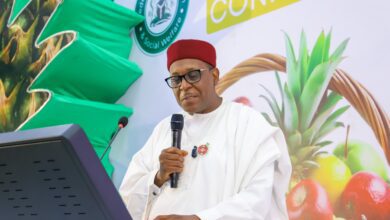
Director, Information and Public Relations, Federal Ministry of Health and Social Welfare, Alaba Balogun in a statement on Tuesday said the Minister, Dr. Iziaq Salako, made this known during an interview on the AIT Kaakaki programme on Tuesday.
TheFact Daily gathered that Nigerian Association of Resident Doctors (NARD) had announced plans to resume its Total, Indefinite and Complete Strike from 12 January, citing the federal government’s failure to implement agreements reached with the association.
Dr. Salako stated that the ongoing standoff with NARD was due to structural and policy issues rather than neglect while adding that the federal government’s actions were aimed at addressing resident doctors’ demands and preventing recurring strikes in the health sector.
He affirmed that the Federal Ministry of Health and Social Welfare places high priority on maintaining industrial peace and ensuring uninterrupted healthcare delivery. He noted that while the government would be pleased to significantly raise health workers’ pay, it must balance such demands with obligations to other sectors, including education, security and national infrastructure, within the limits of available revenue.
According to him, the Tinubu administration demonstrated this commitment in November 2025 by approving an upward review of professional allowances for health workers, adding nearly ₦90 billion to government expenditure annually. The increment covers call duty, shift duty, non-clinical duty and rural posting allowances and was reached through joint negotiations involving all health worker groups.
Dr. Salako explained that past negotiations were often fragmented, with different health professional groups engaging government separately, leading to conflicting agreements on pay parity and relativity and triggering repeated industrial actions. To address this, the Ministry initiated and adopted a collective bargaining approach, ensuring that doctors, nurses, laboratory scientists and other health workers negotiated together.
On NARD’s demands, the Minister said the association’s requests have reduced from 19 to 9, indicating progress in talks. He further clarified that some outstanding demands are constrained by existing civil service rules and approved schemes of service.
He specifically addressed the demand for specialist allowance for resident doctors, noting that resident doctors are specialists-in-training and that current regulations reserve specialist allowances for consultants.
He also added that the National Salaries, Incomes and Wages Commission had advised against extending the allowance to residents, warning it could create similar claims from other health workers undergoing specialist training.
Dr. Salako also dismissed claims of inaction on certification issues, explaining that the National Postgraduate Medical College does not issue certificates after passing Part I examinations, a policy the Ministry cannot override.
Addressing the controversy surrounding five resident doctors disengaged in Lokoja, the Minister said their cases arose from civil service disciplinary procedures. He disclosed that a Ministerial review committee has recommended reinstatement for two doctors, reprimand for two others, and a fresh disciplinary hearing for one, in line with extant due process.
While acknowledging public concern over frequent strikes, Dr. Salako noted that industrial actions by doctors are a global phenomenon, citing similar disputes in the United Kingdom and parts of Europe.
He assured Nigerians that the Federal Ministry of Health and Social Welfare, collaborating with the Federal Ministry of Labour and other stakeholders, remain committed to dialogue that will stabilise the health sector, ensure industrial harmony and prevent future disruptions to healthcare services.