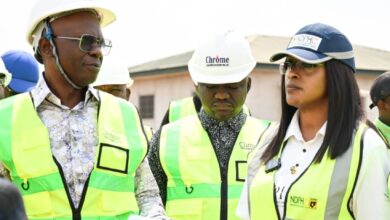
The Nigerian Electricity Management Services Agency (NEMSA) has given the Enugu Electricity Distribution Company (EEDC) four weeks to rectify all identified defects on its network to avert potential hazards that could lead to loss of lives and property.
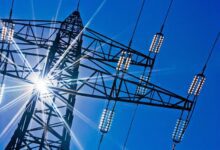
NEMSA’s directive follows recent technical inspections carried out by the agency’s officials at the Afikpo 33kV feeder as well as the inspection of the Nibo Injection Substation in Ebonyi State where 31 critical defects were detected and reported for urgent correction.
According to the Head of Communications & Protocol, NEMSA, Mrs Ama Umoren, the action was part of the agency’s renewed effort at monitoring, testing, and inspection of electrical installations to assure safety, stability, and reliability nationwide.
NEMSA noted that the observed defects at the Enugu Inspectorate Office, led by Engr. Osita Obiukwu, include right-of-way violations, vegetation encroachment, broken cross-arms, aged, weak, and undersized 33kV overhead conductors with multiple joints.
It noted that several overhead lines were flying over residential and commercial premises, posing serious risks to the public.
Pursuant to the Electricity Act 2023, NEMSA is mandated to “enforce compliance with safety requirements for the construction, operation, and maintenance of electrical power plants, transmission systems, distribution networks, and electrical installations” as well as “provide comprehensive technical support services that assures the efficient production and delivery of safe and reliable electricity supply.”
NEMSA also disclosed that its engineers have completed the testing and inspection of transformers in Kebbi, Zamfara, and Sokoto States.
It said the team led by Engr. Armiyau Muhammad Bello, inspected:
A 500kVA, 11/0.400kV community transformer substation at New Layout, near Kebbi Capital College, off Sani Abacha Way, Birnin Kebbi; 300kVA, 11/0.400kV relief transformer substation at Barakallah Area, Gusau, Zamfara State; and A 300kVA, 11/0.400kV relief transformer substation at Arkila Area, Sokoto, Sokoto State.
The agency noted that inspections ensured that these installations meet NEMSA’s technical regulations and standards before full commissioning.
NEMSA revealed that its National Meter Test Station (NMTS) in Port Harcourt has successfully completed the final phase of its bi-annual verification and calibration of meter-testing equipment under the supervision of NEMSA Headquarters.
According to Engr. Koproda Cyriacus, Head of NMTS Port Harcourt, the exercise was crucial to maintaining precision and integrity in all instruments used to test and certify electricity meters nationwide.
He emphasized that similar calibration exercises are ongoing across all NEMSA meter testing centres to ensure accuracy in electricity billing and enhance consumer confidence in the Nigerian Electricity Supply Industry (NESI).
As Nigeria prepares to receive more investment both foreign and local in the renewable landscape, NEMSA has ramped up pre-energization inspections of renewable energy installations for electricity generation nationwide.
Vice President Kashim Shettima, who announced the investment at the Nigerian Renewable Energy Innovation Forum 2025 in Abuja, said the inflow would create over 1,500 direct jobs and accelerate the nation’s clean energy transition.
Commenting on the Agency’s role in this process, Engr. Aliyu Tukur Tahir, Managing Director/Chief Executive Officer of NEMSA and Chief Electrical Inspector of the Federation, stated that the Agency is strengthening its field operations through its 21 Inspectorate Field Offices nationwide to ensure that all renewable and conventional power projects meet approved standards before connection to the national grid.
“No installation is energized until it meets the required extant regulations for testing, inspection and certification by NEMSA” Engr. Tahir affirmed.
“These checks protect people, property, and the reliability of our energy system.”
He reiterated NEMSA’s unwavering commitment to Mr President’s renewed hope agenda by expanding monitoring capacity, enforcing technical standardsand regulation, and deepening collaboration with stakeholders to deliver safe, reliable, and sustainable electricity for all Nigerians.