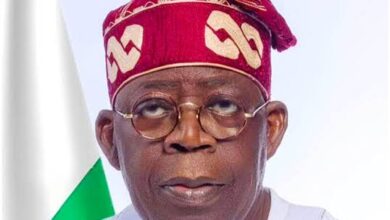

President Bola Tinubu has disclosed that the country secured Final Investment Decisions (FIDs) exceeding $8 billion in the nation’s Oil and Gas Sector in 2025, including major offshore gas developments involving global energy companies.
This direct investment inflow, according to him, was driven by regulatory certainty, fiscal reforms, and improved operational guidelines and conditions.
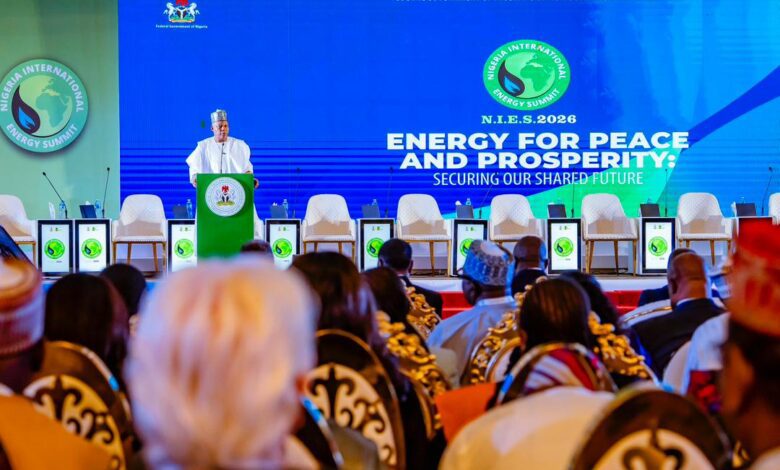
Tinubu spoke on Tuesday while declaring open the 9th Nigeria International Energy Summit (NIES 2026) at the State House, Abuja.
Represented by Vice President Kashim Shettima, the President said the country also introduced a broad executive order on oil and gas investment enabling it to unlock up to US$10 billion in capital inflows, streamline project approvals, reduce bureaucratic delays, and position Nigeria as a prepared investment destination.
He announced that the country is committed to building an energy system that delivers reliability, transparency, sustainability, and shared prosperity.
He stated that when this administration assumed the mantle of leadership in May 2023, it inherited an energy sector rich in potential, yet constrained by inefficiencies, uncertainty, and prolonged underinvestment.
Nevertheless, he said the administration set to work without panicking, guided by the clear understanding that energy cannot be treated simply as an economic commodity if stability is the goal. Declaring that Energy is a catalyst for national security, industrial growth, social inclusion, and regional cooperation.
He told the gathering that Nigeria introduced fully digital, transparent, and competitive licensing rounds to the upstream sector, widely regarded as among the most credible bidding processes in the nation’s history.
In furtherance of this objective, Tinubu said the administration approved the commencement of the 2025 licensing round, creating new investment windows and enabling additional crude oil and gas production capacity.
He recalled that in 2025, the administration introduced the Upstream Petroleum Operations Cost Efficiency Incentives Order, providing tax credits of up to 20% to promote cost efficiency, enhanced competitiveness, and deepened Nigerian participation.
Noting that as a direct result of the reforms it introduced, Nigeria’s average crude oil production improved to approximately 1.6 million barrels per day.
President Tinubu noted that “through targeted initiatives such as Project 1 Million Barrels Per Day, we are working systematically towards 2.5 million barrels per day by 2027.
“Our long-term national ambition remains clear, 3 million barrels per day of liquid hydrocarbons and 12 million cubic feet per day of gas by 2030.”
Recognizing gas as Nigeria’s strategic transition point, he said the administration intensified investments across the gas value chain, revealing that domestic gas supply exceeded 2 billion cubic feet per day for the first time, strengthening power generation, industrial utilization, and energy access.
“Export volumes increased alongside sustained expansion of gas processing and transportation infrastructure, reinforcing Nigeria’s role in regional and global gas markets.
“Nigeria’s refining landscape entered a new era with the commencement of coal operations and the Dangote Petroleum Refinery, significantly enhancing domestic supply of refined petroleum products.
“Modular and indigenous refineries advanced under supportive regulatory frameworks, diversifying national refining capacity,” he said.
The President mentioned that the rehabilitation of state-owned refineries also gained renewed momentum, with operational stability and efficiency remaining a primary focus.
“The Nigerian Offshore Petroleum Regulatory Commission recorded strong and consistent revenue performance, surpassing annual targets and reimposing fiscal sustainability.
“Post-Community Development Trusts accumulated over N358 billion, funding hundreds of social, economic, and infrastructure projects across oil-producing communities, strengthening peace, inclusion, and shared ownership,” he added.
President Tinubu said the crude oil theft, once a major concern on production and revenue, declined significantly due to enhanced security coordination, surveillance, and regulatory enforcement.
These efforts, according to him, restored operational stability and improved Nigeria’s production reliability in international markets.
He submitted that the administration also made deliberate leadership appointments across key regulatory and development institutions, including governing councils and boards responsible for Nigerian content, regulatory oversight, and sector development.
These appointments, he revealed, reimposed professionalism, accountability, and institutional effectiveness.
He mentioned that early reforms, most notably oil subsidy removal and foreign exchange liberalization, repositioned the sector’s economics, improved market efficiency, and enhanced long-term investment attractiveness.
The President said while these measures required national sacrifice, they laid the foundation for sustainability, fiscal resilience, and investor confidence.
“Industry stakeholders and independent experts have described these reforms as transformational, aligning Nigeria’s energy sector with global best practices,” he added.
He said the theme of this year’s summit, Energy for Peace and Prosperity, speaks directly to Nigeria’s vision, adding energy must unite communities, stabilize economies, and secure futures.
“It must power factories, illuminate homes, fuel innovation, and build trust between governments, investors, and citizens. Nigeria stands ready to collaborate with Africa, global partners, and the private sector to deliver energy that is secure, affordable, cleaner, and inclusive,” President Tinubu said.
He invited all participants to engage constructively, invest competently, and partner purposefully with Nigeria and Africa.