Nigeria Set To Host High-Level Ministerial Conference On Antimicrobial Resistance
By Alice Etuka, Abuja



Preparations are on top gear for the 5th Global High-Level Ministerial Conference on Antimicrobial Resistance scheduled to be held in Abuja, next year.
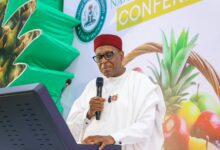
The Coordinating Minister of Health and Social Welfare, Prof. Muhammad Pate announced this while inaugurating a Ministerial Advisory Committee for the Planning of the Conference.
The conference aims to deliver bold outcomes that would shape global AMR strategies ahead of the 2026 UNGA High-Level Meeting on AMR. It will also provide a platform for countries to share innovations, scale up best practices, and commit to achieving AMR-related 2030 targets.
The Minister explained that Nigeria took an integrated approach to dealing with issues of health, “human health, animal health, plant health, environment are all interconnected adding that that’s why government had the One Health steering committee established even before now”, he said.
Pate also noted the need for a holistic approach, citing the importance of working together with mobilized expertise across various sectors and disciplines to develop sustainable, multi-sectoral approaches and solutions that protect human health, animal health, and the environmental ecosystem.
“We need to look at these issues holistically and by working together… to develop sustainable multi-sectoral approaches and solutions that protect human health, animal health, and the environmental ecosystem, secure our food systems”, he said.
The minister commended the efforts of the Director-General of the Nigeria Centre for Disease Control (NCDC) and the planning committee for their work on the high-level ministerial conference on antimicrobial resistance (AMR), scheduled for 2026.
“We’re rolling this approach into a preparation for this conference in 2026. I commend you, because since coming back from data, you mobilize, you organize, and very diligently beginning the preparatory steps”, he said.
Pate noted the importance of cross-sectoral collaboration, particularly between the health and livestock ministries, in addressing the challenge of AMR:
“By working closely with the livestock ministry… we know that a lot of use of antibiotic programs in the animal sector drives resistance in the human health arena as well,” he said.
The minister thanked the members of the advisory committee, including Professor Yabu Chichibu and Dr. Ayodele Alakija, for their expertise and commitment to the fight against AMR.
On his part, Minister of Livestock Development, Idi Mukhtar Maiha, reaffirmed the Federal Ministry of Livestock Development’s commitment to addressing the challenge of antimicrobial resistance (AMR) through a One Health approach.
Maiha noted that AMR poses a significant threat to the livestock sector, which is the backbone of rural livelihoods in Nigeria as the health of animals is intricately tied to the health of people.
He said that the One Health approach was essential in addressing AMR, as it requires coordinated, multi-sectoral, and sustained collaboration across health, livestock, agriculture, environment, and beyond, stressing that no single sector can address AMR alone.
The minister commended the leadership and vision of the Minister of Health and Social Welfare, Prof. Muhammad Ali Pate, and the Honorable Minister of Environment, Balarabe Abbas Lawal, in advancing Nigeria’s One Health agenda.
Maiha noted that the Federal Ministry of Livestock Development has taken steps to combat AMR, including the development of national guidelines for the use of antimicrobial drugs in animals, a microbial food washing strategy, and an antimicrobial national renewal strategy.
He expressed confidence that the Ministerial Advisory Committee would provide strategic direction and oversight needed to ensure Nigeria’s successful hosting of the 2026 high-level ministerial conference on AMR.
“We will work together with our counterparts in the Ministry of Health and Environment and indeed, all stakeholders to ensure that the livestock sector plays a central role in shaping national response and contributing meaningfully to the success of this global conference,” he said.
The Minister of Environment, Balarabe Lawal, has said Antimicrobial resistance (AMR) was not only a public health challenge, but also an environmental crisis.
Represented by the Director of Pollution Control and Environmental Health, Omotunde Adeola, he noted that the environment play a critical role in the propagation of resistant microorganisms.
“The environment is both a reservoir and a transmission pathway for pathogens,” and that AMR is a current and escalating danger that demands full attention.
“The environment is both a reservoir and a transmission pathway for pathogens. In Nigeria, as in many parts of the world, antimicrobial residues enter the environment through untreated hospital waste, wasteful runoff, open defecation, poor waste management and indiscriminate disposal of expired drugs”, he said.
The Director emphasized the need for sustainable practices, proper disposal, and strengthened infection prevention and control measures to mitigate the crisis.
“We must prioritize sustainable practices, enforce proper disposal and strengthen infection prevention and control measures, integrating safe water, sanitation and hygiene practices into AMR strategies,” he said.
The 2026 high-level ministerial conference on AMR provides an opportunity for Nigeria to review global progress, reinforce political momentum, and showcase innovative solutions. The Director expressed confidence that the conference would lay a strong foundation for impactful policies and actions that would resonate far beyond the conference.